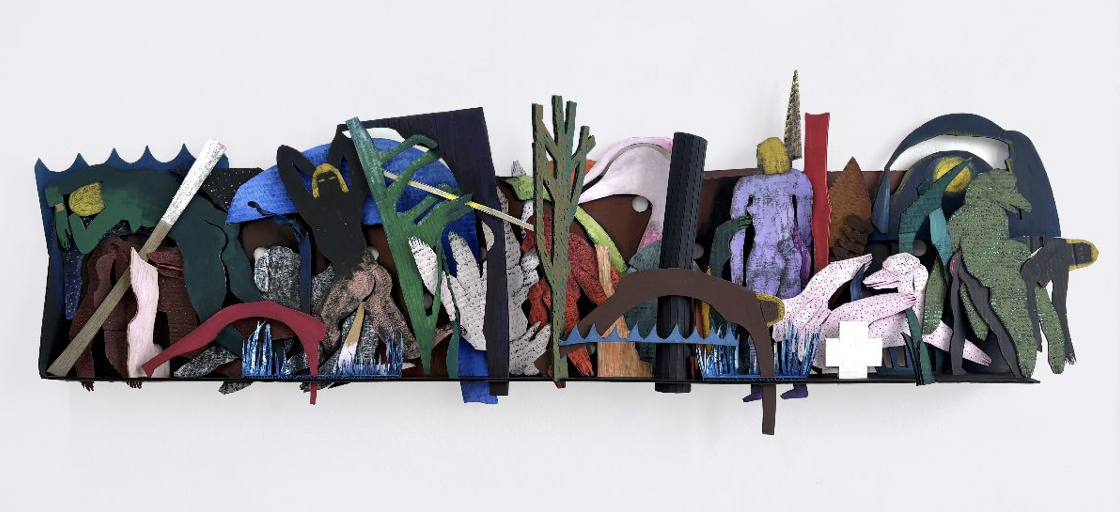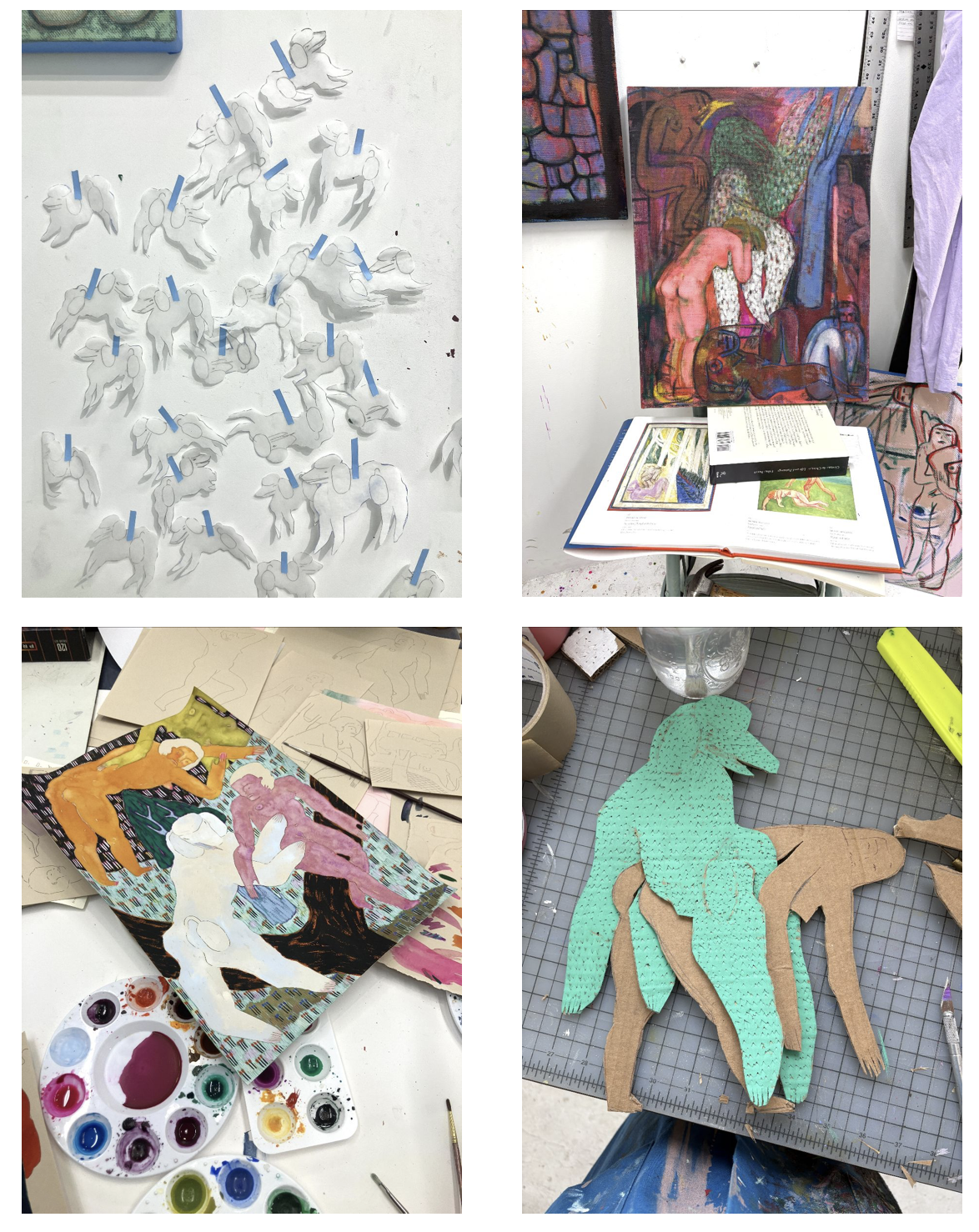
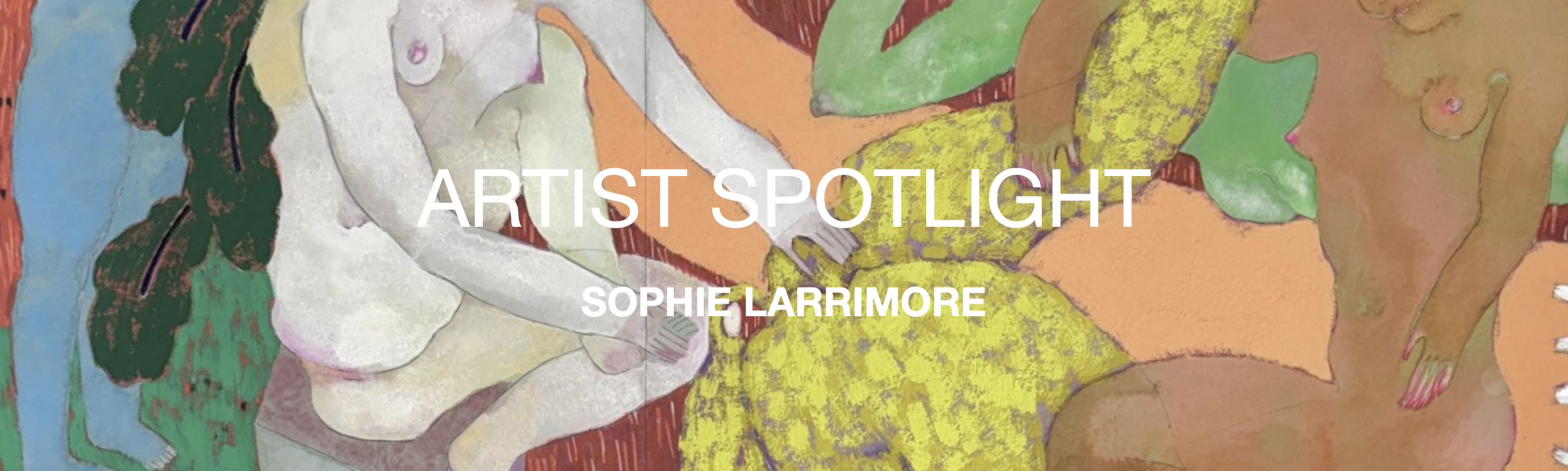
Sophie Larrimore is known for vibrant, stylized depictions of human and canine figures in garden-like settings. These subjects primarily act as vehicles for working through questions of structure, surface, color, and shape, testing how far a painting can hover between the two-dimensional plane and the suggestion of depth. Though these formal concerns remain consistent, her most recent works reflect an understanding that embracing a more complex, personal, or specific narrative doesn’t lessen the formal aspects; it deepens them.
Larrimore will have a solo exhibition at The Pit LA in 2027.
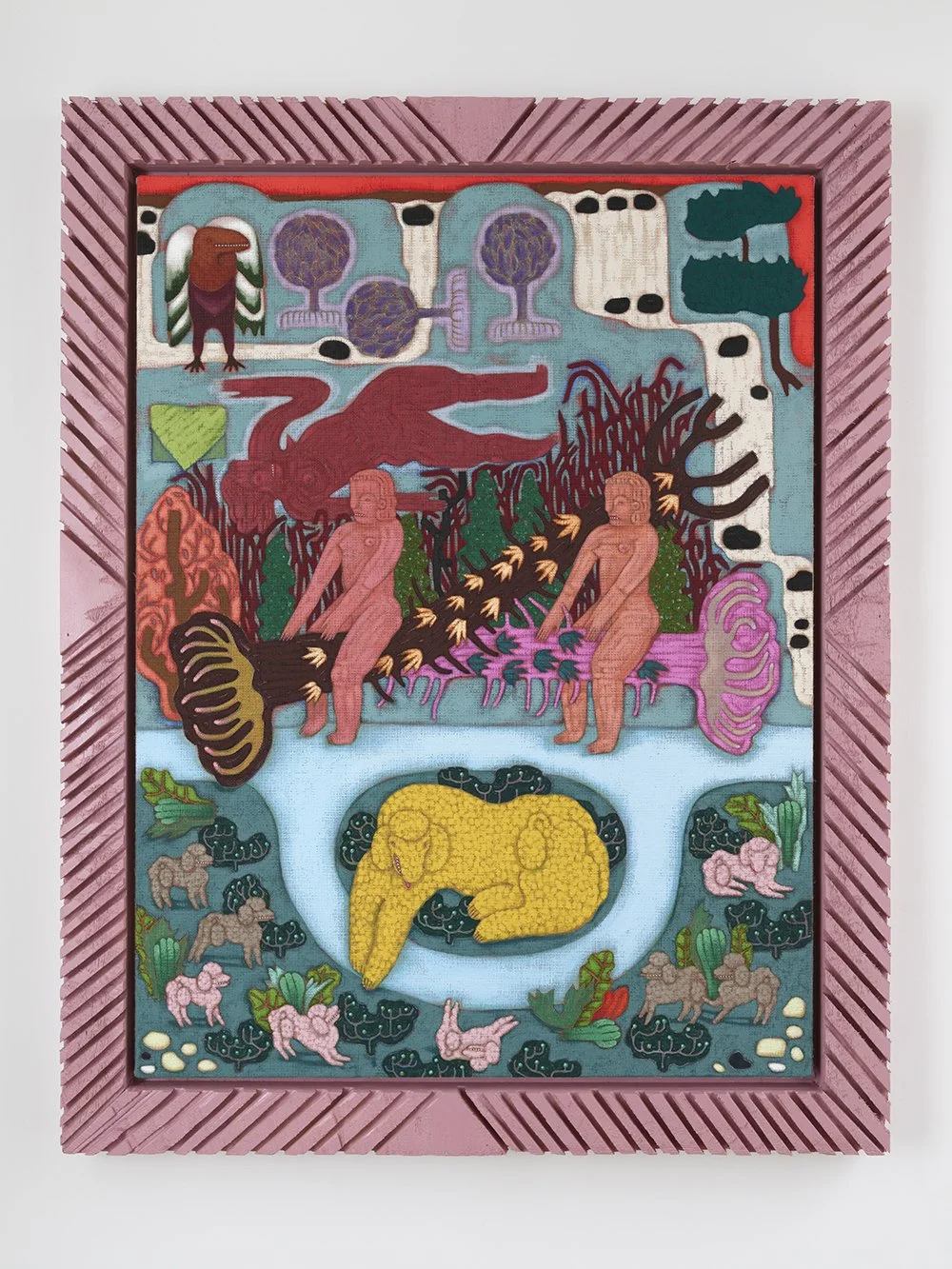
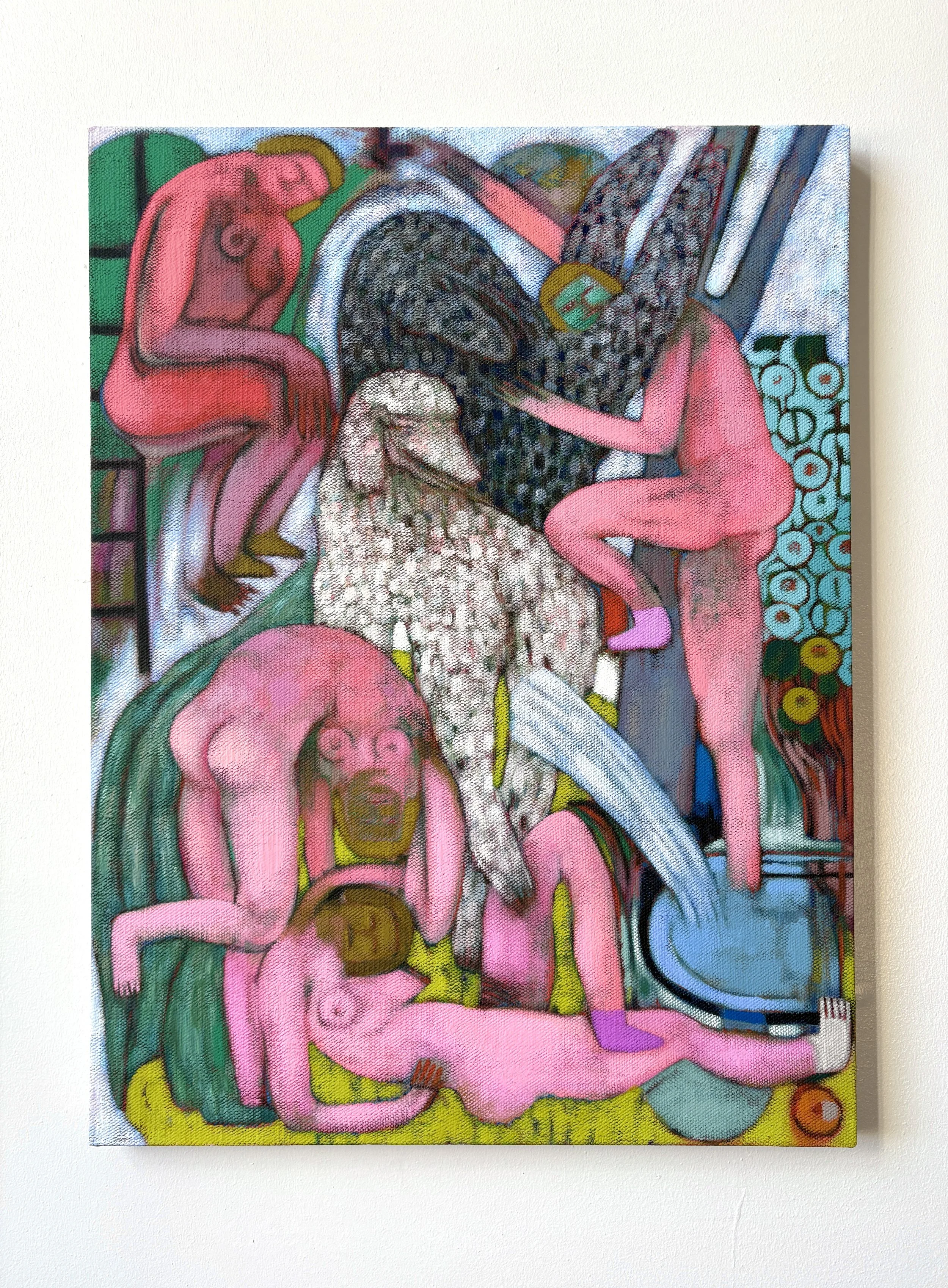
Sophie Larrimore, Perennial Crush, 2021. Acrylic and water soluble crayon on unprimed linen. 40 x 30 inches. Courtesy of the artist and Kate Werble, New York.
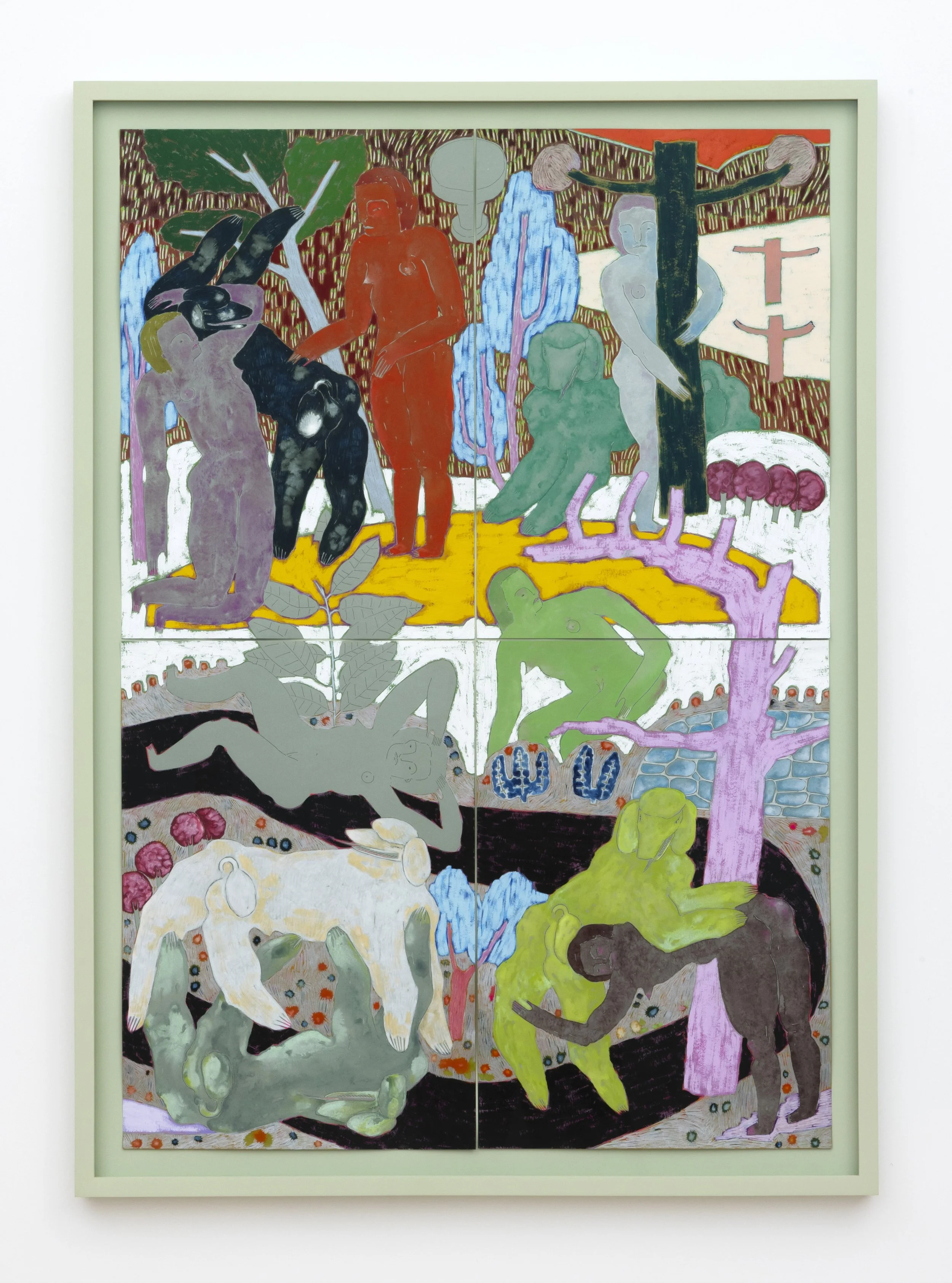
Larrimore has long approached painting through a specific vocabulary: the poodle, the female nude, the landscape. Working with these classic motifs provides a framework for exploring what can still be new in a medium that seems exhausted. These archetypes function as formal devices rather than subjects, each figure held in place on a flat, patterned ground that recalls the compressed space of illuminated manuscripts and medieval tapestries. Repeated across canvases, the figures settle into emblems, stable and self-contained, allowing color, edge, and surface to carry the weight of the painting.
Of her subject matter, Larrimore has said that her “subject is clearly figurative, yet not concerned with imparting a specific narrative. The viewer is permitted to arrive at their own interpretation. Consistently, devotionally, mining these staid themes allows the paintings to fully become the objects of formal concern and speak to more than the subject(s) at hand.”
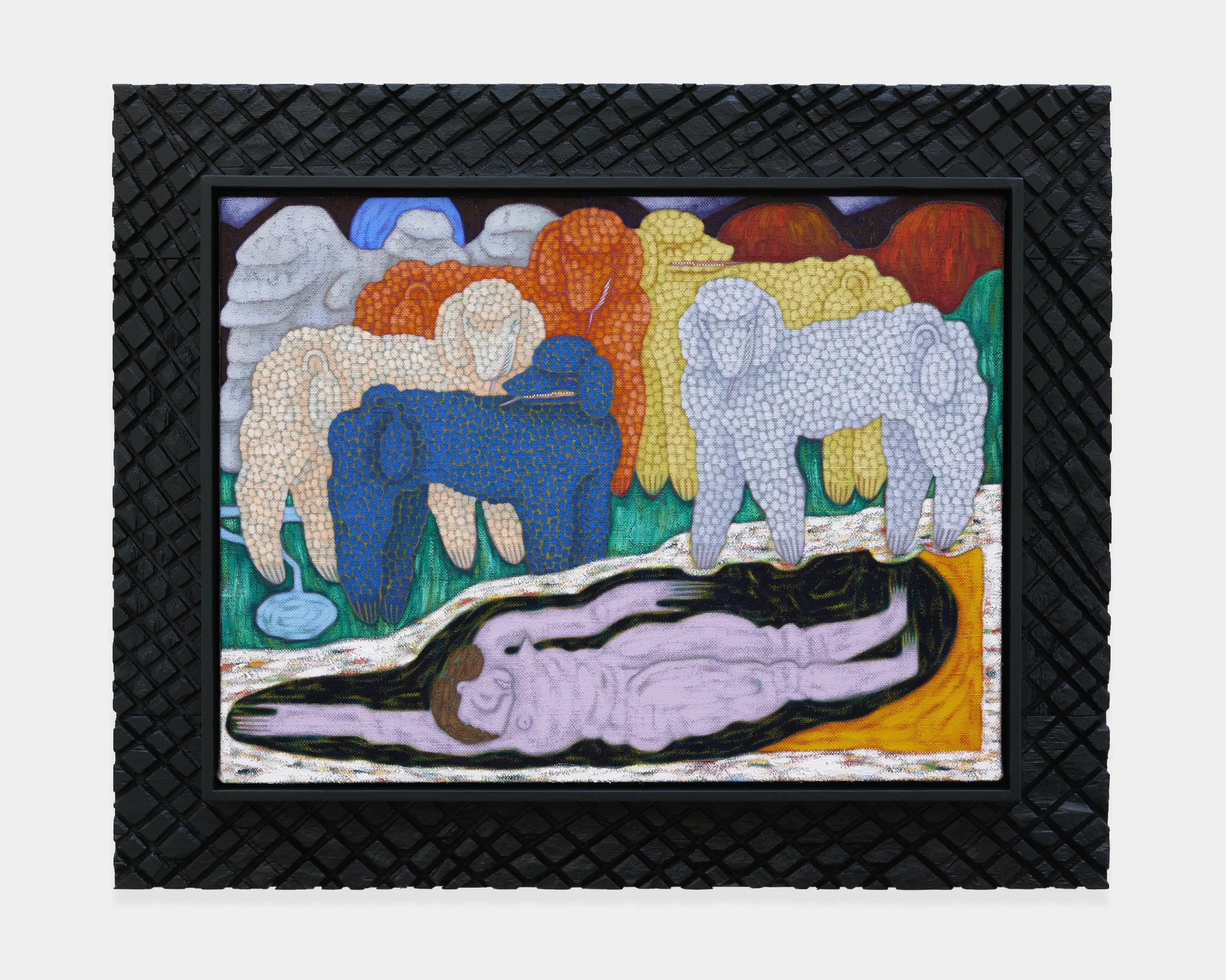
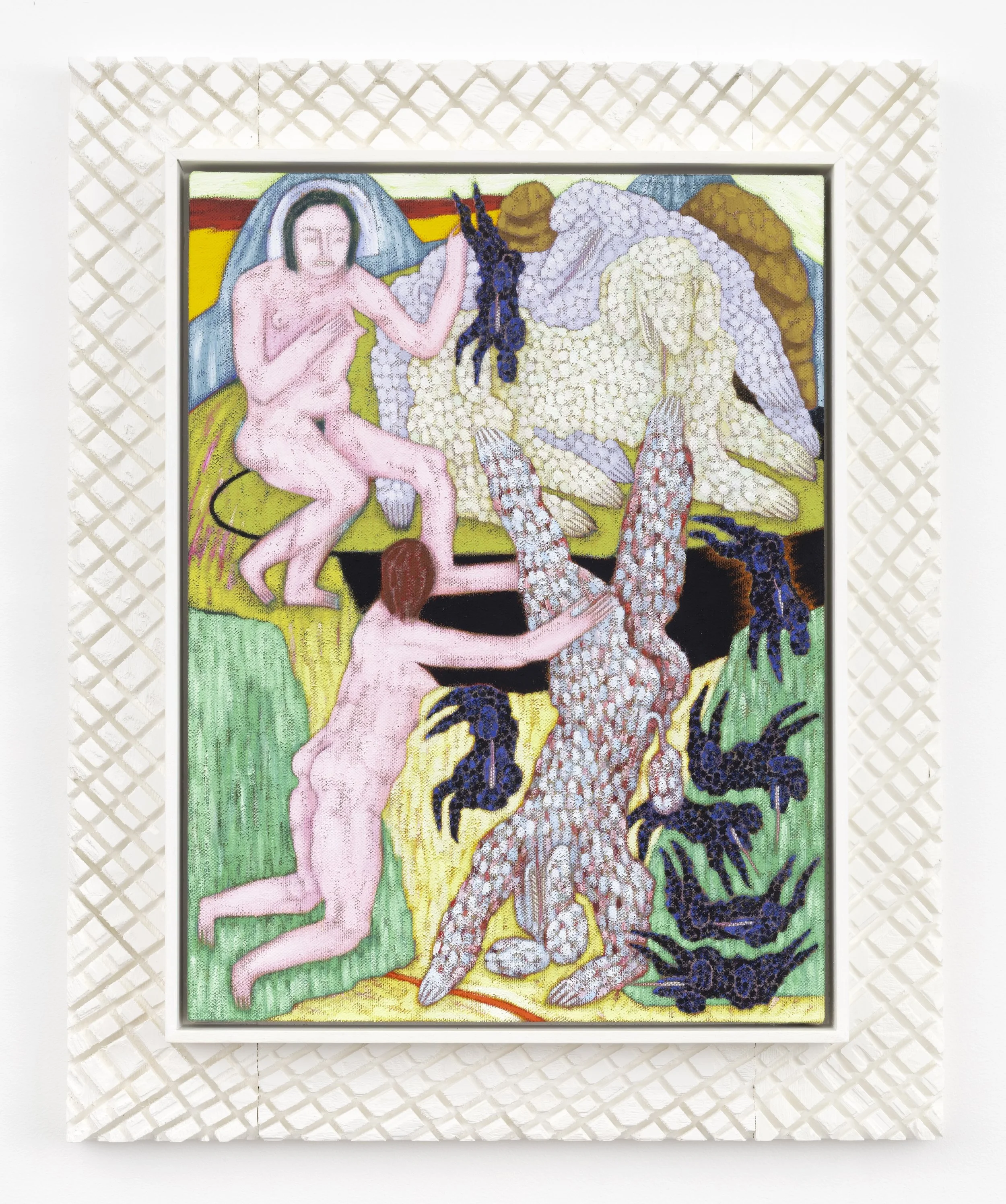
Sophie Larrimore, Magic We Might Never Know, 2024. Acrylic and water soluble crayon on unprimed linen. 18 x 24 inches. Framed: 26 x 32 inches. Courtesy of the artist and Cadet Capela, Pari
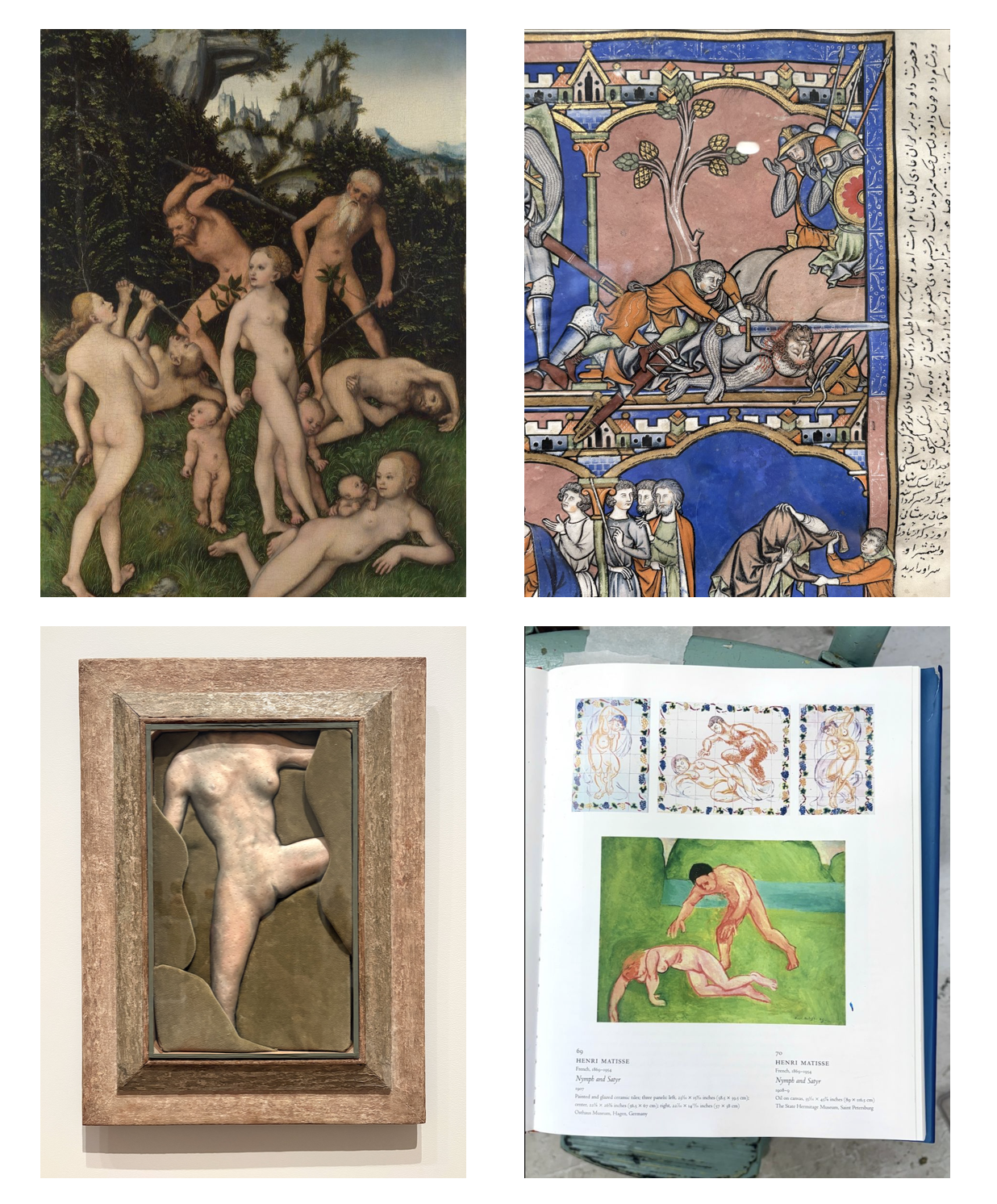
Larrimore works by relying on memory, invention, sketches, and an internal visual vocabulary, rather than using direct source images. This vocabulary is greatly influenced by pre-Renaissance art—illuminated manuscripts, mosaics, frescoes, and early icon painting—where space stacks vertically instead of receding. References to eighteenth-century American needlework are also a constant throughout her practice, shaping her flat, frontal compositions. The use of form and color is reminiscent of works by Gauguin, Matisse, and Duchamp. By presenting many of the works in roughly hand-carved frames, Larrimore directs attention to their objectness and to the devotional space paintings can inhabit.
NEW WORKS