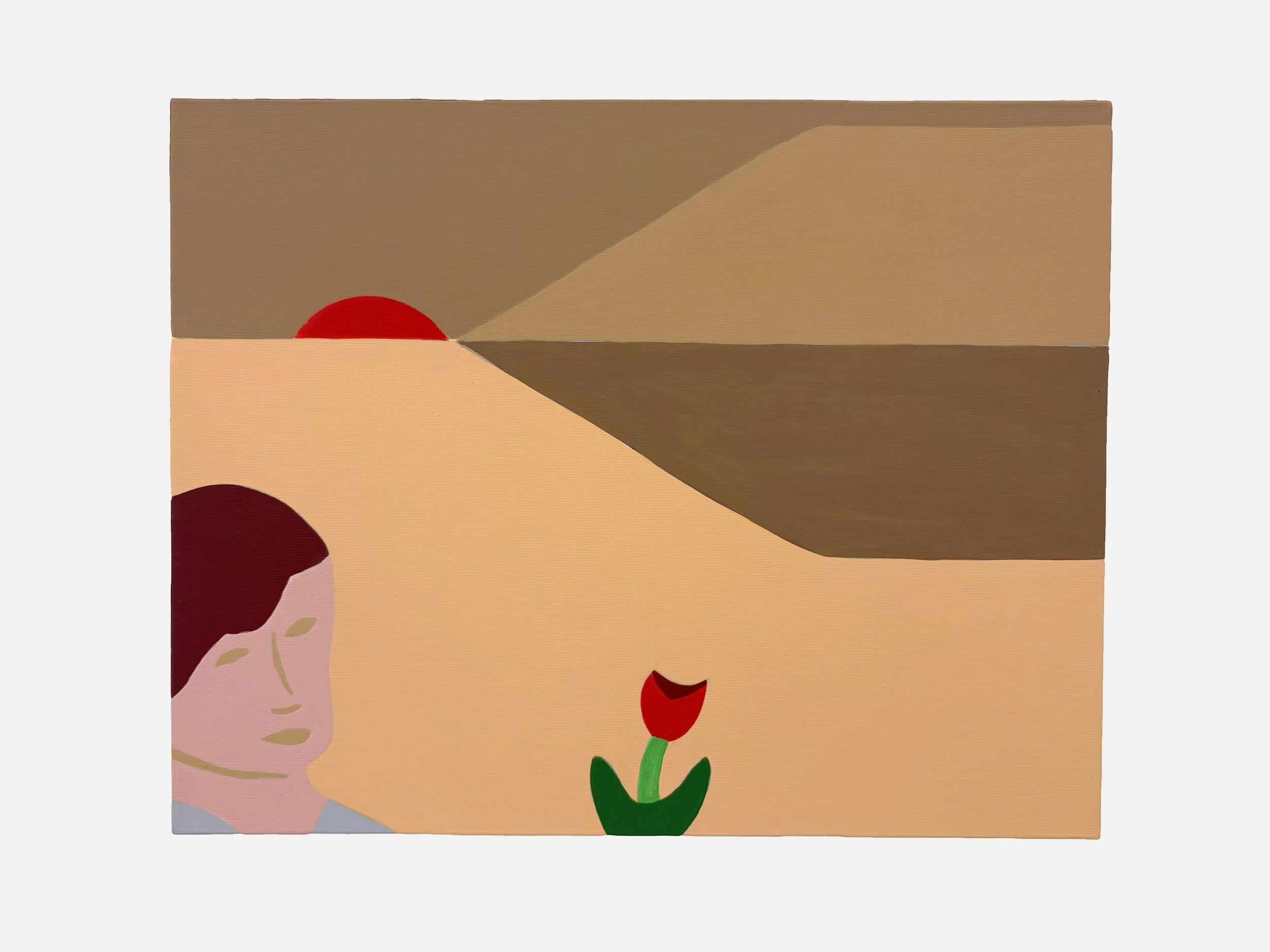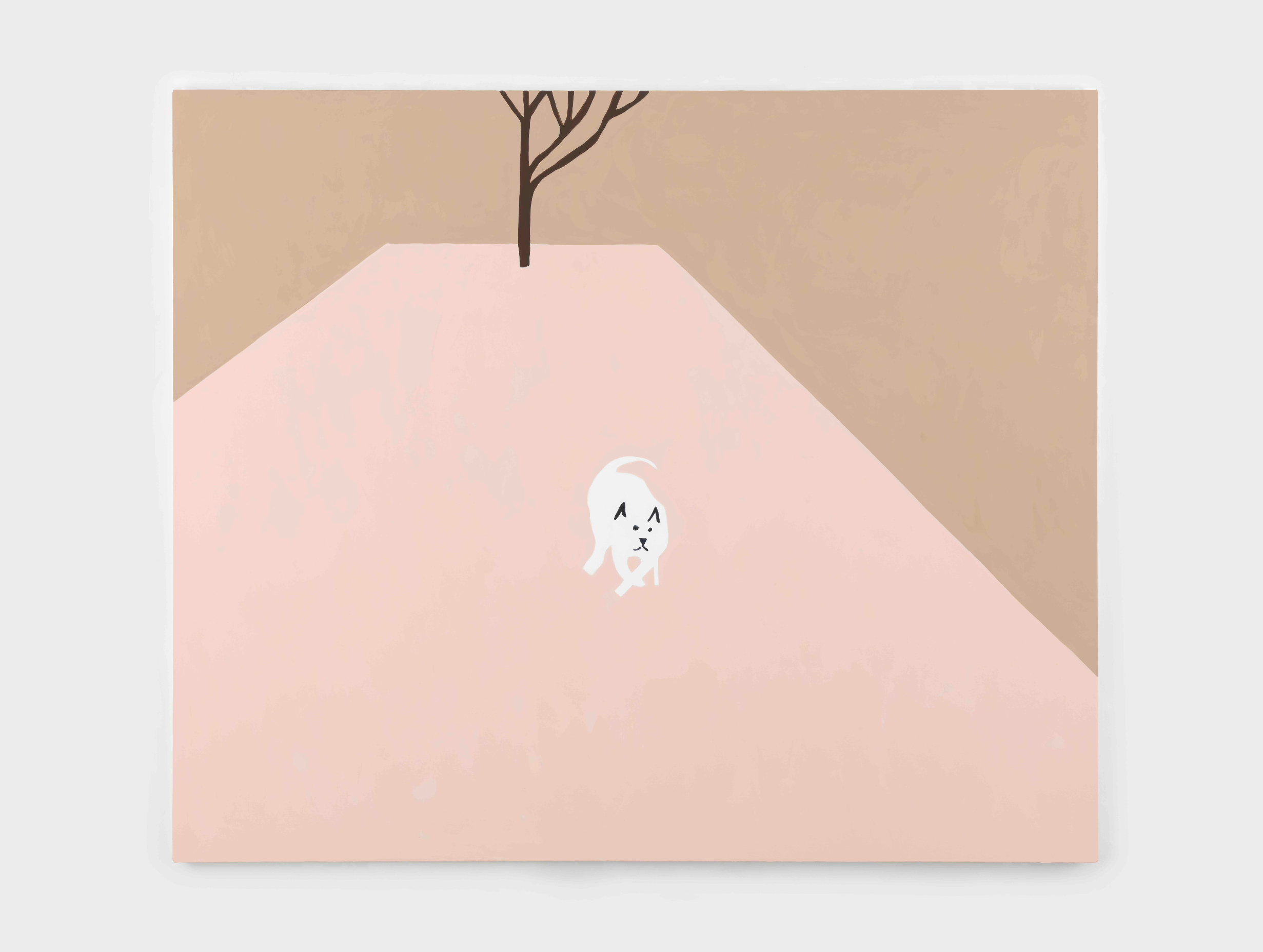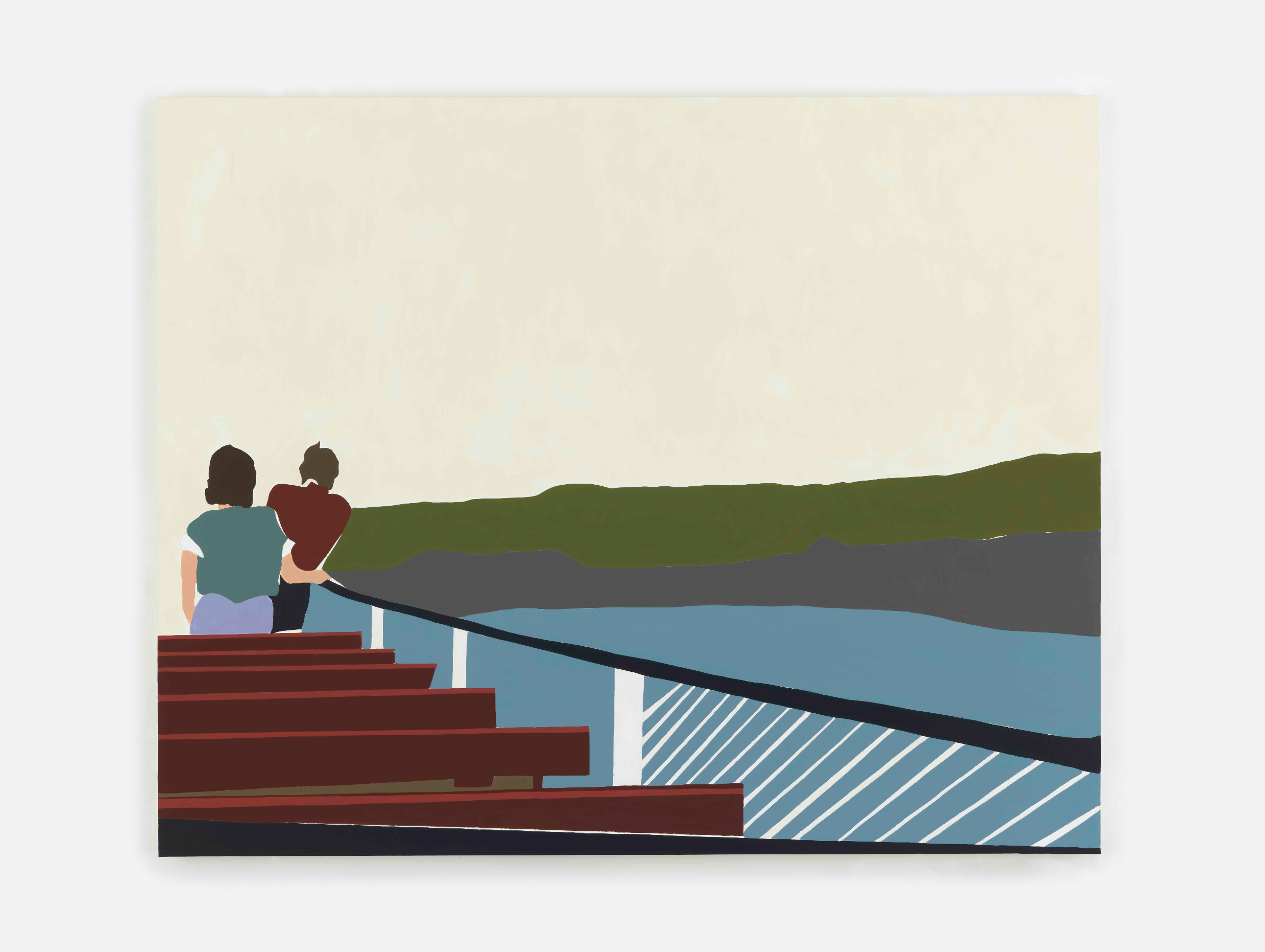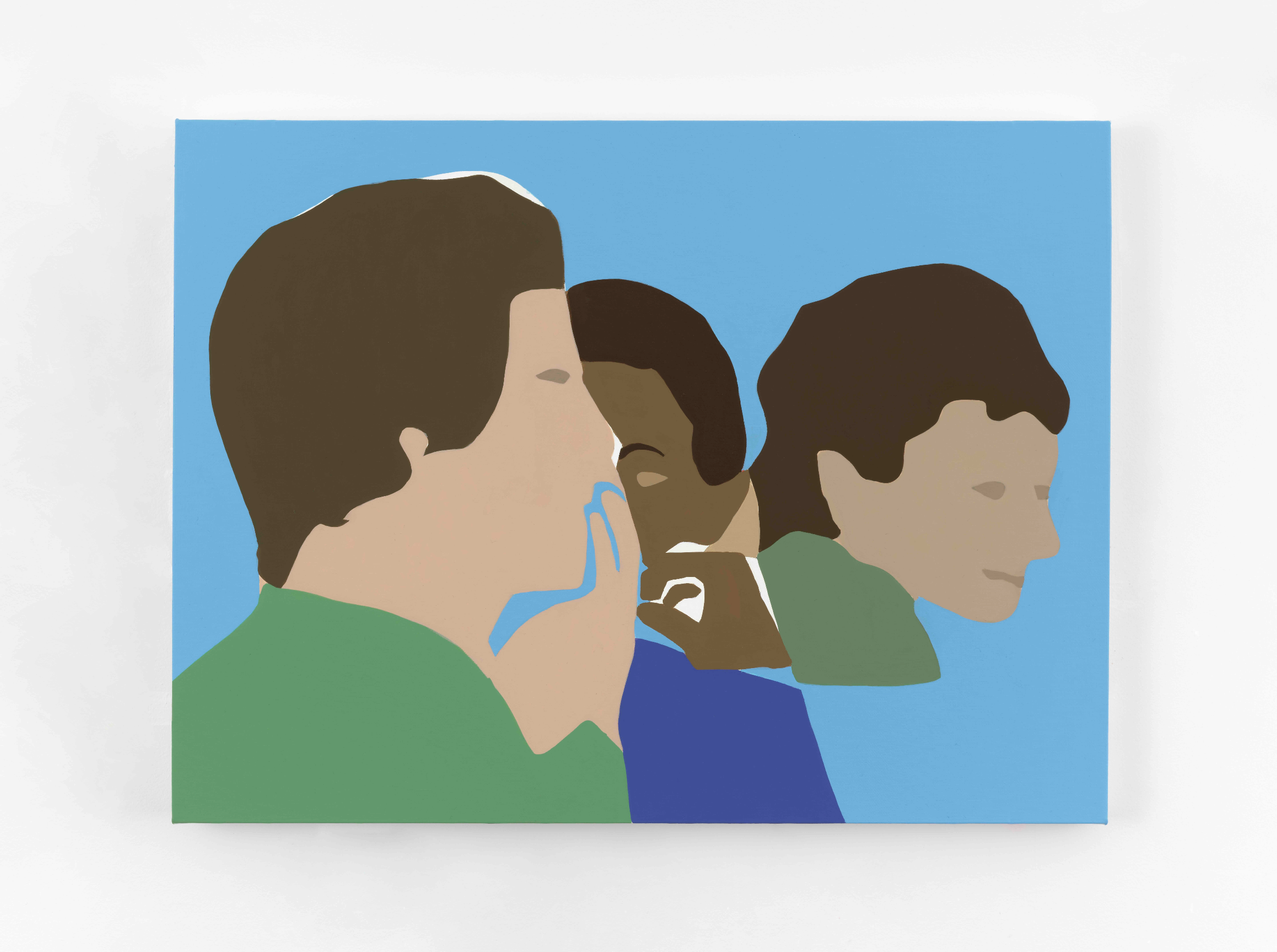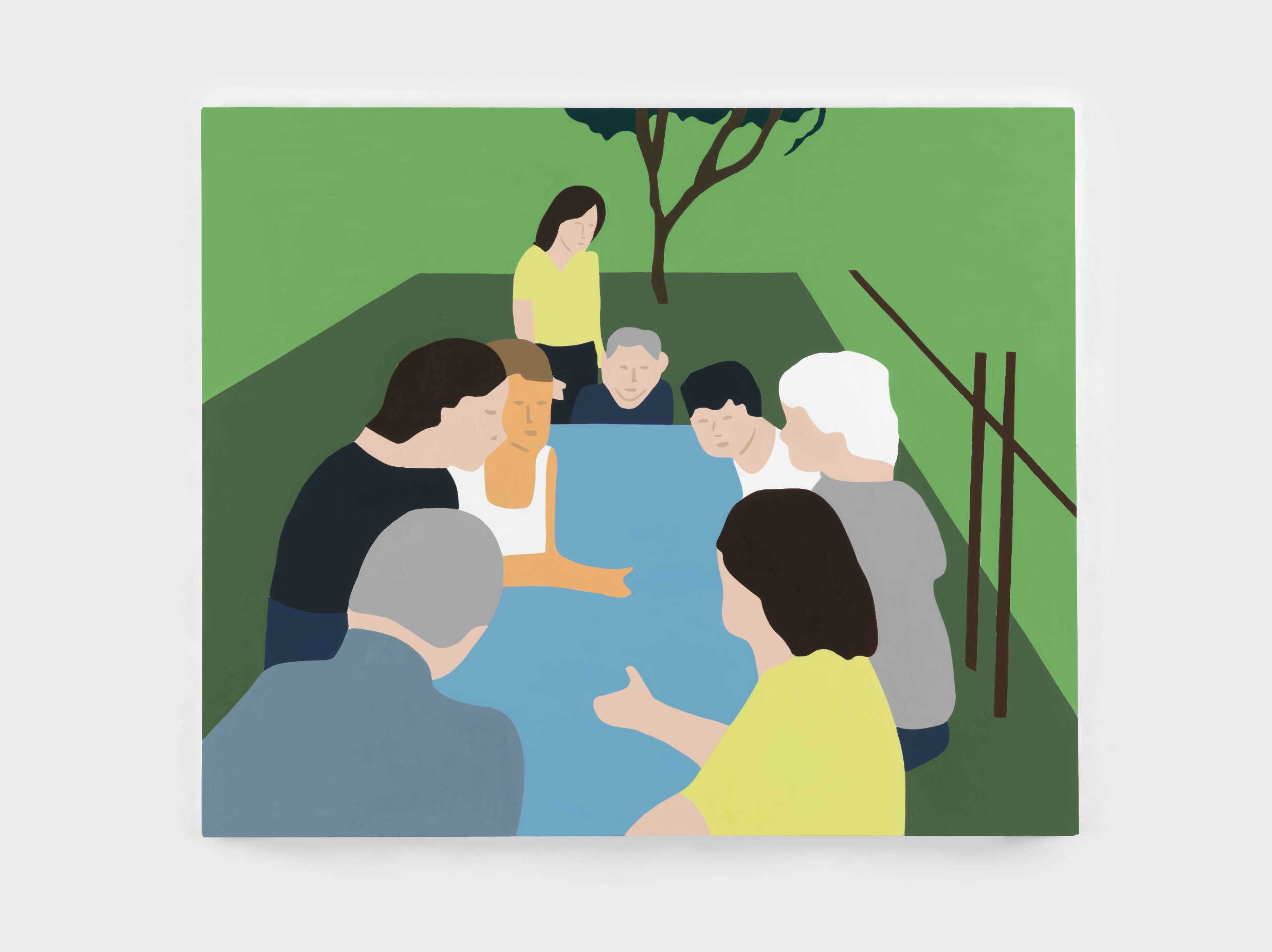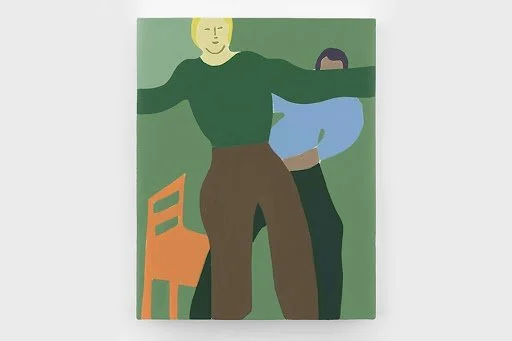
James Ulmer draws from a diverse range of influences, positioning himself within a lineage of artists who engage with painting through non-traditional visual mediums. His work resembles comic stills, each presenting a compact narrative featuring brightly colored, flatly rendered figures in everyday moments— swimming in a lake, sitting at the dinner table, driving a car, or gazing out a window. But Ulmer's paintings present color and abstraction in a way that draws attention to the entangled tensions that exist in any moment. Stripped of facial expressions and set against bold, graphic fields of color, Ulmer’s figures are deliberately generic. While he remains anchored in figurative painting’s historical role of depicting daily life, they don’t represent reality, but a sort of sensory composition of a moment.
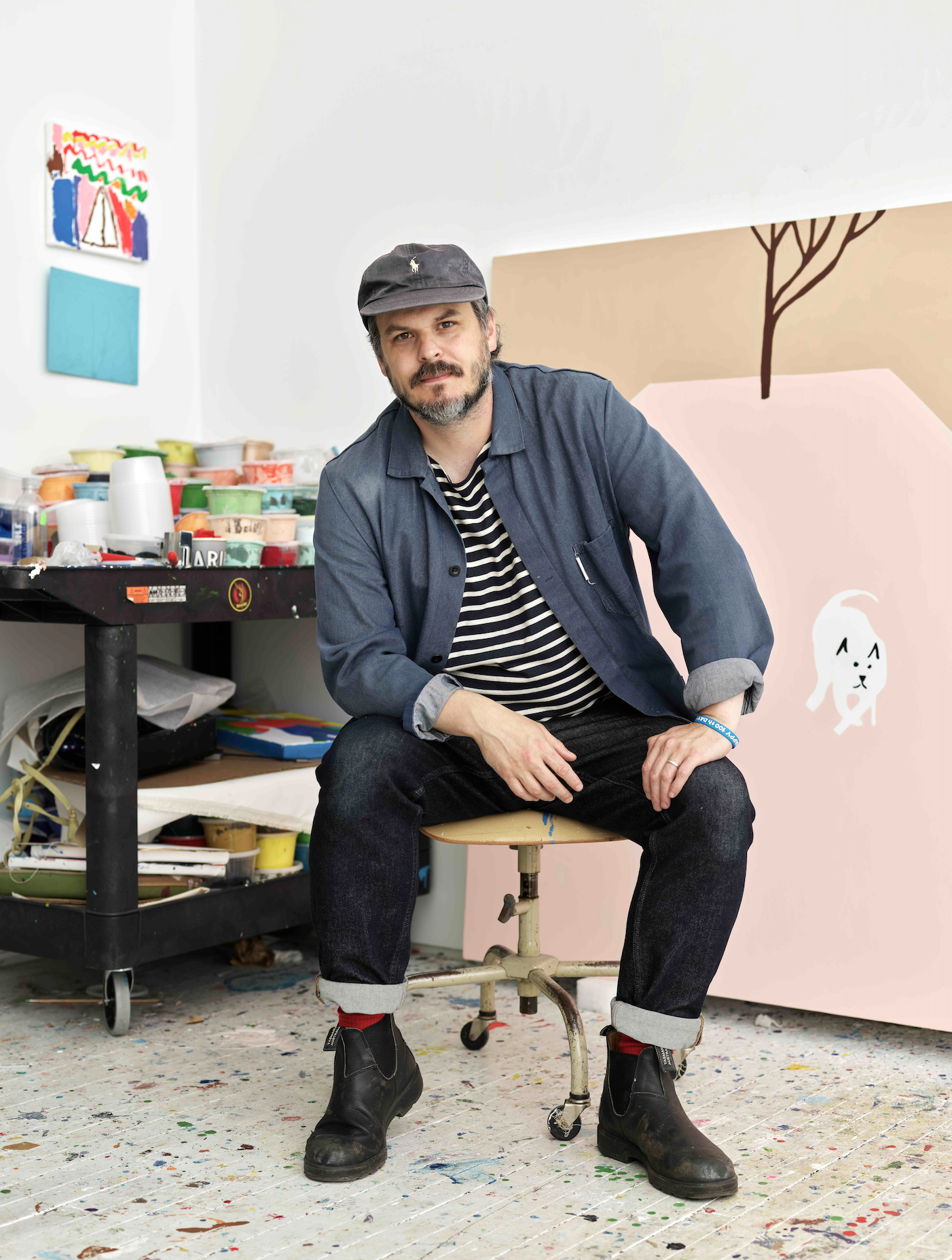
The works utilize a rudimentary vocabulary that is simple and universal. Whether people or animals, still lifes or landscapes, the artist's work renders childlike elements with sophistication and restraint. The human figure and its varying environmental relationships have been ongoing sites of intrigue for Ulmer, who excels in the depiction of boldly-hued shapes, evoking various narratives through soft geometric forms.
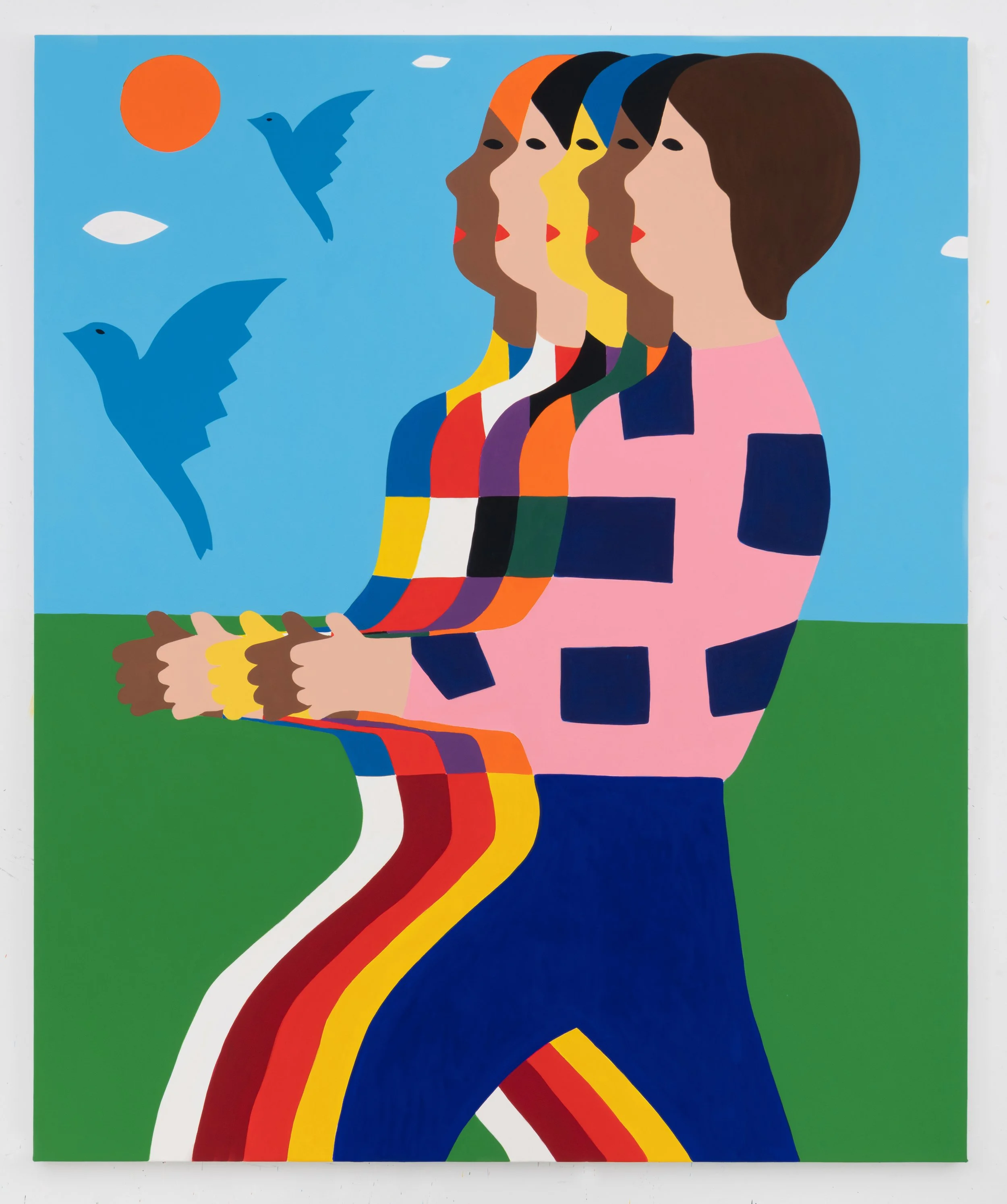
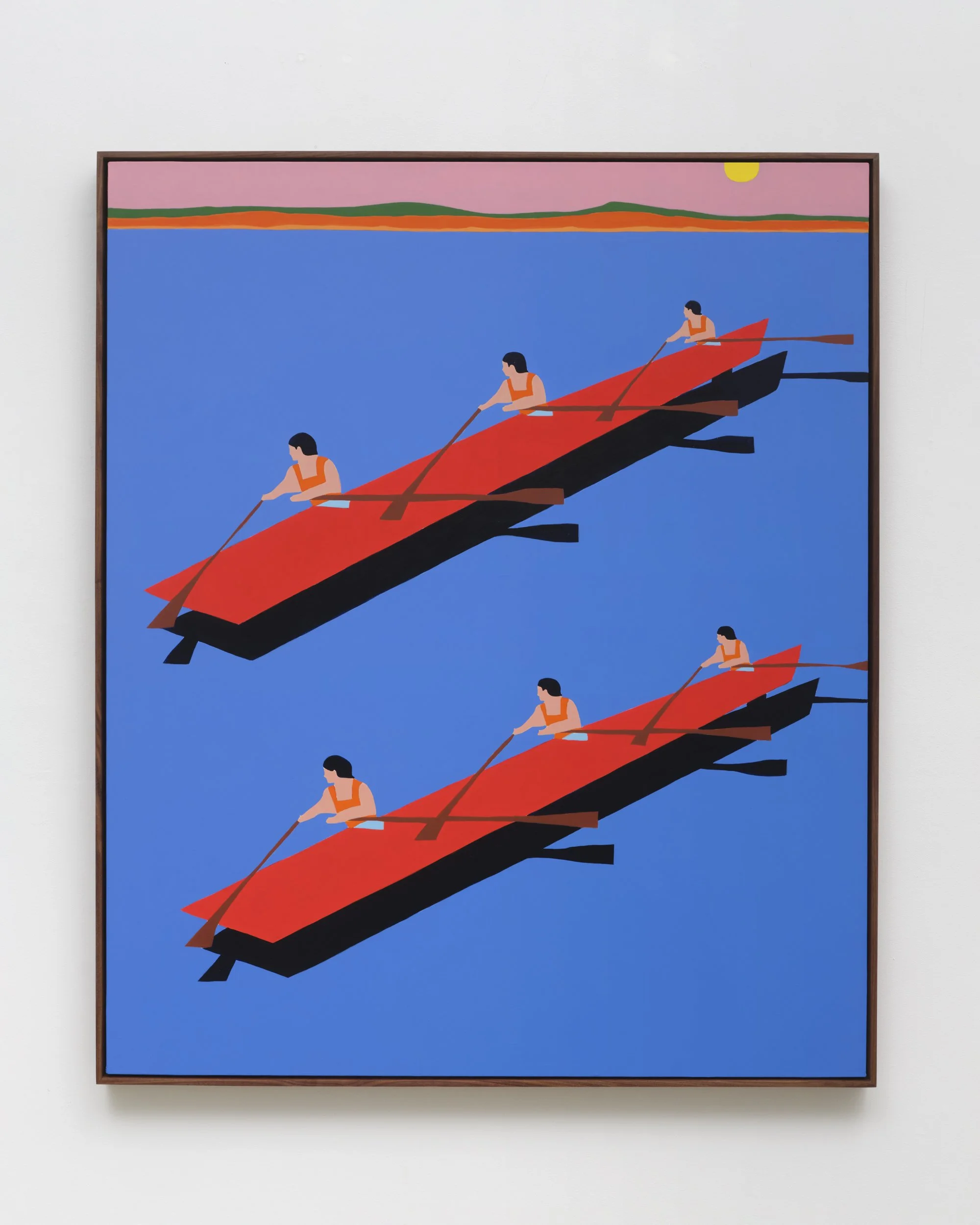
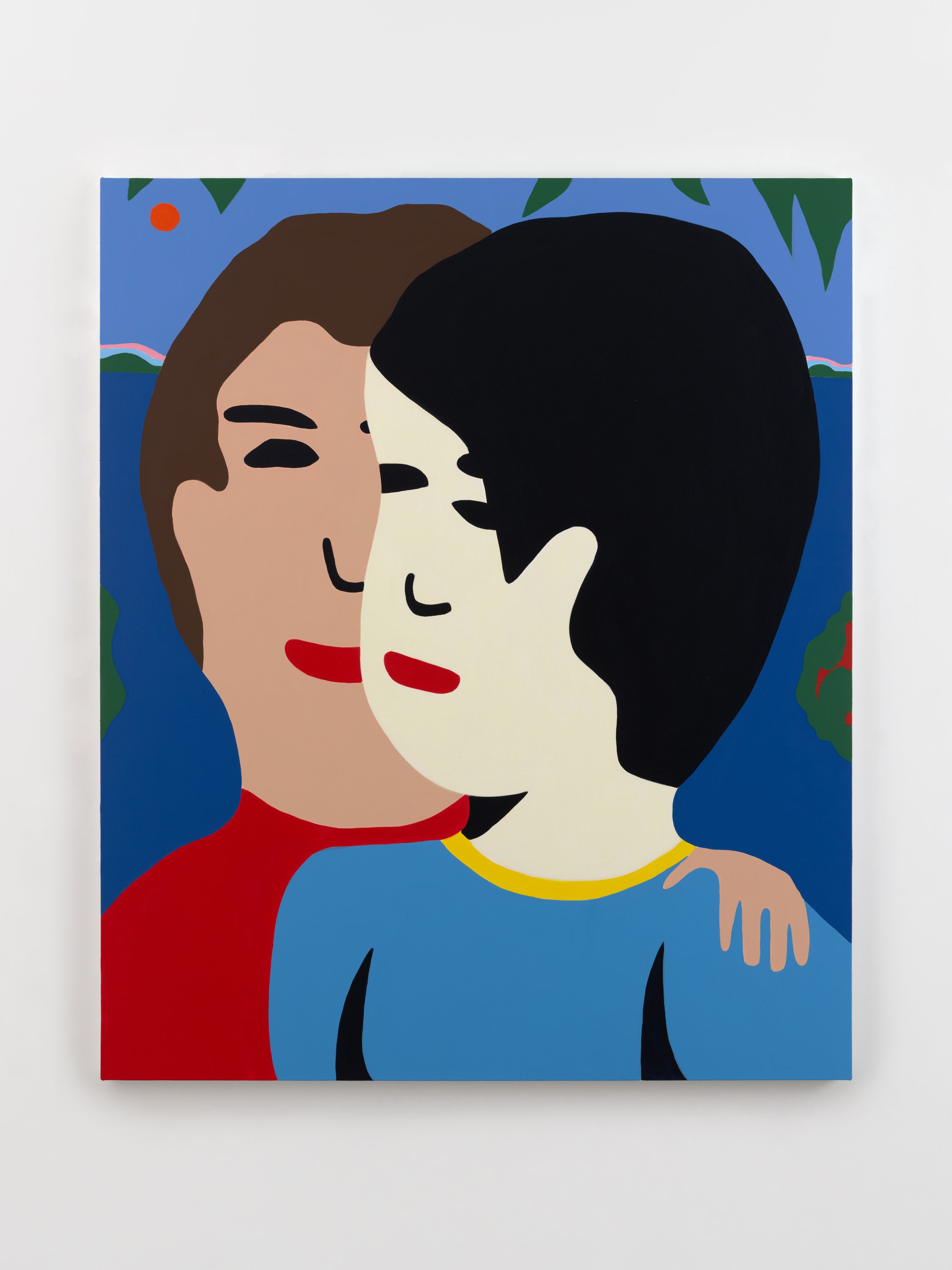
In his press release for Ulmer's 2024 exhibition "Water Paintings" at The Pit Los Angeles, Reuben Merringer described Ulmer's works as "color and abstraction that draw attention to the entangled tensions that exist in any moment, however active or placid it may otherwise seem."
He continued, "Frank Stella has said of Caravaggio that what interested him was not the faithfully rendered objective reality of the image, but the reality created by the effort going into the painting itself. Ulmer’s paintings, which, like Stella, reduce visual information to the bare essentials, are rigorously precise, achieving such a reality, evidenced in the determined organization of the image as well as the colors themselves. Color choice is often the starting point of the individual works—knowing, for example, that he will paint “something blue”. But achieving the right blue pushes Ulmer’s canvases into the reality described by Stella, and like Caravaggio, that reality of the object couriers a fixed moment, affording us the time to untangle its fabric not for what happened, but to imagine the many ways a moment can be felt."
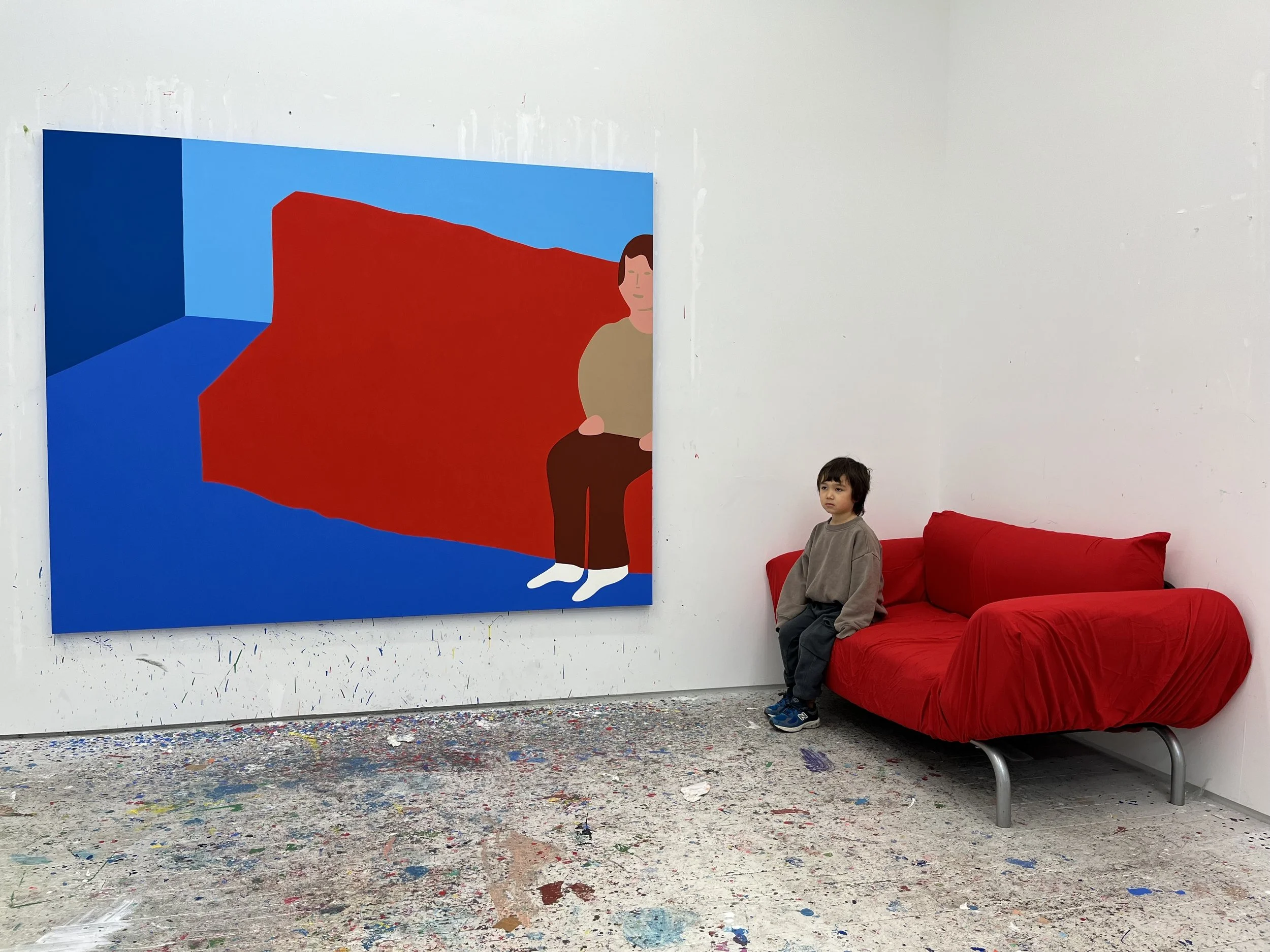
A new series begun in 2024 found Ulmer taking an inward turn. In the afterword to The Red Couch, a small run artist publication printed last year, Nelson Harst describes the series genesis:
James Ulmer began the Red Couch series by wanting to paint an interior corner. He'd been doing big, outdoor paintings, grounded with a long horizon line. Often, they had an active, sporty feeling: in the water, swimmers and rowers; on the road, runners and drivers. By taking on a corner, James started on a fresh new series. The "Red Couch" paintings are inside pictures, rested, and posed.
For an artist like James, a rigorously disciplined image builder, painting a corner is serious business. It reminds me of how Art Spiegelman described Ernie Bushmiller's cartoons in terms of irreducible concept. It took exactly three lines to get James where he wanted to be.
The couch paintings are interior images because of how three vectors converge, forming three surfaces: two vertical, one horizontal. Another meandering line does not mark the surface– it's path creates the mass of an object, grounded in the conjured room. So, what is that object?
James often invites his family into his paintings; they are his favorite people. And as the saying goes: the chairs are where the people go.
—— Nelson Harst
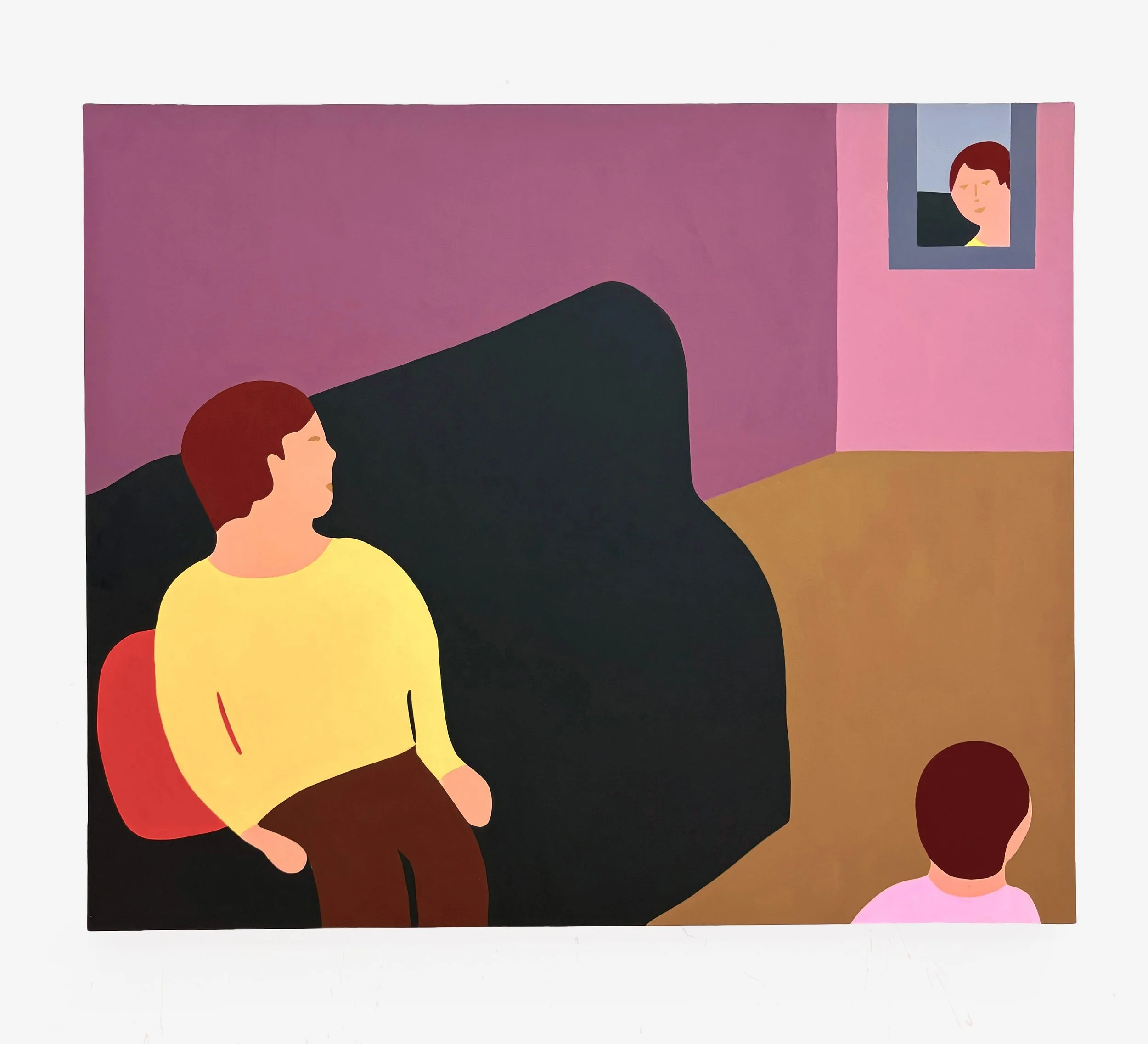
James Ulmer Green Couch, 2025. Acrylic and Flashe on Canvas. 30 x 36 in
NEW WORKS
In Ulmer's latest series of works, he takes inspiration from found photographs—a new source material for an artist whose previous bodies of work drew primarily from imagination and memory. Though his family has always appeared throughout his paintings, these new pieces began when he was visiting his parents' home and came across a box of printed photographs from the 1980s and 1990s. Drawn to the subjects in the photographs, Ulmer developed abstracted compositions and a more muted color palette. The new palette is quieter than earlier work, but color relationships remain deliberate and charged.
In Ulmer's words, "Previously, I'd been mostly referencing illustration sources, which function more as symbols or icons. But of course photographs, especially personal photographs, the ones you look at once every few years, become a sort of symbol as well, an icon of memory. After I painted a few of these photographs, I started making paintings that did not reference an actual photograph, but looked like sort of photo I would pick, if I had seen it. In the end, the paintings are not of photographs, but of memories-- not specific memories, but the kind of image that stands for memory."
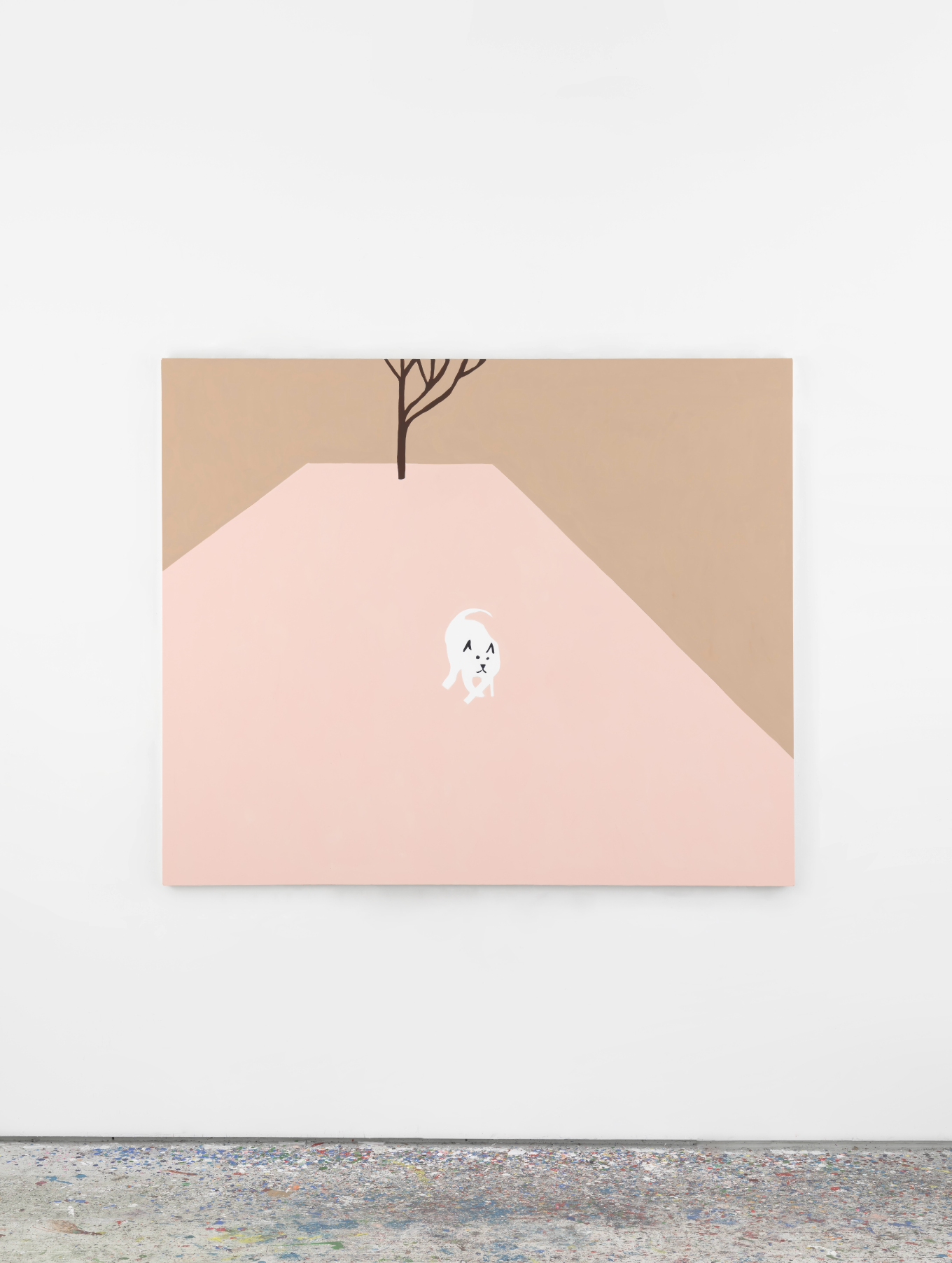
James Ulmer Nicky, 2025. Acrylic and flashe on canvas. 55 x 66 in.
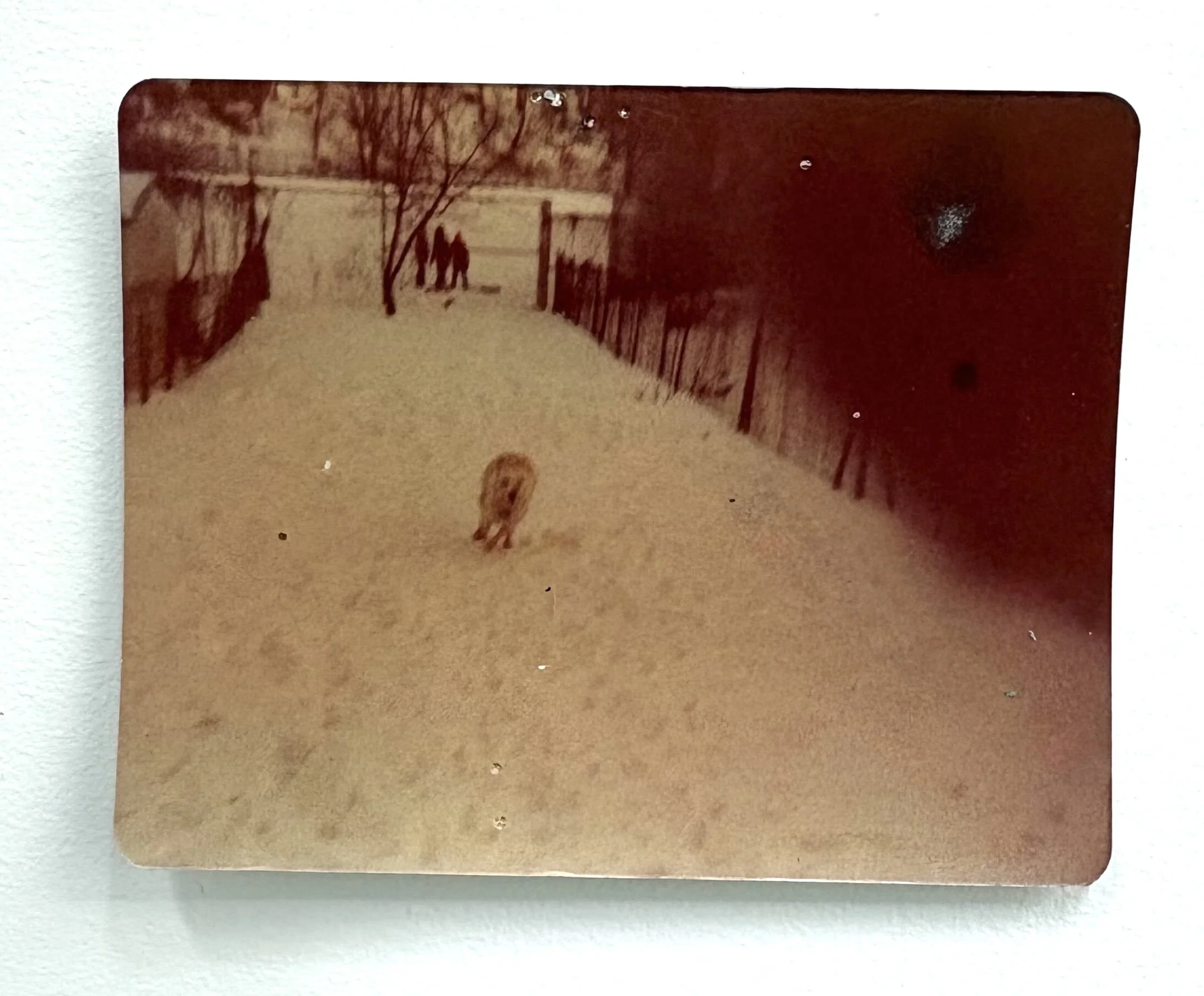
Found photograph of James Ulmer's family dog, Nicky.
IN THE STUDIO
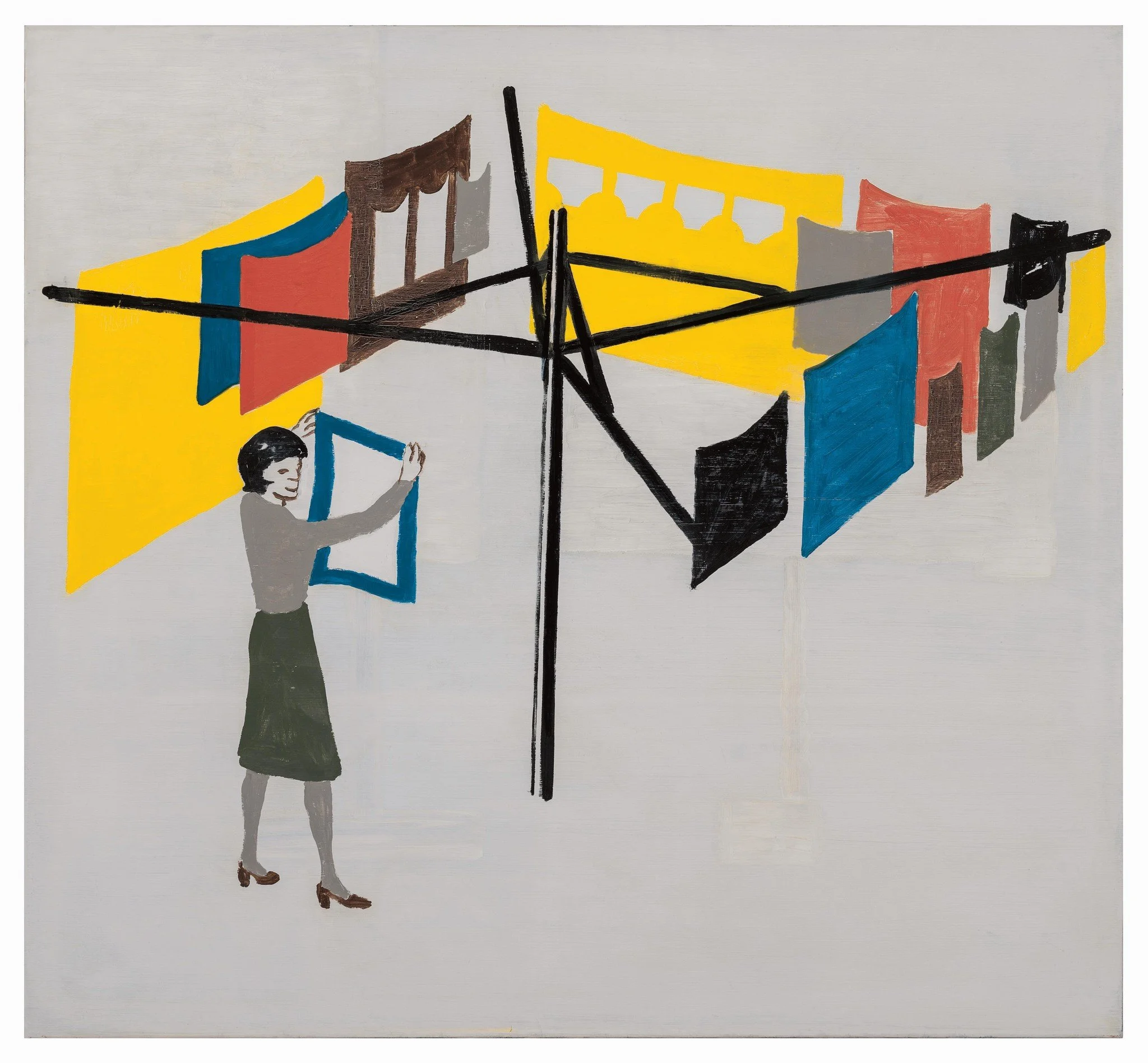
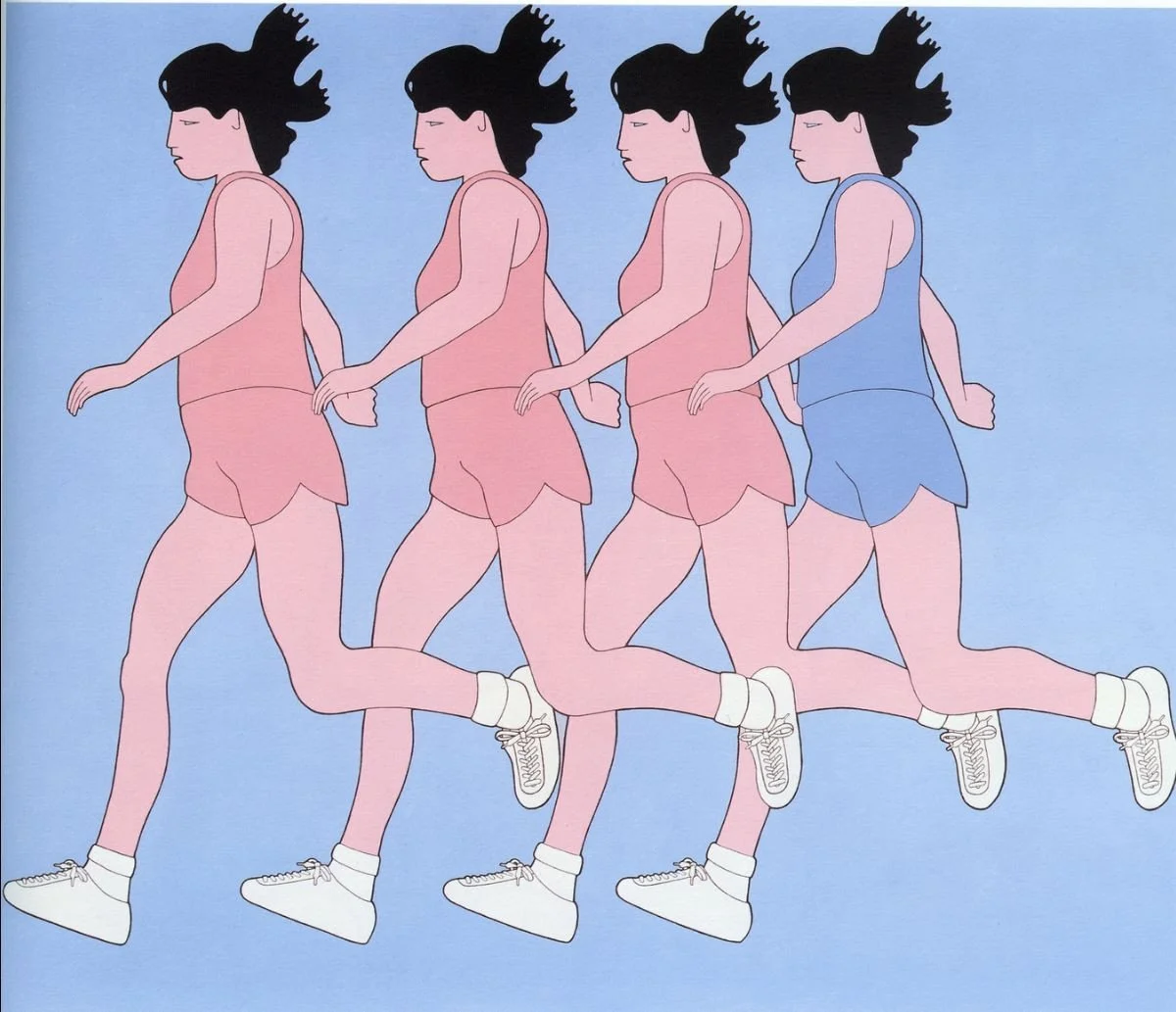
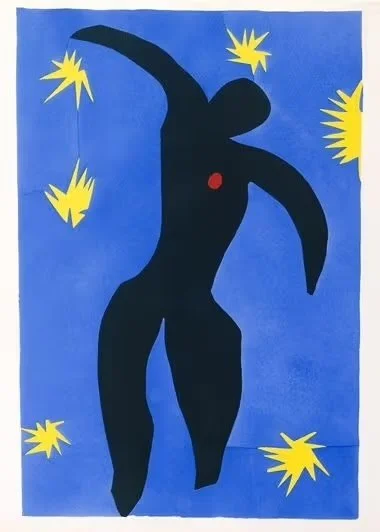
Ulmer's compositions hover between figuration and abstraction — recognizable, but reduced. Like Matisse's cut-outs and Walter Swennen's deadpan forms, he begins with drawings. After he works digitally to arrange and rearrange until a composition lands. The finished works call to mind John Wesley too — pristine and graphic from a distance, but up close the process surfaces: pencil lines at the edges of shapes, color shifts where he second-guessed himself. That tension — between the iconic and the handmade — is where the work lives.
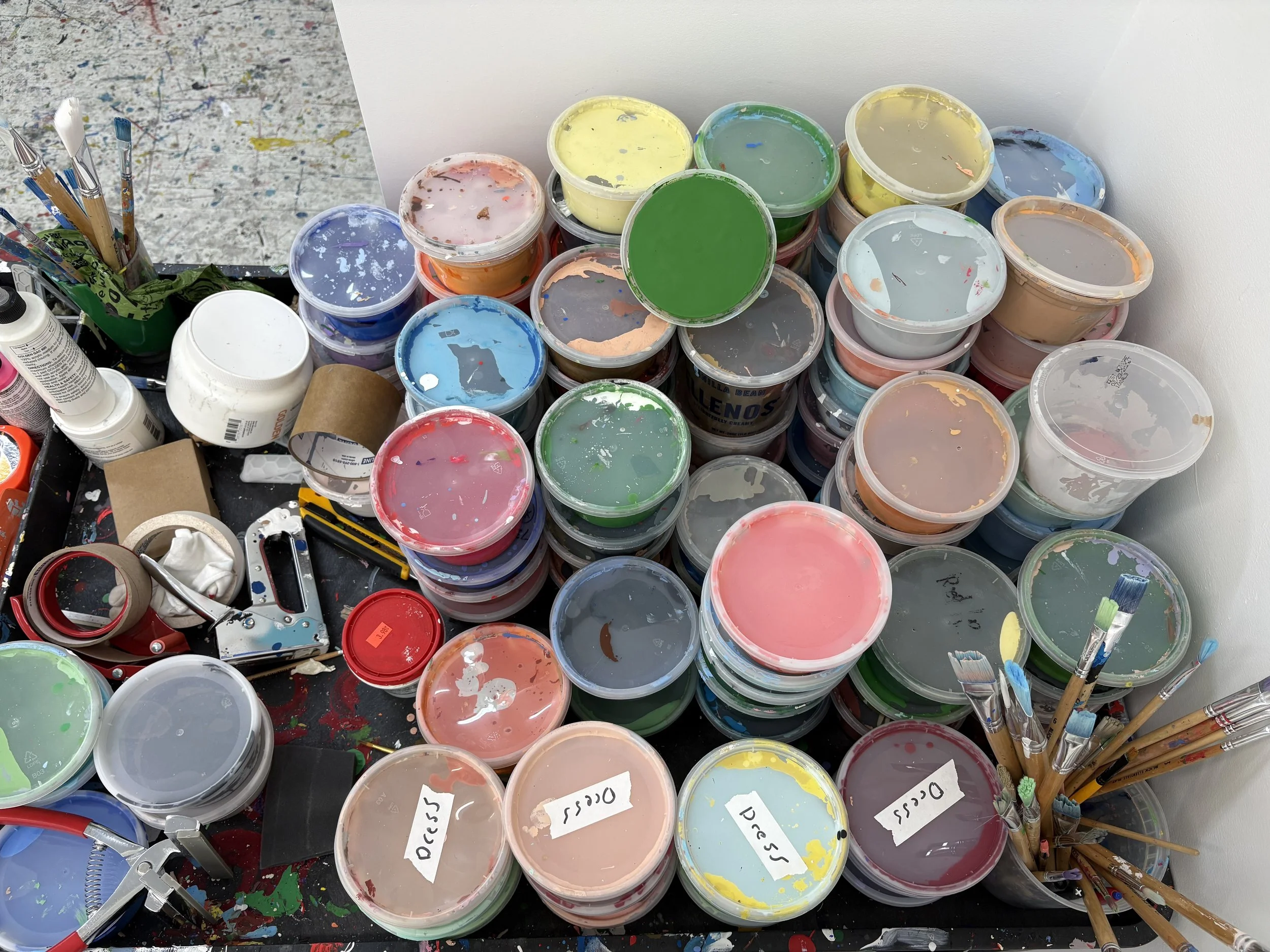
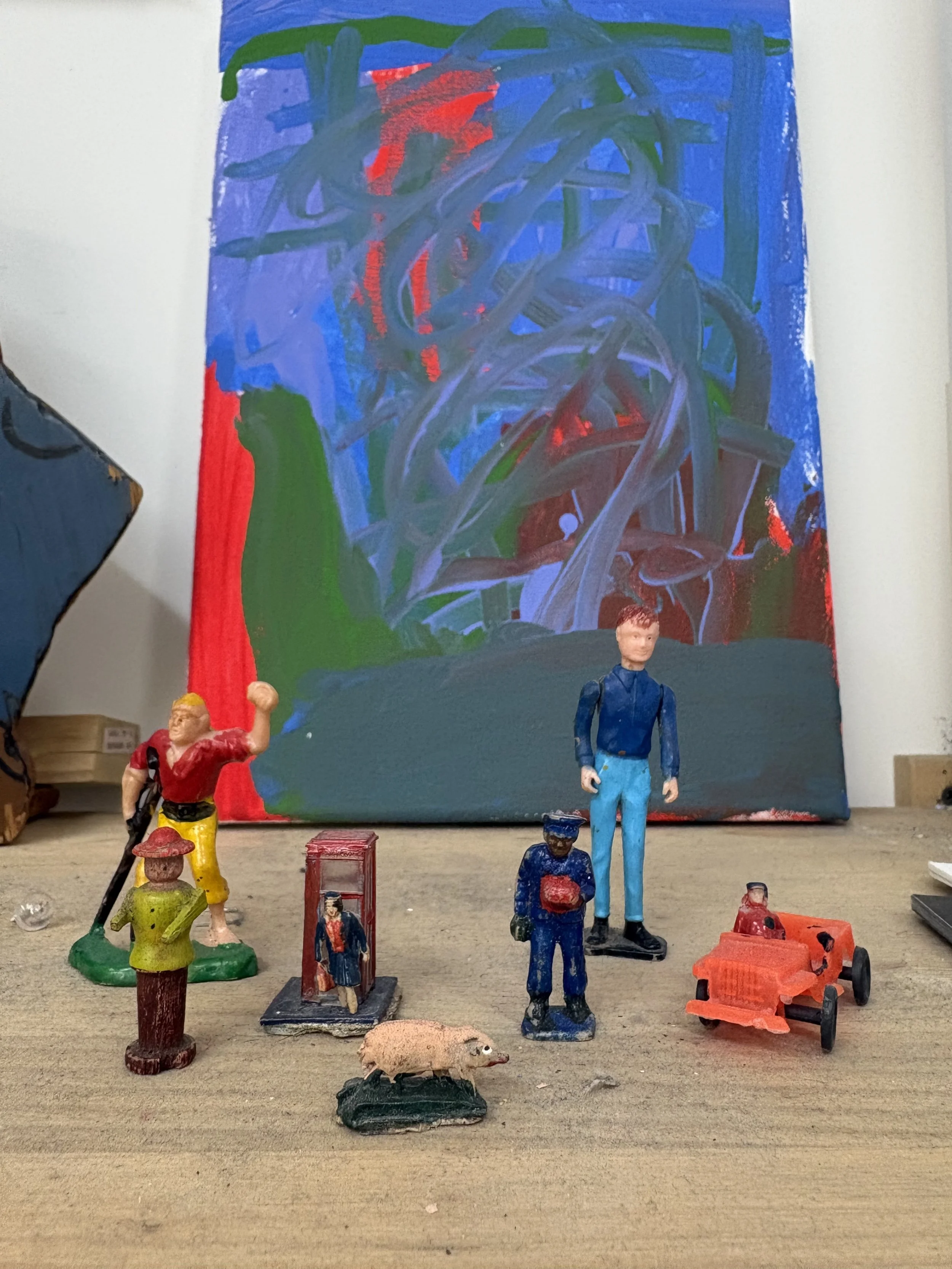
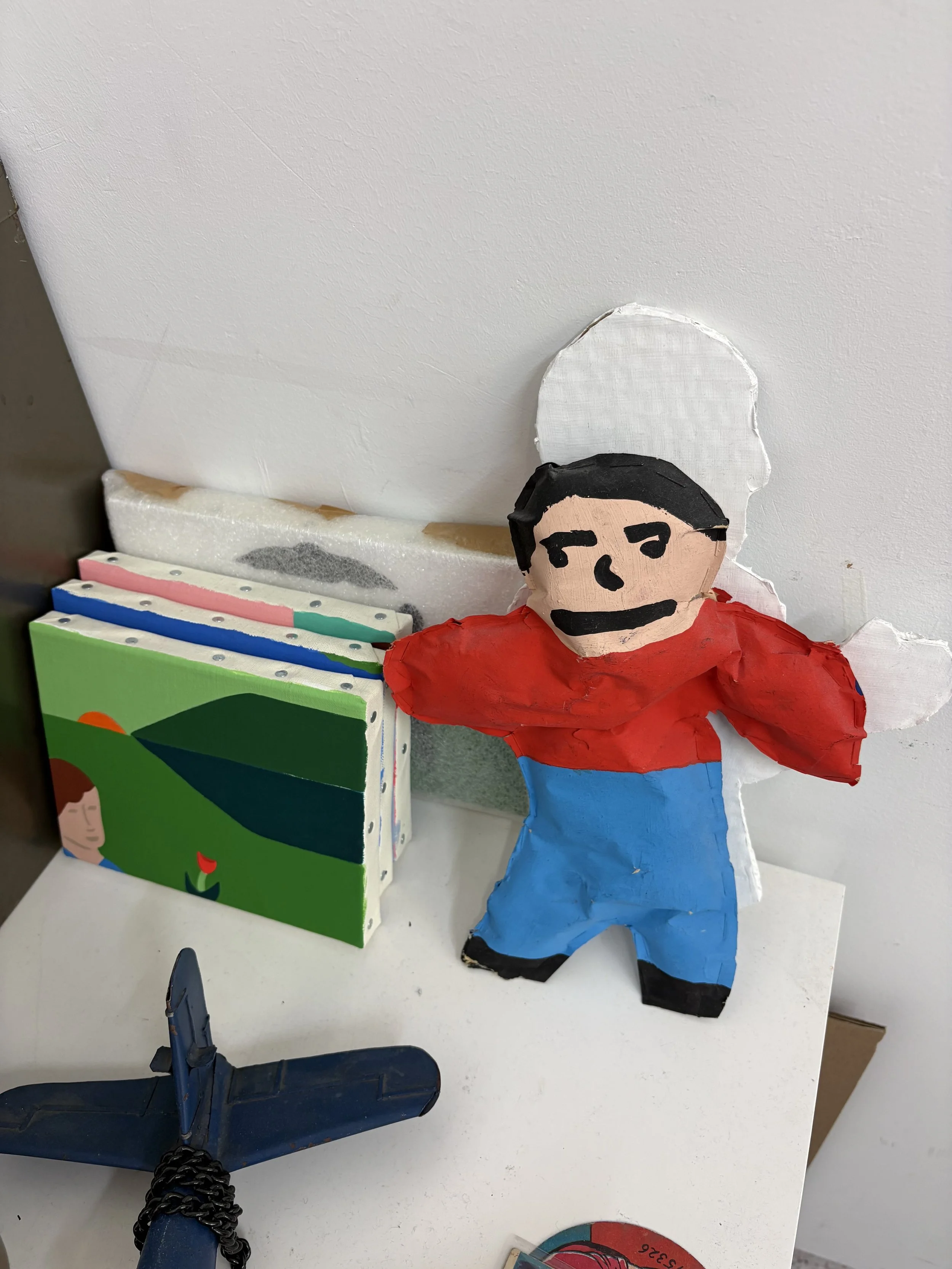
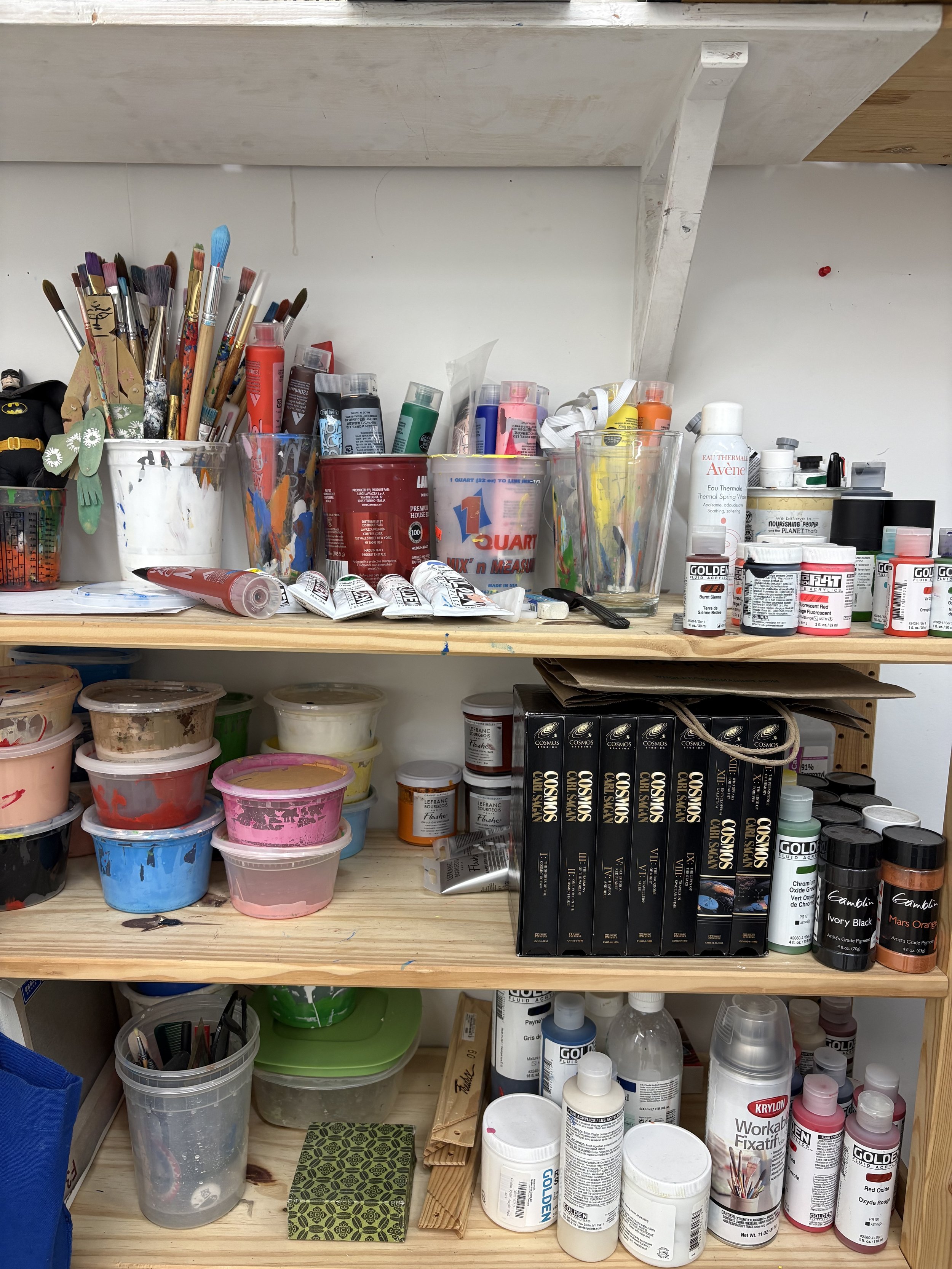
"I'm always looking to translate my ideas through a simple pictorial language. My inspiration comes from color and the connection between humans and nature."
--- James Ulmer
James Ulmer lives and works in Ridgewood, Queens, New York. He graduated from the University of the Arts in 2005 with a degree in Illustration and Design and was awarded the Thorton Oakly Medal by the Society of Illustrators. Ulmer was a member of Philadelphia’s legendary Space 1026 Collective from 2008-2011. His recent shows include solo exhibitions at The Pit, Los Angeles, CA (2024, 2022); V1 Gallery, Copenhagen, Denmark (2022); The Hole, New York, NY (2021); Marvin Gardens, New York, NY (2021); PmAm Gallery, London, England (2021); and JJ.Amala Gallery, Tokyo, Japan (2019). Ulmer’s work has been included in notable thematic shows including Good Pictures, Jeffrey Deitch Gallery, New York, NY (2020)and A Being in The World, Salon 94, New York, NY (2016). His work can be found in the public collection of the Ogunquit Museum of American Art in Maine and the Long Beach Museum of Art in California as well as numerous private collections worldwide.