EXHIBITING ARTIST: MARI EASTMAN
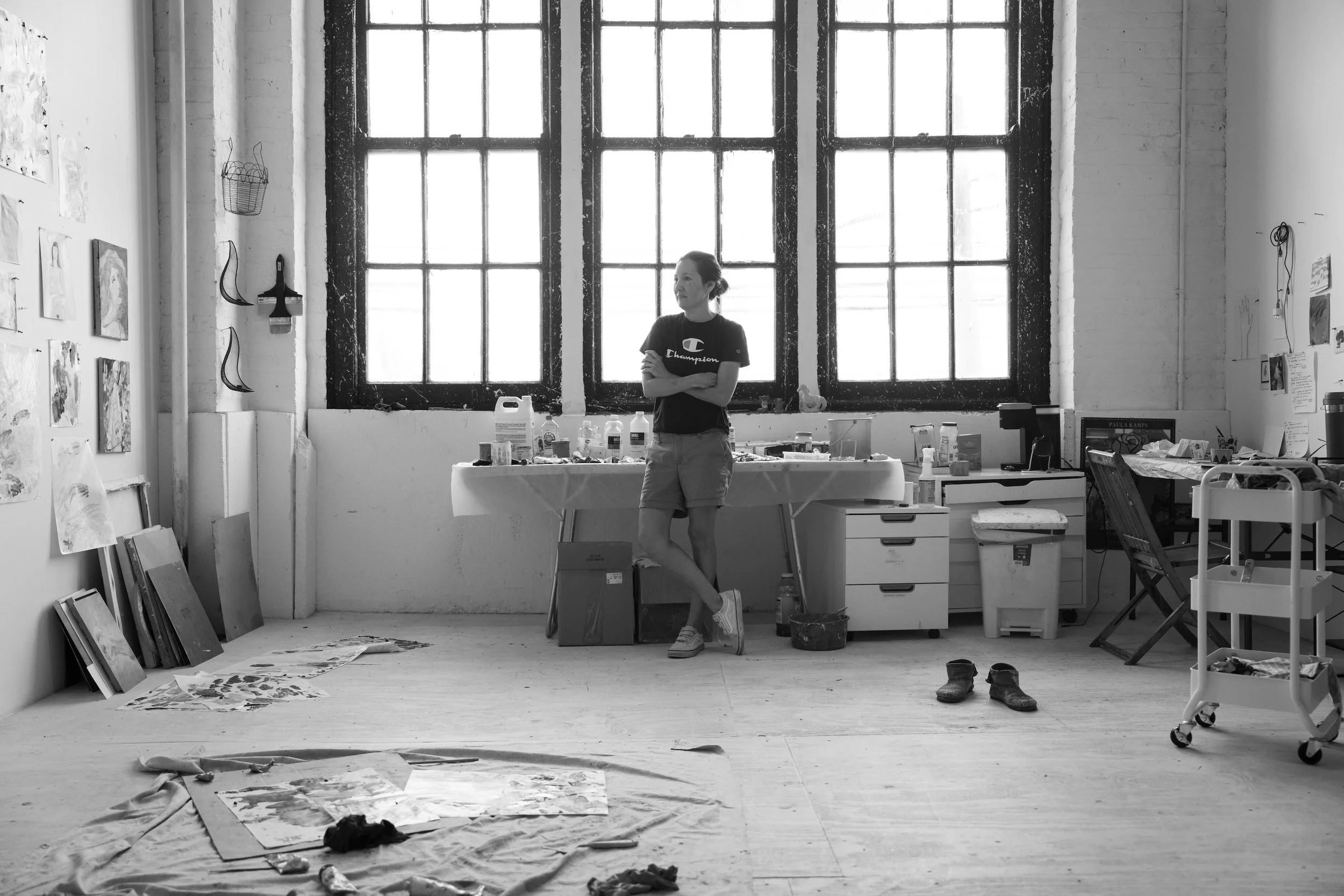
Mari Eastman in her studio
Mari Eastman (b. 1970, Berkeley, California) is a Chicago-based painter. She earned her BFA from Smith College and her MFA from the School of the Art Institute of Chicago, where she later taught before joining the University of Chicago's Department of Visual Arts. She has had more than 40 solo exhibitions in the US and Europe and her work has been included in group exhibitions at the Hammer Museum, MOCA Los Angeles, the Orange County Museum of Art, and the Berkeley Art Museum amongst others. Eastman will have a solo exhibition at The Pit in 2027.
Eastman builds her paintings out of found imagery such as fashion spreads, decorative objects, pictures of well-known figures, that she works over until it starts carrying something more personal. The paintings themselves tend to be small and intimate, with loose, deliberately unpolished brushwork that pulls the image out of focus and sands down its initial gloss. For Eastman, this is a way of pushing back against the weight of painting in art history. Gallery director Lauren Every-Wortman spoke with Mari Eastman about how that practice actually works.
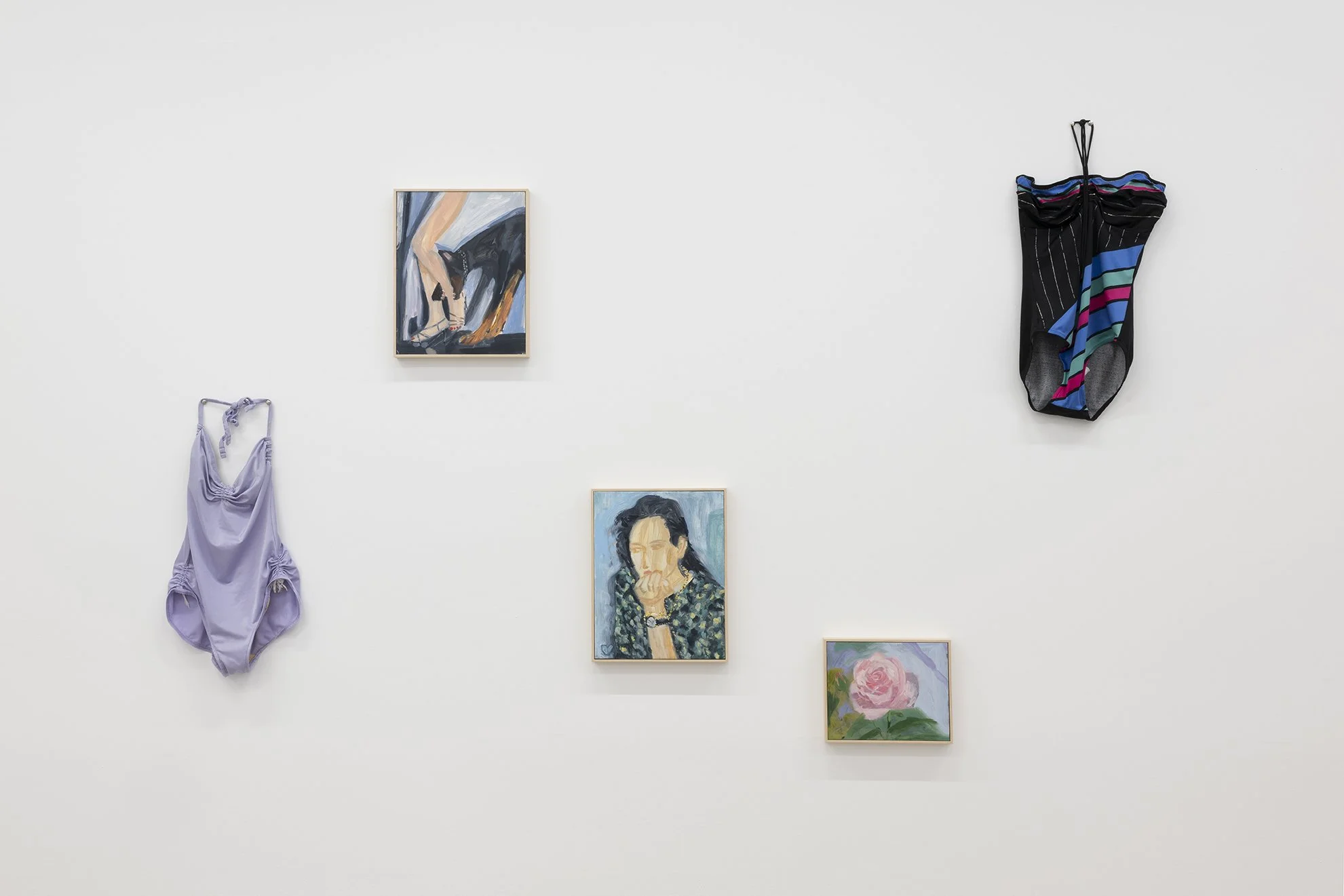
Exhibition view of Mari Eastman at Bombon Projects in Barcelona, Spain from 22 January – 22 March 2025.
You've spent decades as a painter and now as a professor at the University of Chicago. Can you go describe your training and is there a moment that felt like it defined your practice moving forward?
My training was practical and independent. I got my MFA at the School of The Art Institute in Chicago in the 90s. Typical of teaching at that time we were thrown in together, learned from each other as well as feedback that was less professionalized than today. There was little expectation of living off of artwork. In general I think that was good although sometimes I regret not taking more theoretical classes. They were available but I chose to take photography and filmmaking instead. For advisors I had Gaylen Gerber, Amy Sillman, Jerry Saltz, Robert Clarke-Davis, Kay Rosen, Barbara Rossi. I deeply regret not signing up for Jim Nutt. He had a reputation of being critical and I was scared, frankly. On a print-out in the hallway which listed advisor's names and how to get in touch with them for Jim it said: "Jim Nutt: will call you" and someone had written in block capitals next to that "an idiot". Although, I loved meeting him in the stairwell and chatting. I loved my time in graduate school. Maybe the biggest take-away was how incredible making art is, how fun, how freeing, affirming, you could do anything - you could take awkwardness, sadness, anything bad that had happened in the day and turn it to gold in the studio. Going to a non-art undergrad it was the first time I had been around so many artists and young people who wanted to be artists and I had a tangible sense of being in the right place at the right time, a feeling of "these are your people”.
Does teaching change how you look at your own studio decisions, or do you keep those two selves separate?
DEFINITELY. I learn so much from my students, how brave and hard-working they are, their way of seeing the world. They shake me out of my stodgy ways. I also learn from what students do that aren't so great: being defensive, not taking suggestions, i.e. letting fear guide behavior, things I recognize I do, and try to learn from that too. When the day is done, and in summer, I try to shut out my professional teaching side, the part of me that represents the institution and adults, and try to reclaim my irresponsible, romantic self but take some of the technical tips or information, self-awareness, or good models I learned that year and put it to use.
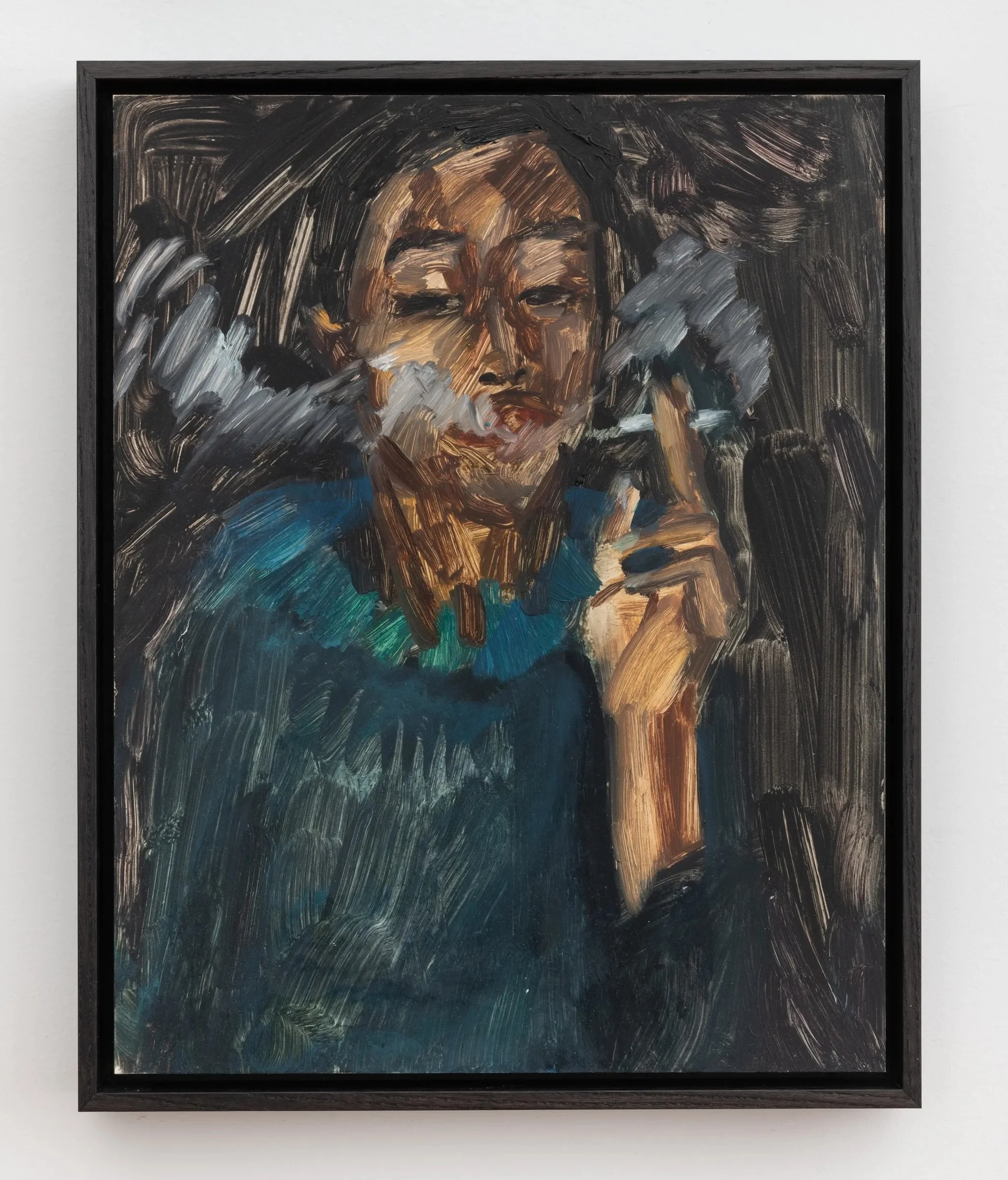
Mari Eastman, Smoker (After Yiadom-Boakye), 2024. Oil on panel. 14 x 11 inches. Exhibited at Broadway Gallery, New York in Mari Eastman's solo exhibition Fan Art from March 21 - April 20, 2024.
IN THE STUDIO
"In painting, I am a perfectionist, I AM laborious, so much so I despair at my inability to be easy. I have to paint quickly before I rework. The majority of my work, the paintings you don’t see, are under painted or over painted. 1 out of 5 times I hit it right. Sometimes I do include the labor, if it gives work a strangeness."
--- Mari Eastman
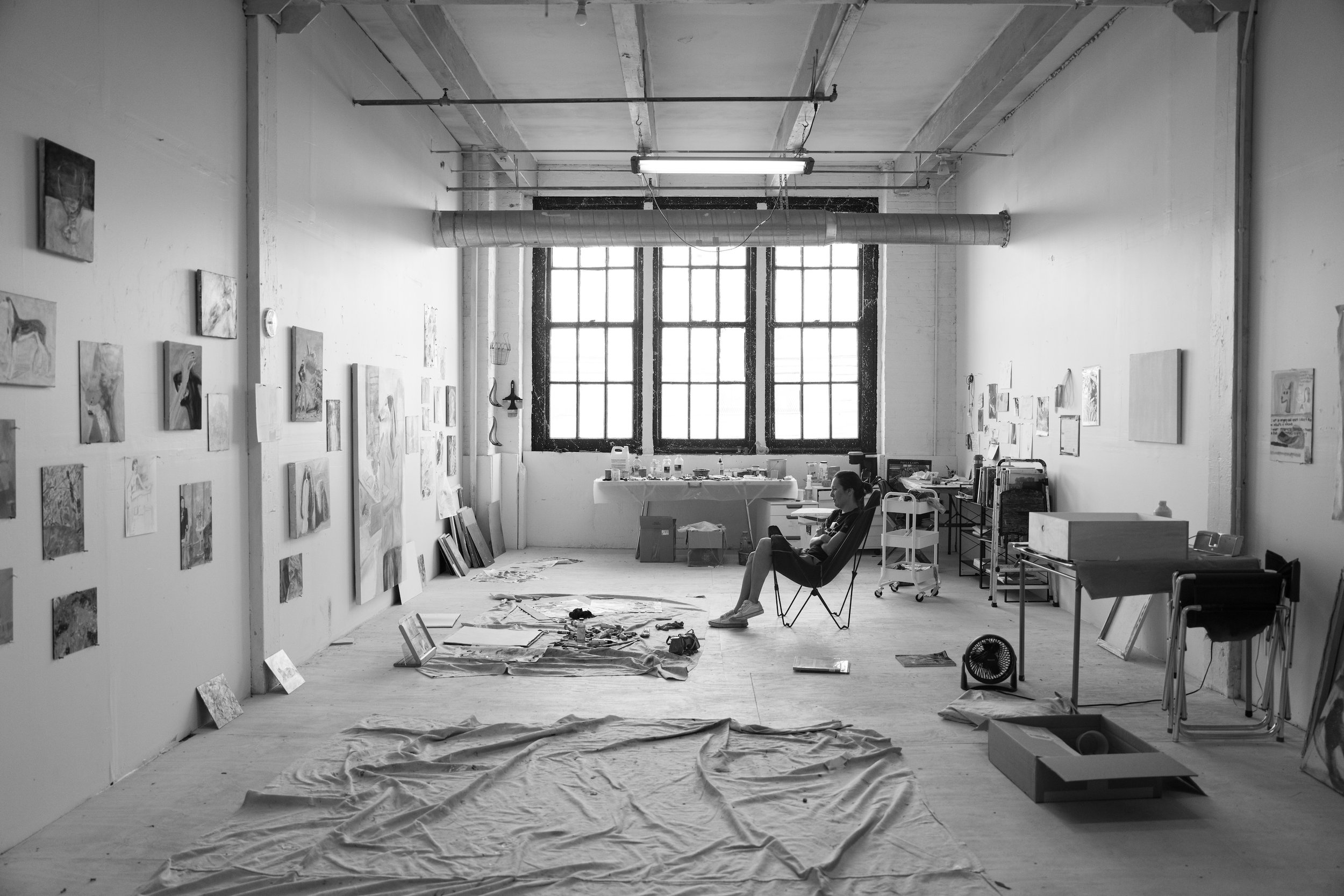
Critics keep reaching for words like "casual" and "unfussy" to describe your paintings, while also noting real deliberation underneath. Do you think ease and control are actually opposites in painting, or is that a false choice?
I am very aware of wanting to portray ease, to the point it can hamper the painting because sometimes, often, you have to buckle down and it's not easy. I heard Jill Mulleady say at a talk she gave at the Art Institute that she doesn't want people to look at her paintings and think of hard work and I identify with that. I think there is something class-based here, something bourgeois. There is nothing so tedious as a laborious painting - it smells of the barnyard or the factory. I am saying that not to judge those who work in farms and factories! I am saying that to admit to my bourgeois ideology! I want to depict ease. I love the impressionists, Manet especially. In Manet, unlike other impressionists (except for Morisot who is almost ALL struggle), his ease was combined with a struggle that he leaves for you to see, and it is almost embarrassing, like seeing someone's eyebrow makeup. (I’m always worried people can see my eyebrow pencil). In painting, I am a perfectionist, I AM laborious, so much so I despair at my inability to be easy. I have to paint quickly before I rework. The majority of my work, the paintings you don’t see, are under painted or over painted. 1 out of 5 times I hit it right. Sometimes I do include the labor, if it gives work a strangeness.
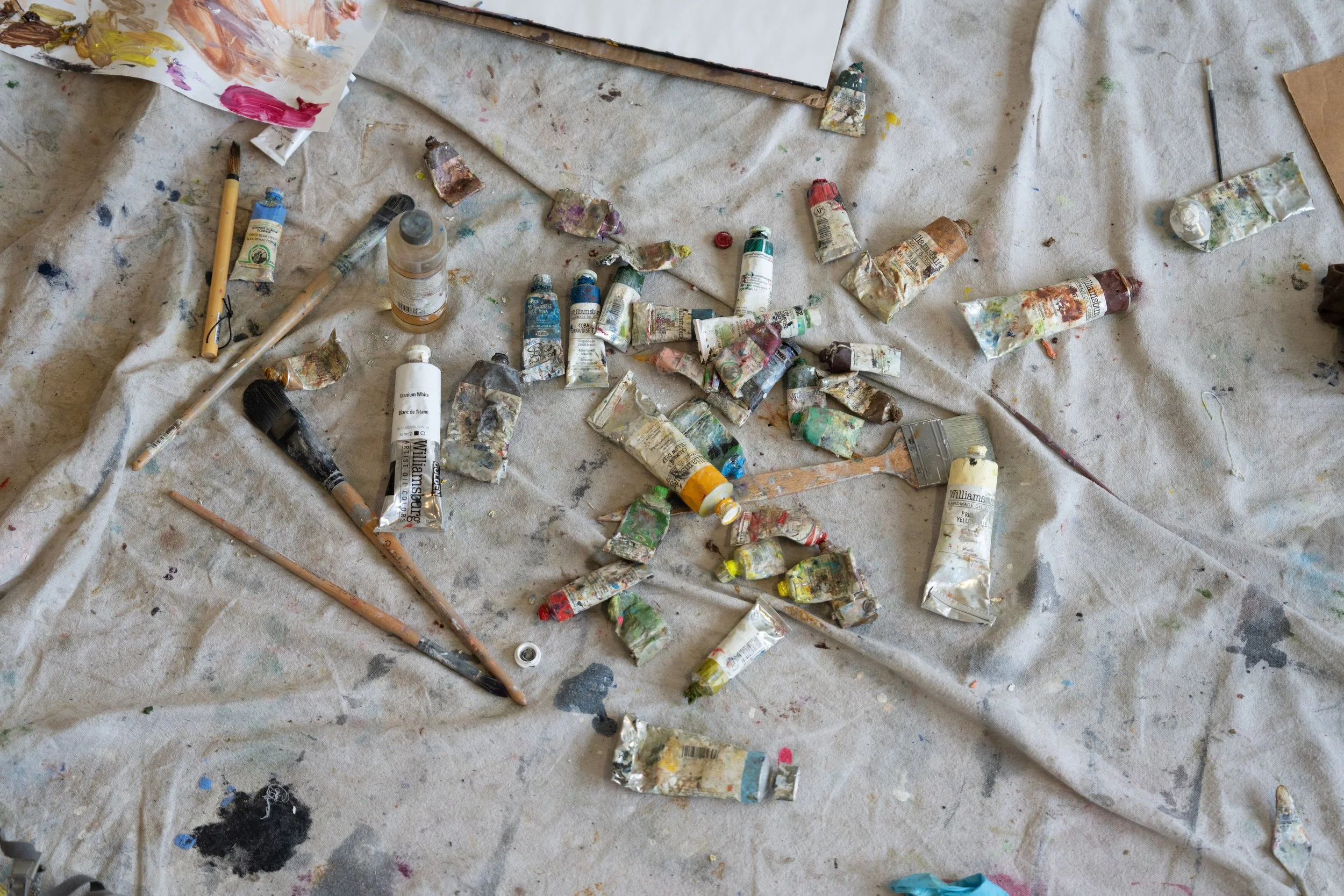
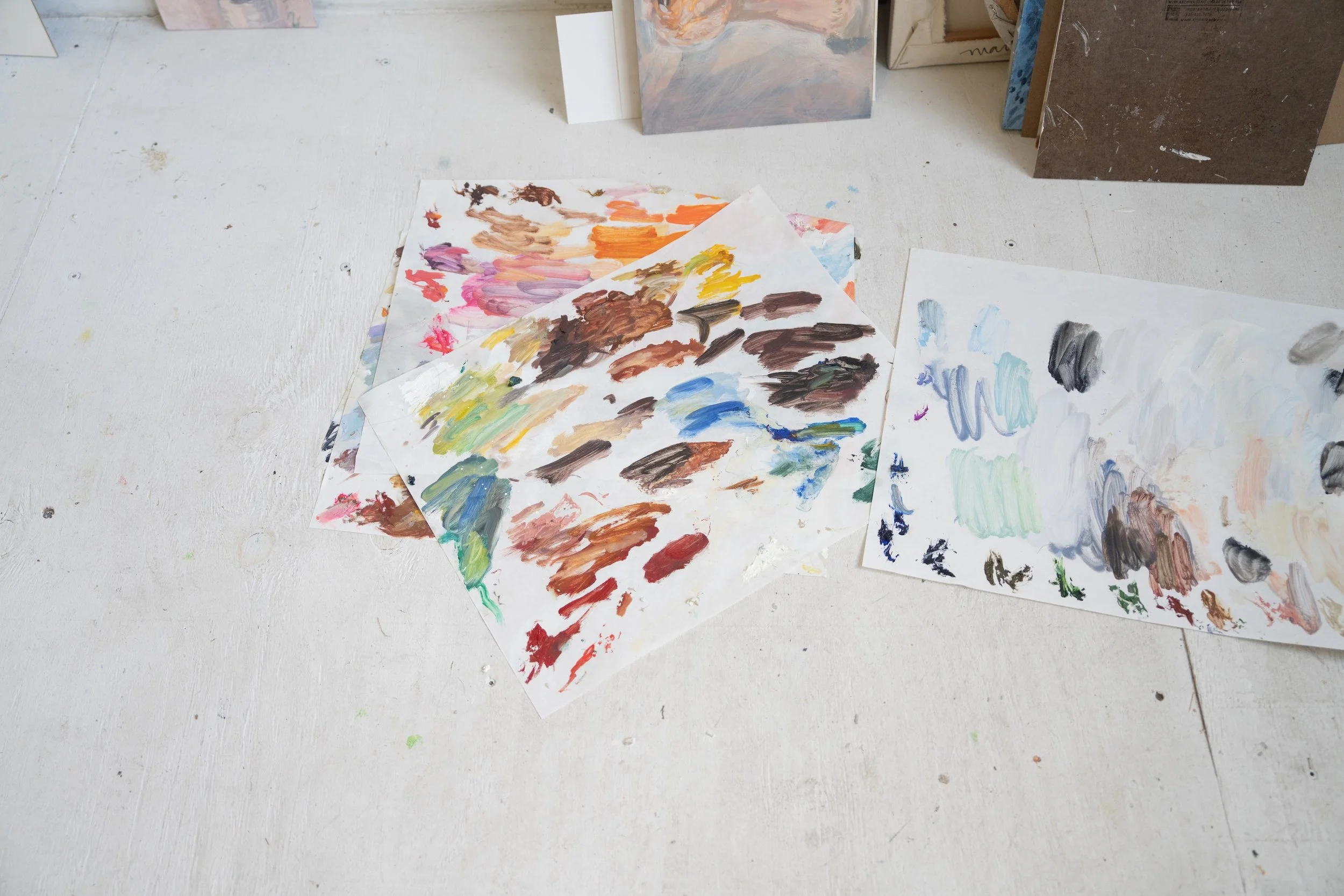
Your work moves between intimate small panels and pieces that extend onto the gallery wall itself. Does scale change what the painting is actually doing?
Oh yes. This is a whole essay in and of itself. I am naturally inclined to make small works that depict emotional staccato moments, the larger ones require more decisions, time, and stitching together of different ideas.
A lot of your source material (fashion imagery, decorative objects, other people's photographs) already carries someone else's intention before you touch it. Why do you feel the desire to replace that intention with your own? What does painting do to the images that photography can’t?
Each of these questions could be such a long answer - for the moment I will say: I'm not consciously trying to replace anything, I'm trying to enter the emotional world the photograph creates and live in that world as long as I can, like entering Narnia through the wardrobe. Painting allows me to be in the reality the photographer has created, to possess it, more so, and in a more satisfying way than looking can. I suppose it's vampiric - like extending an emotional state by listening to a song on repeat. Also, it is a form of mastery - technical mastery, which returns to me the agency the photograph has suggested, or stolen.
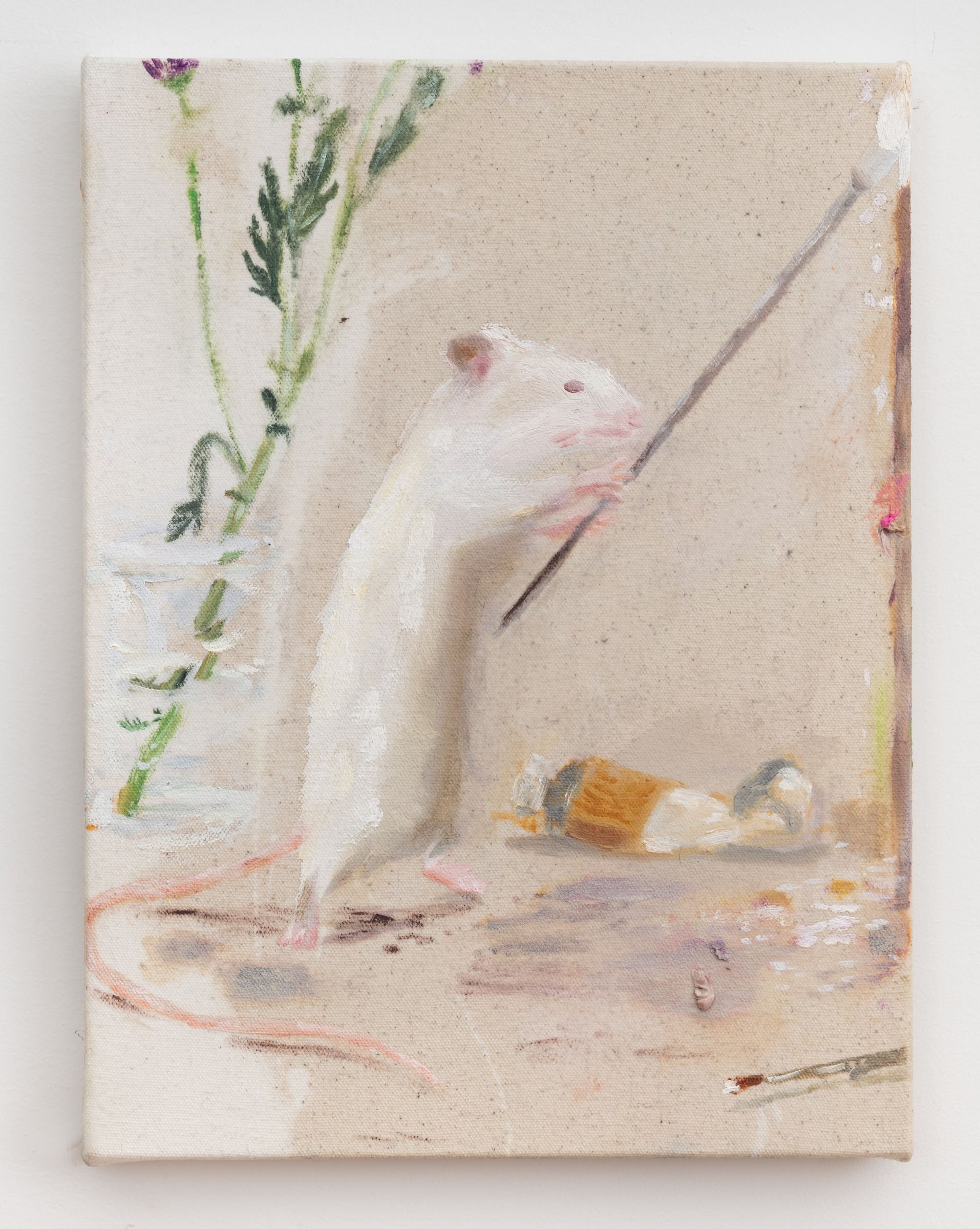
Mari Eastman, Studio Assistant 2024. Oil on bleached canvas. 14 x 11 x .5 inches. Exhibited at Broadway Gallery, New York in Mari Eastman's solo exhibition Fan Art from March 21 - April 20, 2024.
Can you describe your physical process with a painting? Are you starting from sketches or more loose?
I make drawings as prep. Recently I started sketching directly on canvas. Works on yupo and panel are painted without sketches.
When you paint from a photograph how much of the final image is really about that source, and how much is about what your hand does once you stop looking at the reference?
I don’t stop looking at the reference.
Is speed a discipline you impose on yourself, or is it just how you've always worked?
Once the feeling is gone, it's hard to keep the mood of the painting, so I have to work fast.
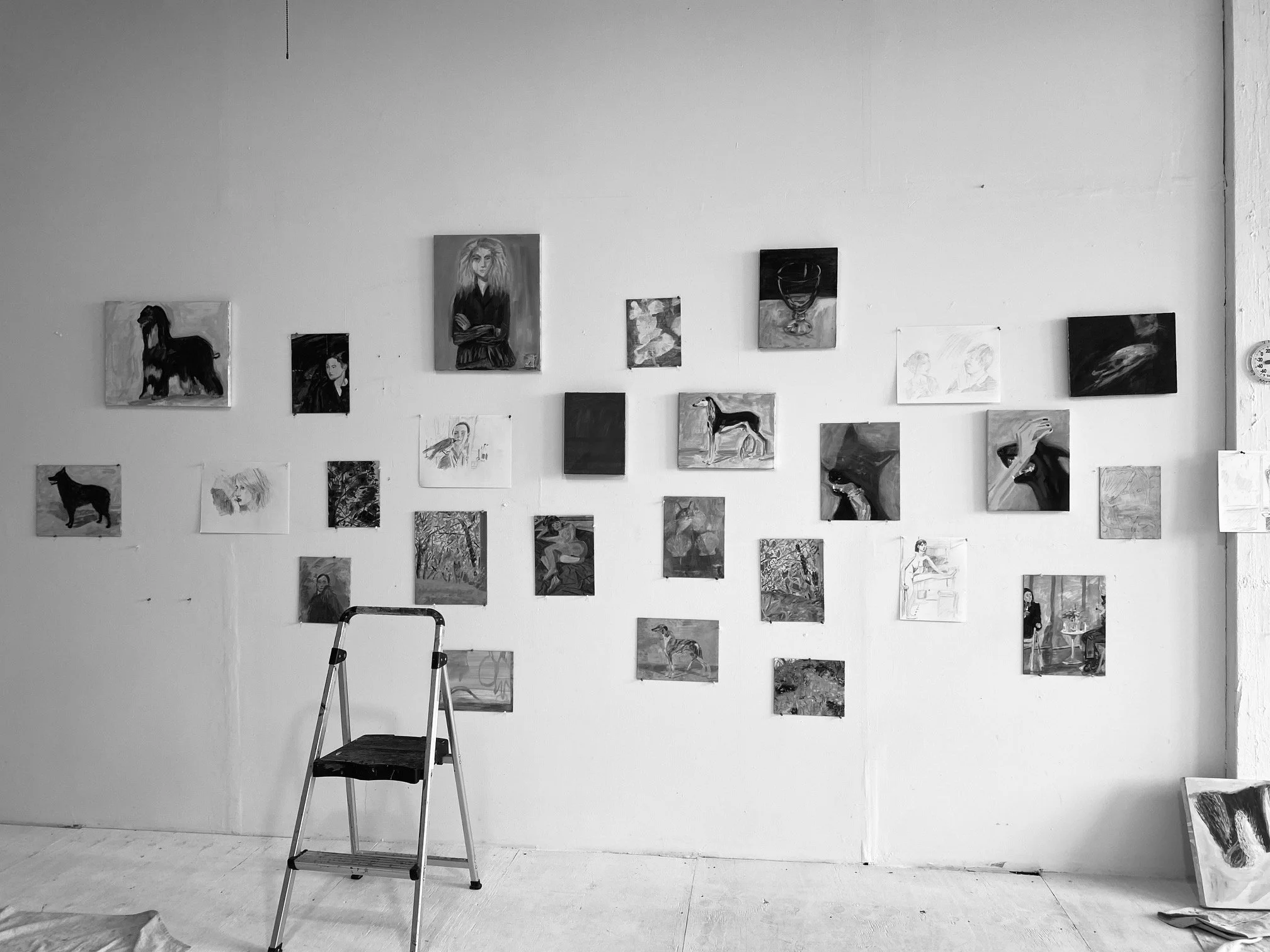
Image of Mari Eastman's studio wall
Your subjects range from homages to other painters, to runway models, to wild animals. What actually links those choices, a feeling, a formal problem, or something more private?
All of the above.
After almost thirty years of showing this work, is there a question about painting you still don't have an answer to — one that keeps bringing you back to the process?
YES. WHEN WILL I GET GOOD AT THIS SHIT????!!!
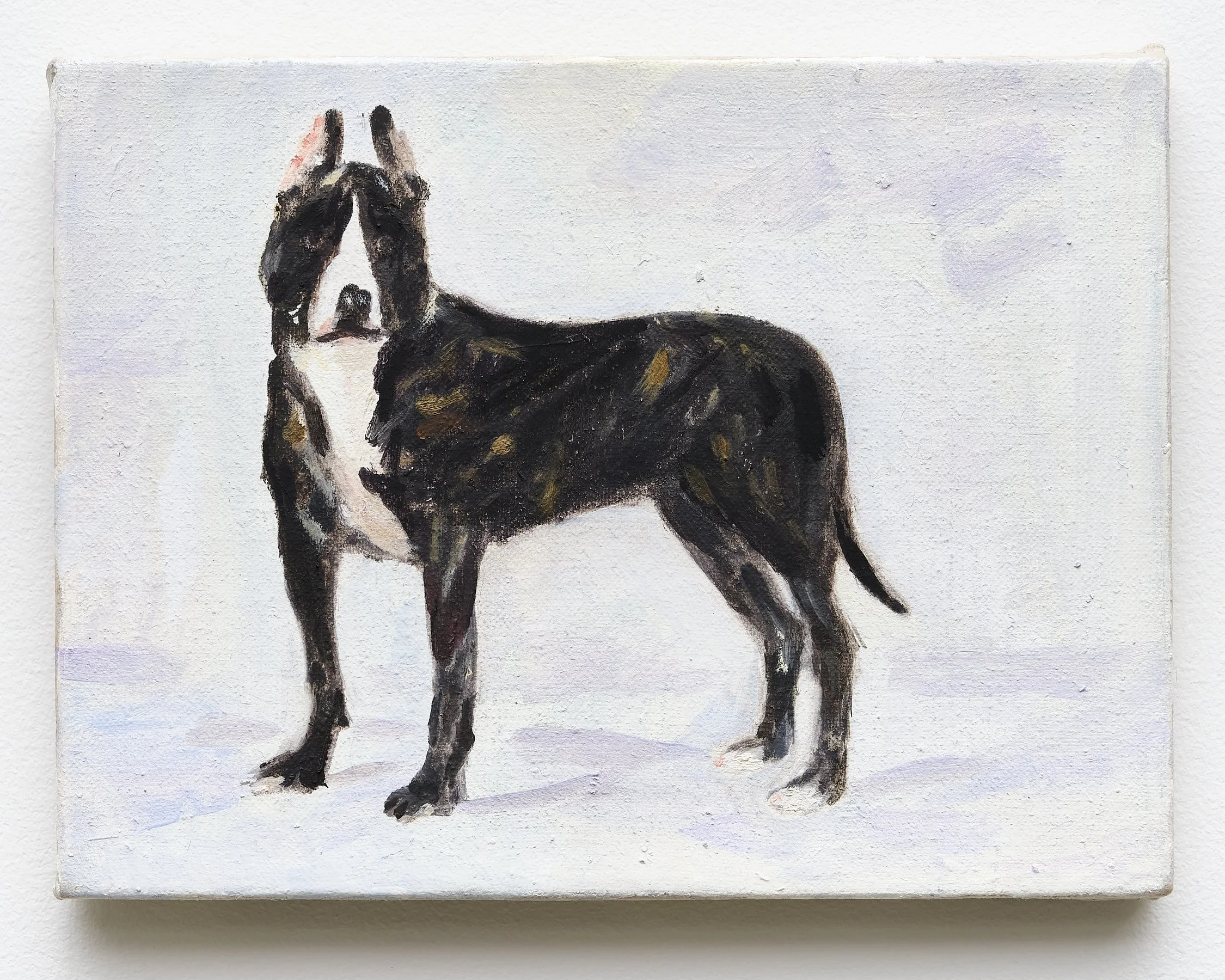
Mari Eastman American Staffordshire Terrier, 2022. Oil on canvas. 9 x 12 in. Photography by Chris Hanke.
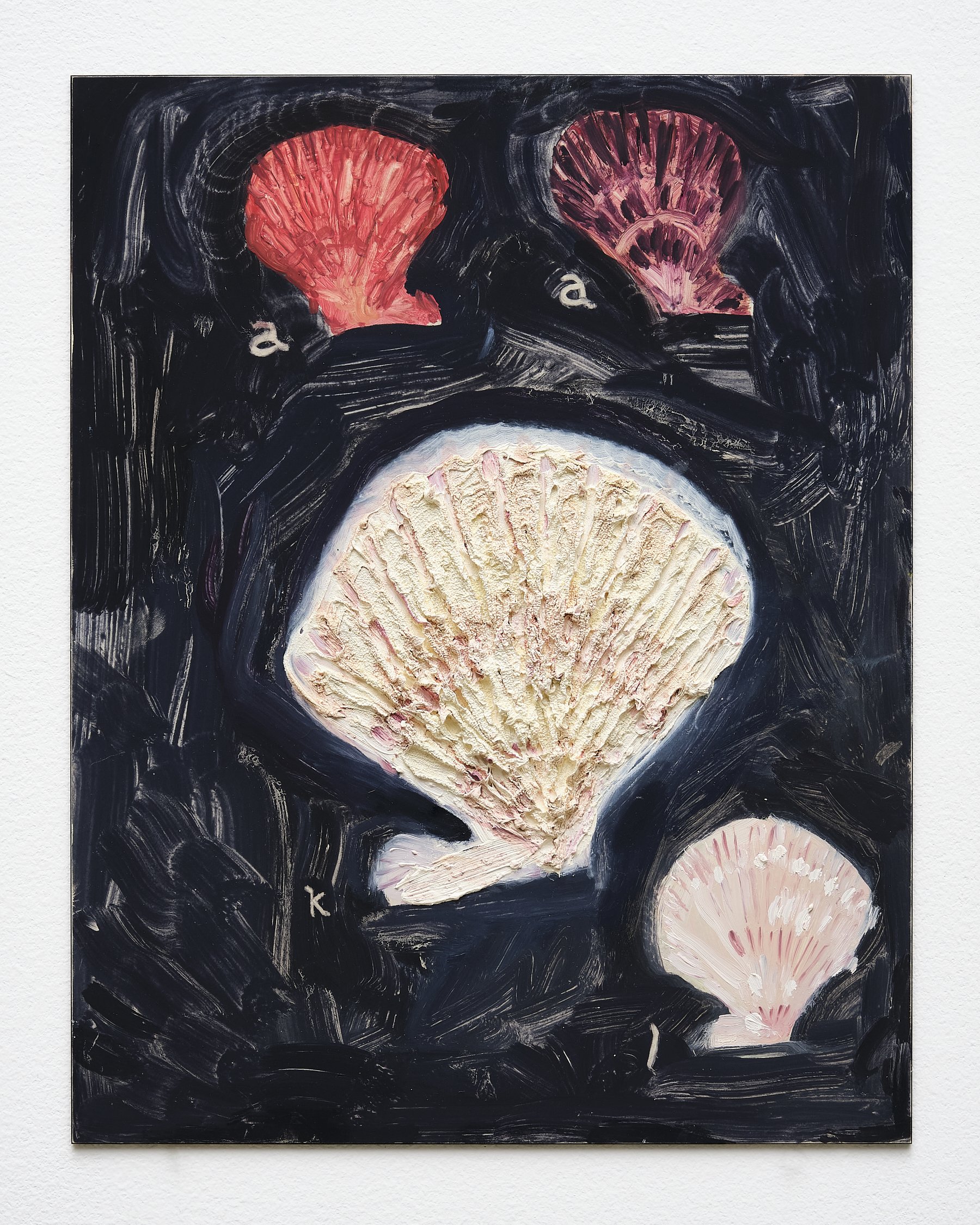
Mari Eastman Shells, 2023. Oil and wax on panel. 14 x 11 in. Photography by Chris Hanke.
Mari Eastman (b.1970, Berkeley, CA) holds an MFA from the School of the Art Institute of Chicago and a BA from Smith College. She has been in exhibitions at the Hammer Museum, Los Angeles, the Berkeley Museum of Art, and had solo shows at Los Angeles Contemporary Exhibitions, Sprüth and Magers Projekte, among others. Recent solo shows include Broadway in New York, The Green Gallery in Milwaukee and Bombon Projects in Barcelona, Spain. Her work has been reviewed in the New York Times, Artforum.com, and featured in Contemporary Art Daily. Eastman lives and works in Chicago and is on the faculty at DoVA at the University of Chicago.