Maryam Yousif
Above Earth, Under The Rays of the Sun,
Maryam Yousif: Above Earth, Under The Rays of the Sun
May 9 - June 17, 2026
The Pit is pleased to present Maryam Yousif: Above Earth, Under The Rays of the Sun, a solo exhibition of new ceramic sculptures opening May 9, 2026. There will be opening events on Saturday May 9 with an artist walkthrough at 2pm and a reception from 3-5 pm. The exhibition is on view through June 17, 2026.
Yousif’s third exhibition with the gallery takes its title from the inscription on a curse tablet found in the royal tombs of the Assyrian queens at Nimrud, where the phrase describes the mortal realm: the place of people who live above the earth, beneath the sun. Working from this ancient text as a point of departure, the exhibition brings together large-scale and intimate works that move between funerary artifact and living ornament, between what is carried out of a place and what endures. Maryam Yousif was born in Baghdad, Iraq in 1985, where she grew up surrounded by her mother’s paintings and handmade objects, emigrating to Canada at the age of 10.Yousif works primarily in clay, producing figurative sculptures that occupy a space between ancient devotional objects and contemporary folk art. Her signature “Habibti” figures (Arabic for “sweetheart” or “my love”) are modeled on Sumerian votive statues, the small stone stand-ins placed inside temples by worshippers who could not enter themselves. Her lustrous, layered glazes fuse the exuberance of Bay Area Funk ceramics with the ancient visual traditions of her homeland. Running through the work is a persistent question: what it means to leave a place, potentially forever, and what do we carry with us when we do so?
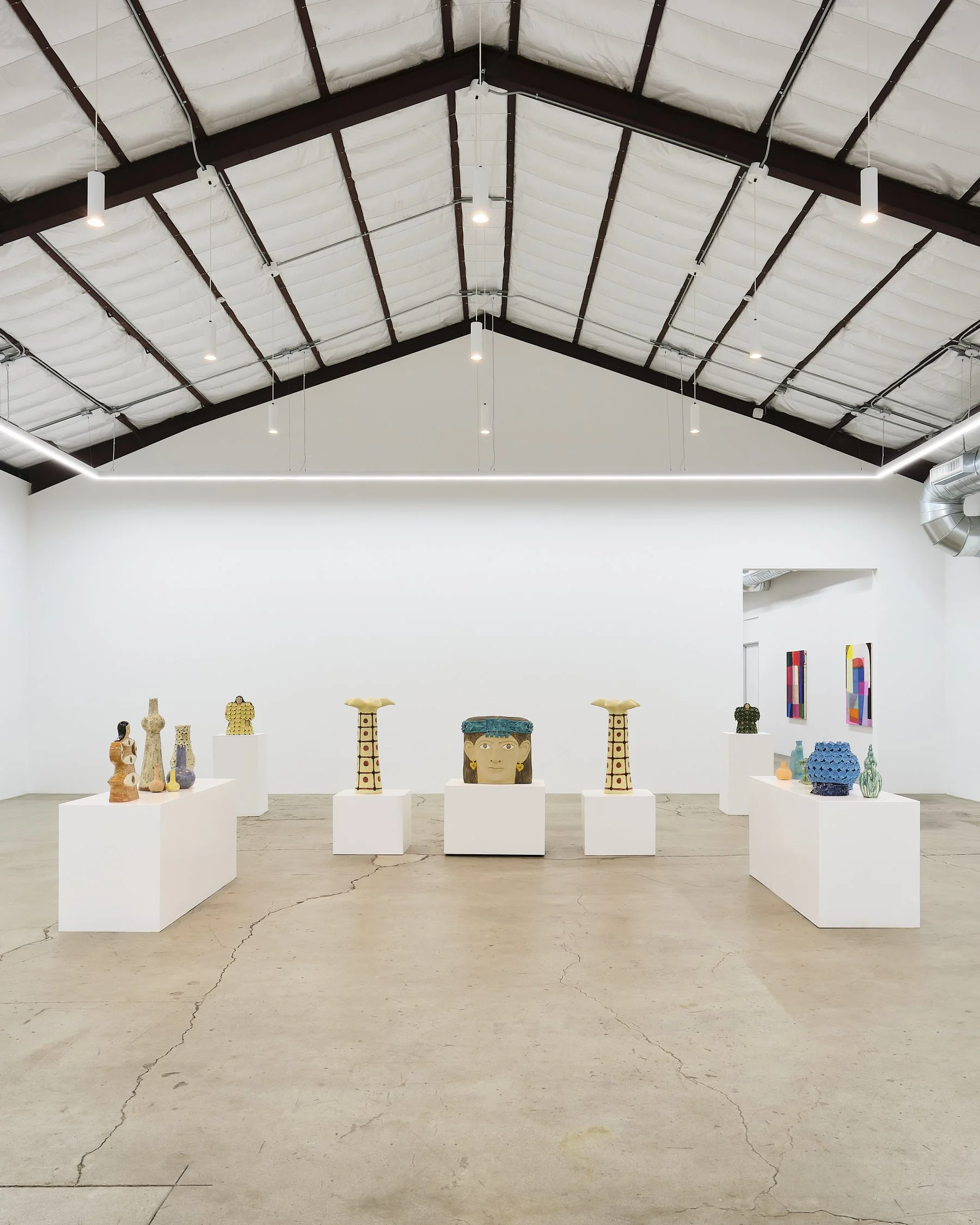
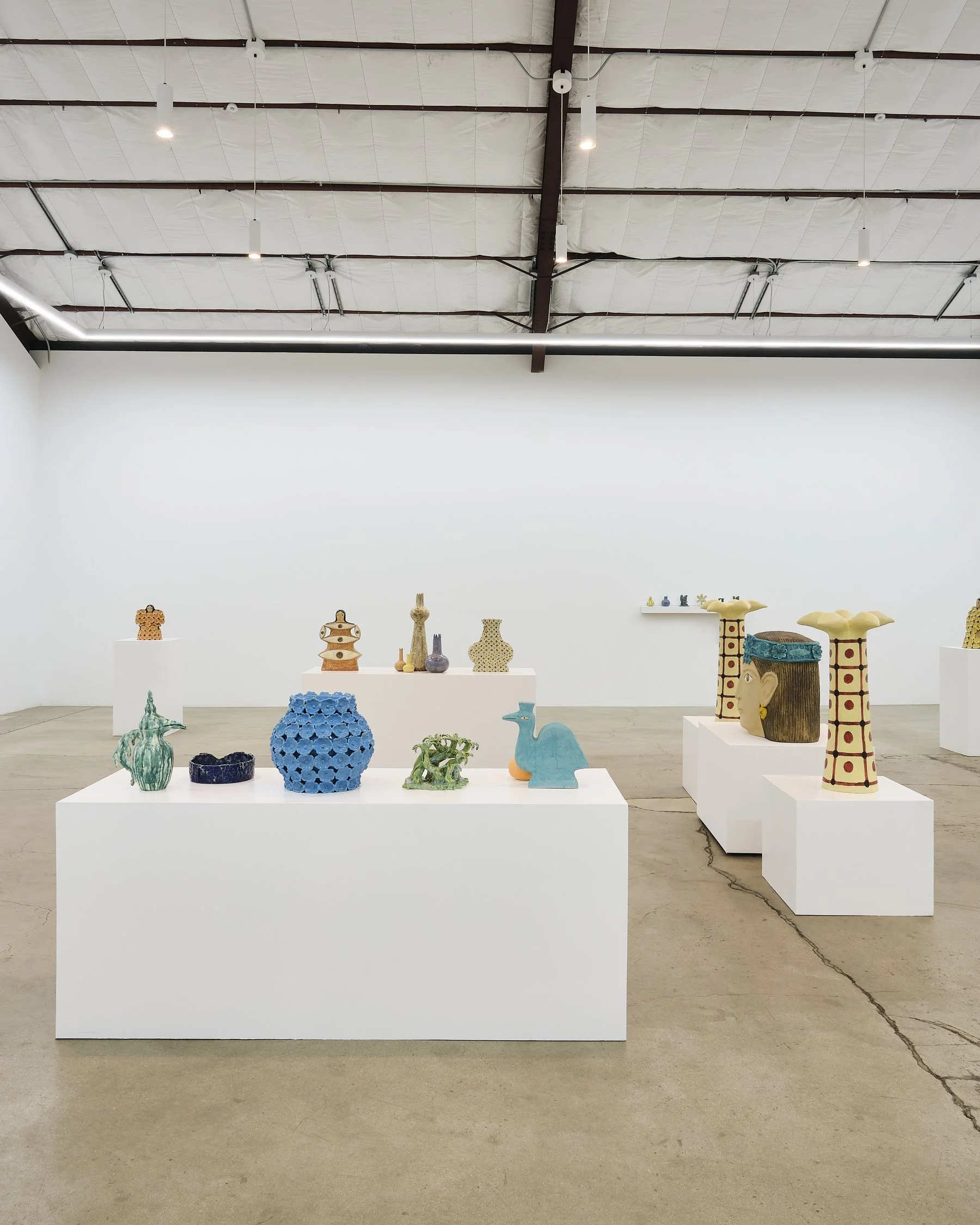
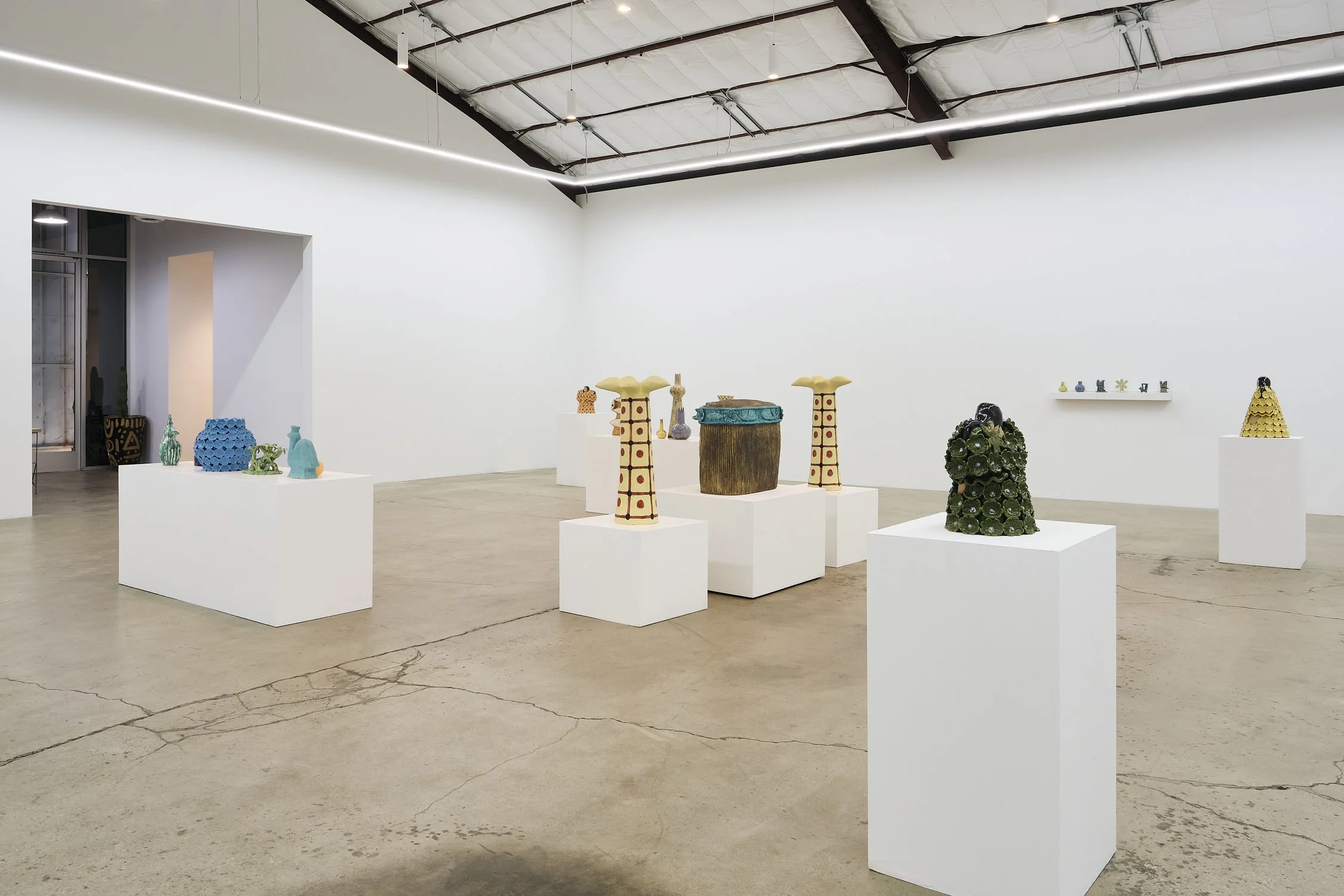
The centerpiece of her new exhibition, “Head of Female Figure with Deportation Earrings” is a monumental ceramic head, approximately 23 inches tall and modeled after an 8th-century BCE ivory female figure excavated from the Burnt Palace at Nimrud, now in the collection of the Metropolitan Museum of Art. Like its ancient source, Yousif’s head is adorned with a richly worked diadem with her interpretation incorporating rosettes, pomegranates tendrils, and rib shaped earrings inspired by her grandmother’s that were brought back as a gift from her grandfather upon his return after being deported to Iran in the early 80s during the Iran Iraq war. The back of the head carries a boat scene from the marshes of Iraq, a landscape her mother has painted throughout her life and one that holds deep folkloric resonance in Iraqi visual culture. Flanking this central figure in the installation are a pair of tall palms, each about 33 inches high, their shafts decorated with a grid of red and black dots echoing ancient decorative patterning found on a 9th century oil lamp.
Elsewhere in the exhibition, Habibti figures in yellow, green, and tangerine are each swathed in hand-formed ceramic rosettes, their faces composed and directly above the accumulated blooms. Various objects – a teal Dallah with a cascading drip glaze, a stone-like bird vessel paired with a small pomegranate bottle, small harps, Pazuzu figures, and pomegranates in various glazes – populate the room like an inventory of talismans.
“Above Earth, Under The Rays of the Sun” is an exhibition about the objects that travel with us and the ones we leave behind. The royal tombs at Nimrud, discovered by Iraqi archaeologists in 1988, yielded extraordinary jewelry, resplendent vessels, and a clay tablet inscribed with a curse threatening those who would disturb the queens’ rest. For Yousif, this curse text resonates beyond its archaeological context, touching on the superstitions of her Iraqi childhood and, the protective power of the evil eye that recurs throughout her work, and the deeply human impulse to surround the dead with beautiful things. To recreate these funerary objects in clay, she writes, is “to forge a new sense of life.” Personal memory and deep history fold into one another throughout.. The exhibition extends Yousif’s singular territory in contemporary American ceramics – a practice where Bay Area Funk’s irreverence and material freedom meet the visual legacy of ancient Mesopotamia, held together by the lived experience of being in diaspora.
For more information please email info@the-pit.la
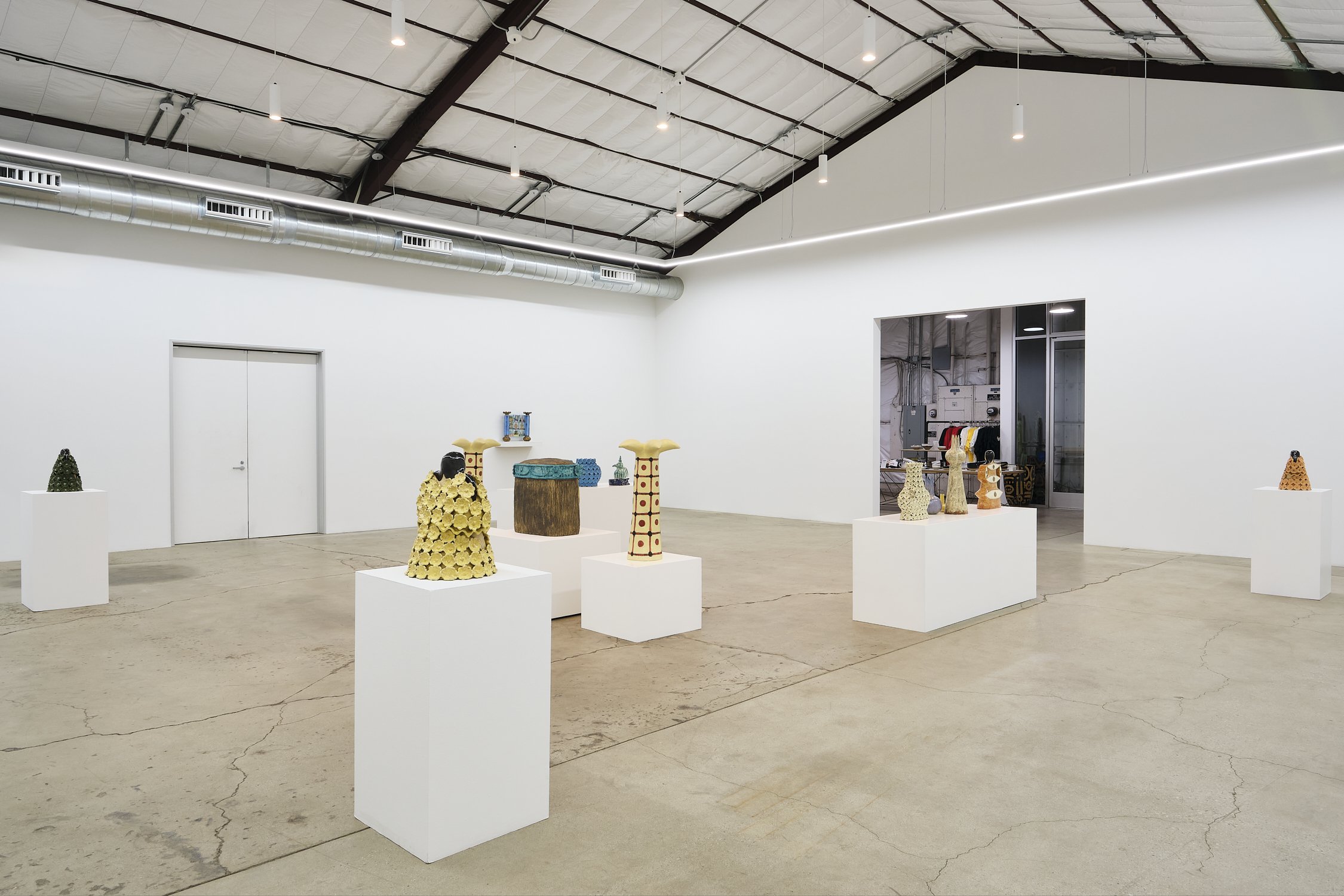
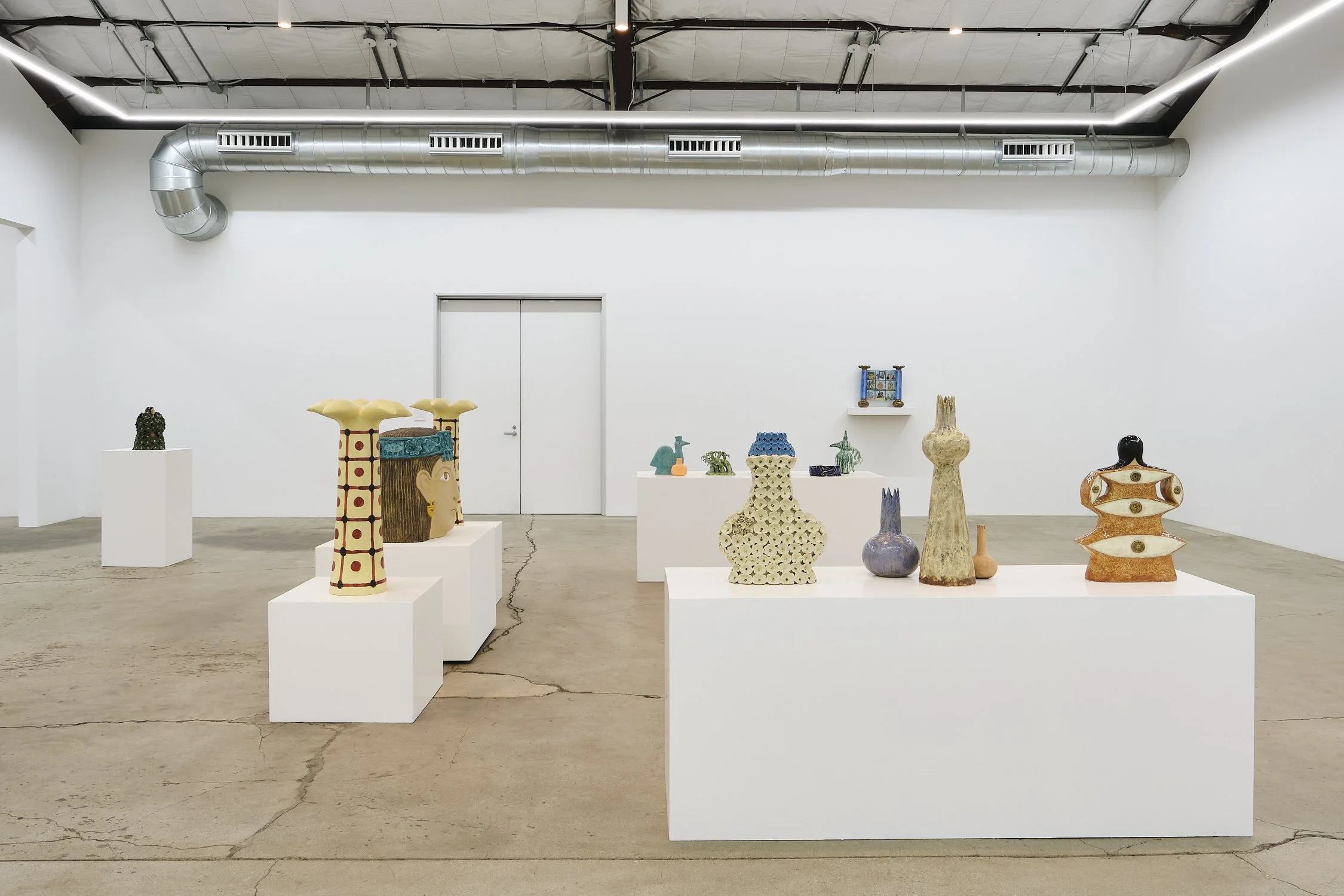
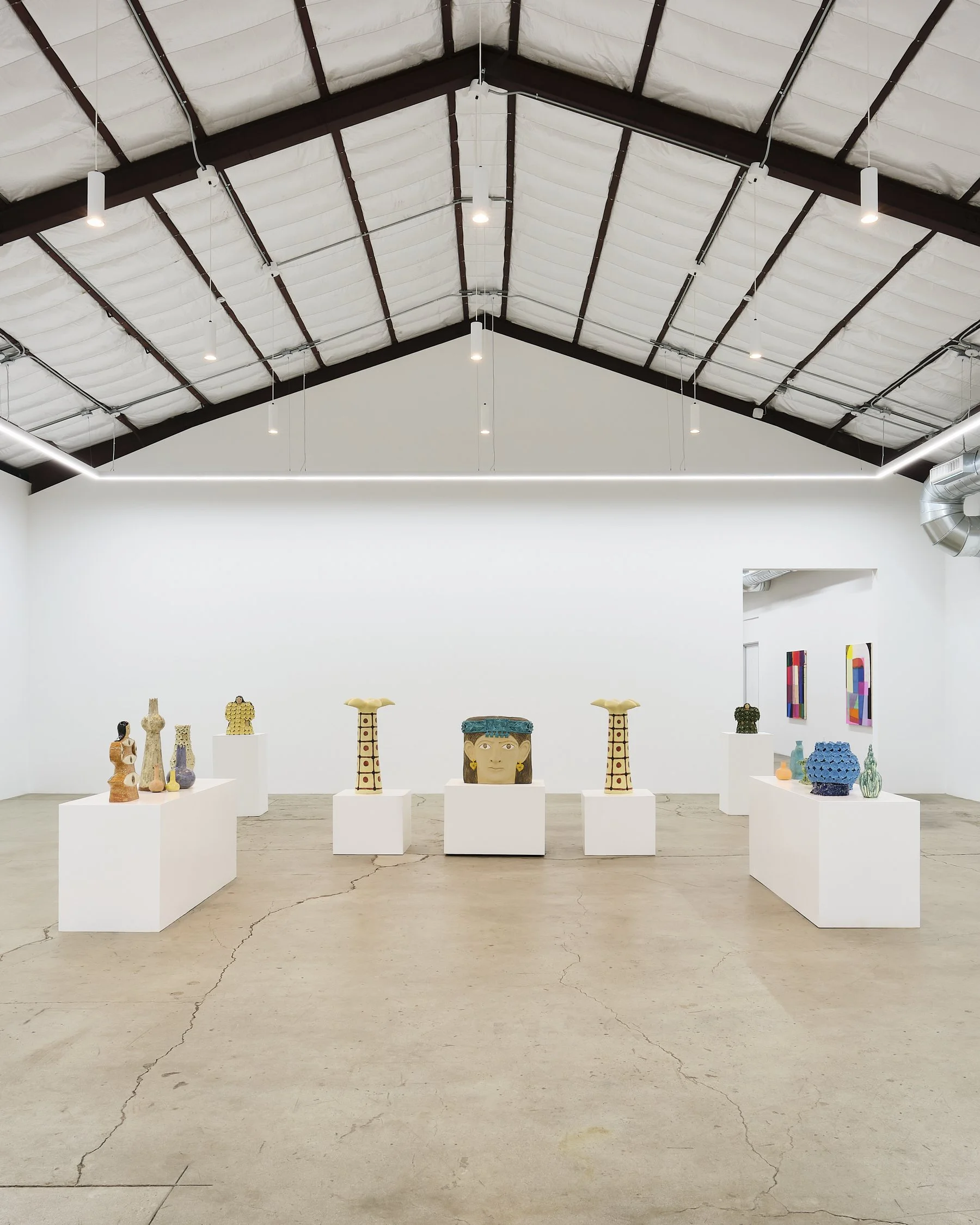
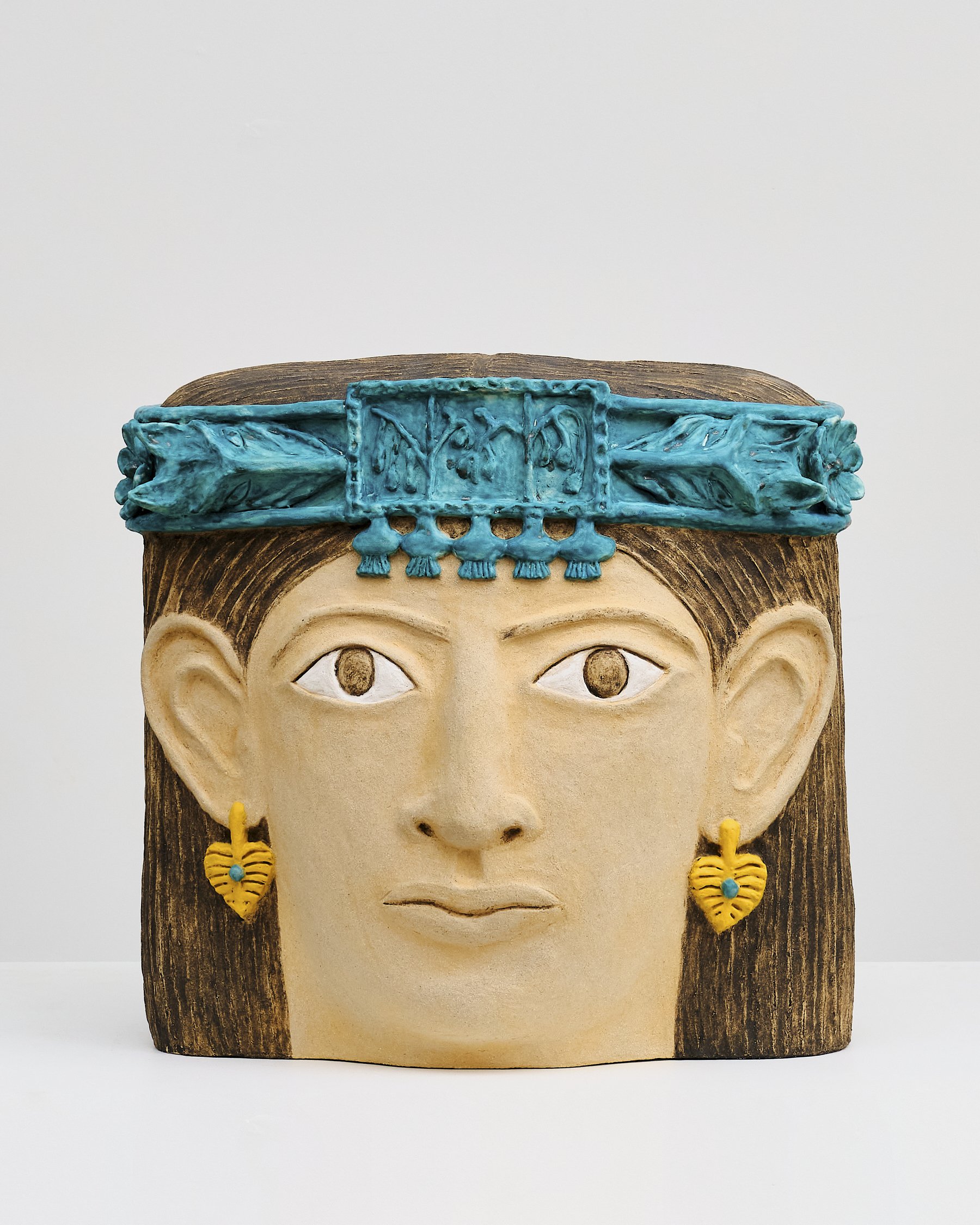
Maryam Yousif, Head of Female Figure with Deportation Earrings, 2026, Glazed ceramic, 23 x 25.5 x 15 in, 58.42 x 64.77 x 38.10 cm
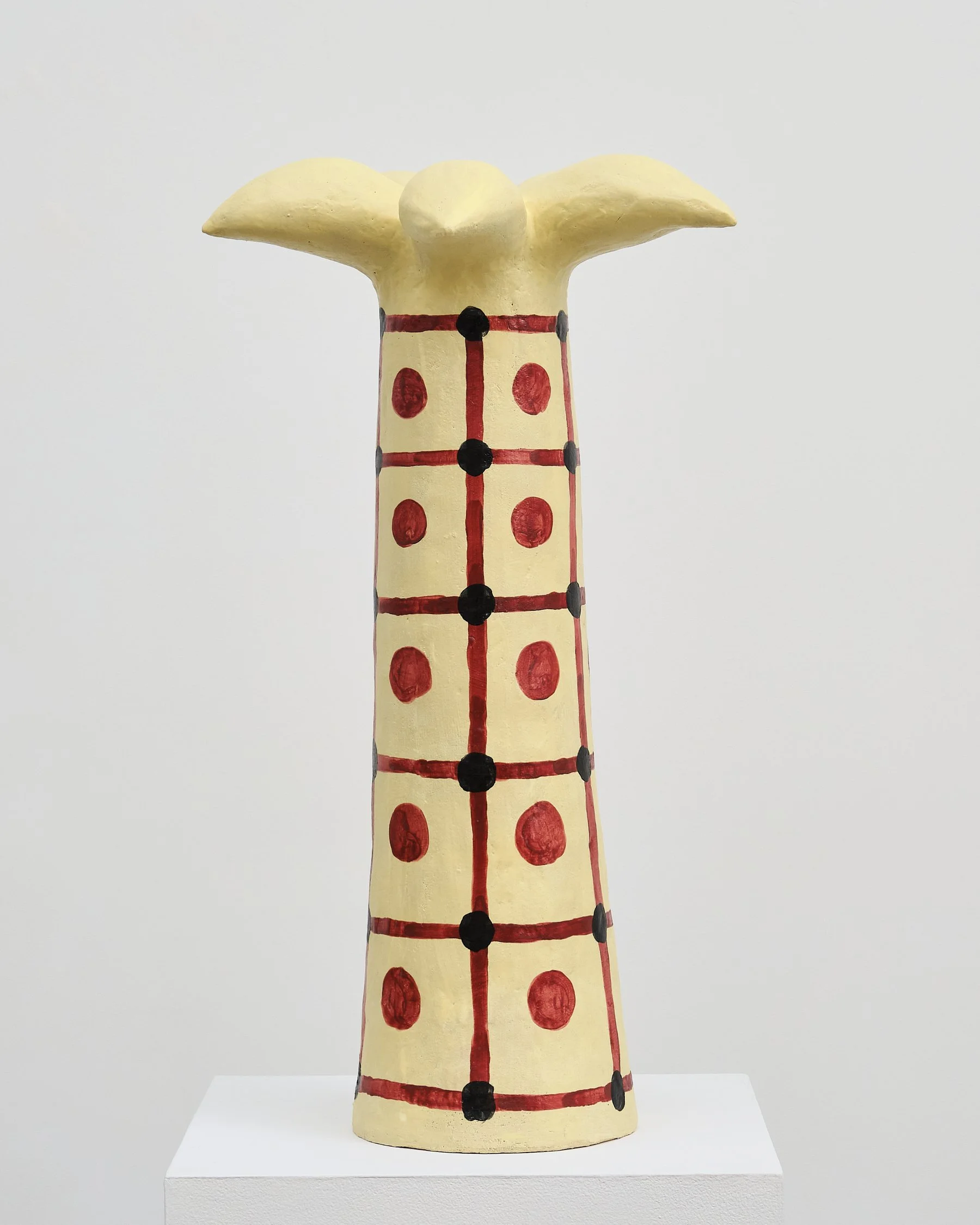
Maryam Yousif, Palm Tree with Hassoon’s Pattern, 2026, Glazed ceramic, 33 x 19 x 19 in, 83.82 x 48.26 x 48.26 cm
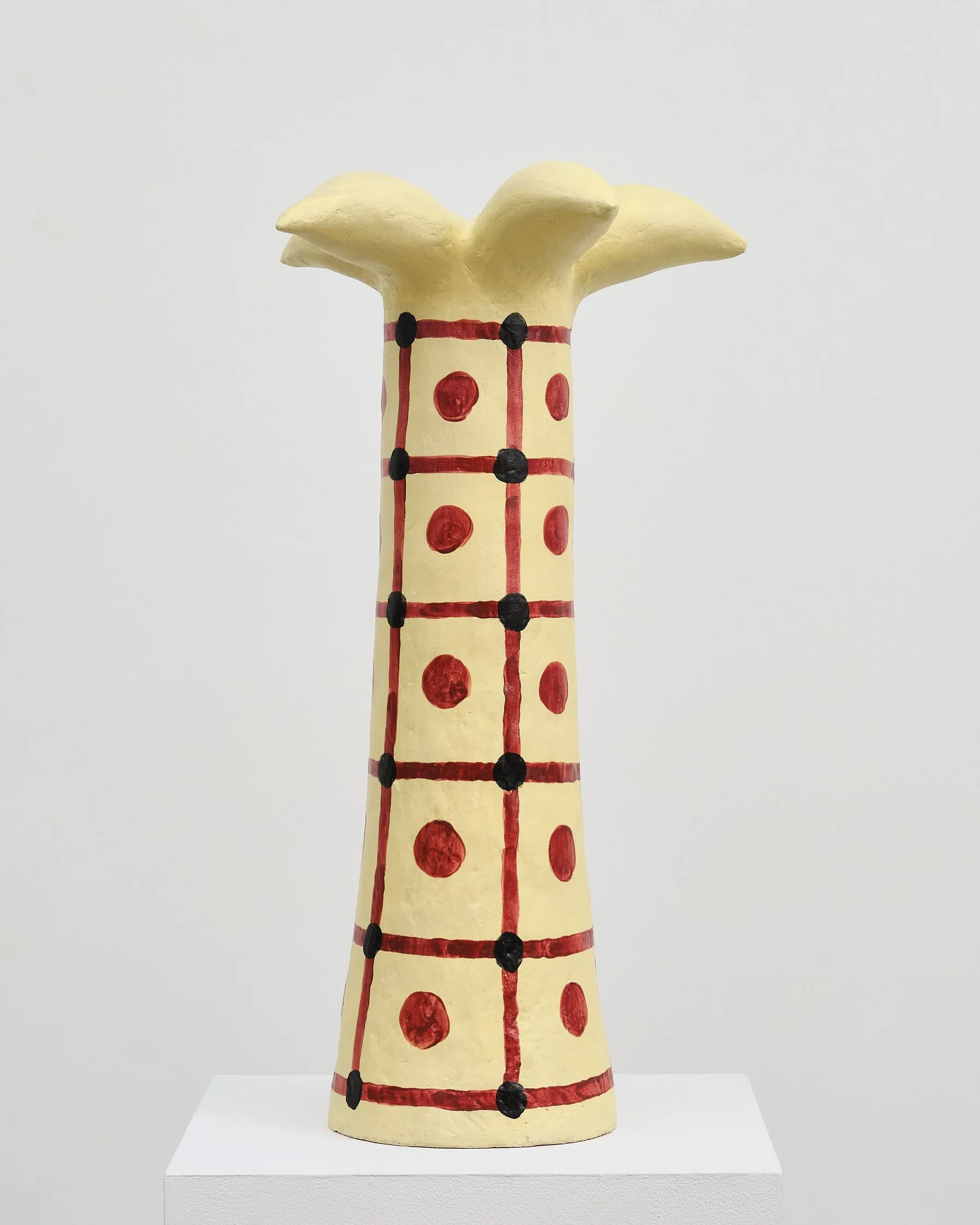
Maryam Yousif, Palm Tree with Hassoon’s Pattern, 2026, Glazed ceramic, 33 x 19 x 19 in, 83.82 x 48.26 x 48.26 cm
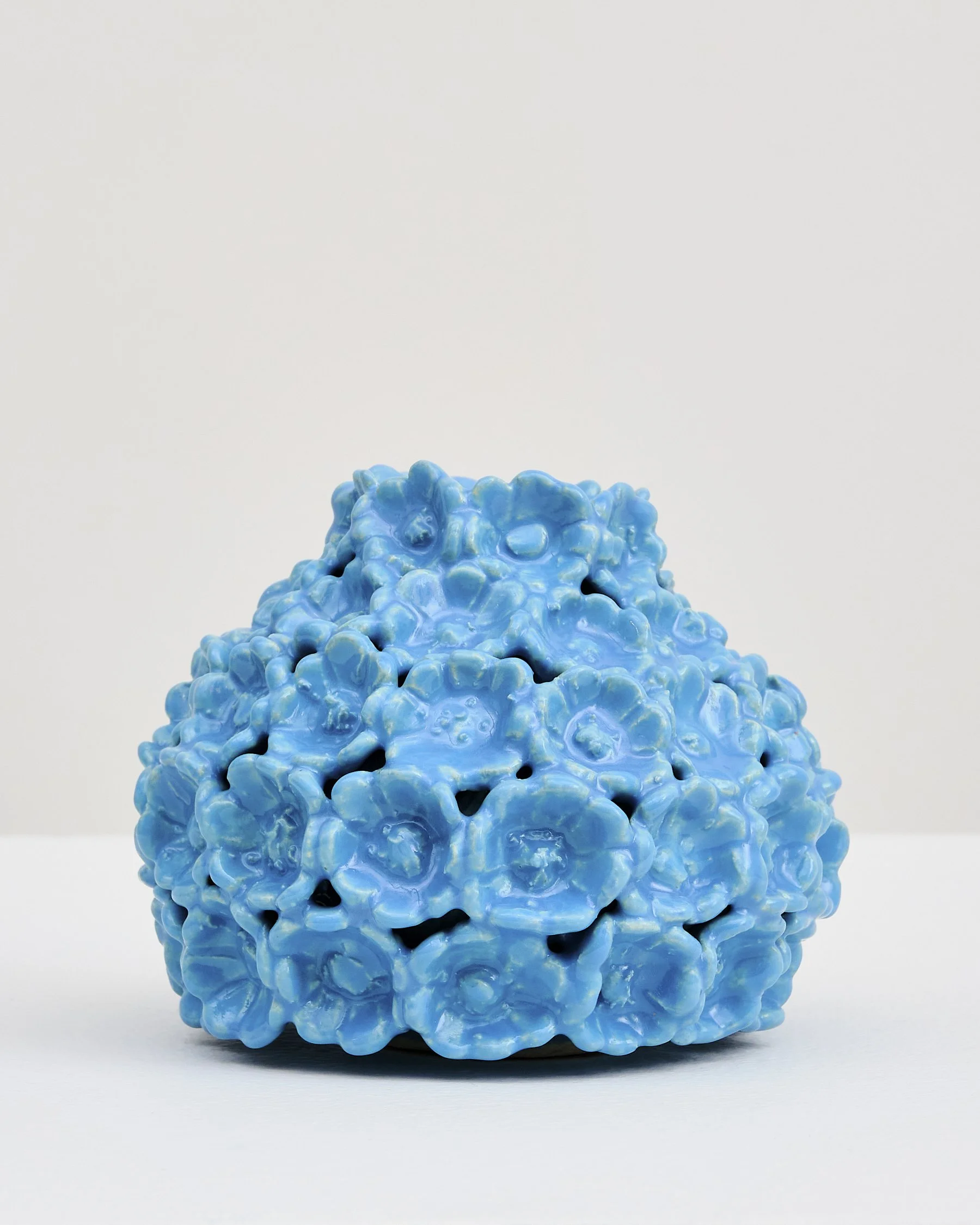
Maryam Yousif, Queen’s Rosettes from Tomb II Vessel in Wedgwood Blue Small, 2026, Glazed ceramic
4.5 x 5 x 5 in, 11.43 x 12.70 x 12.70 cm
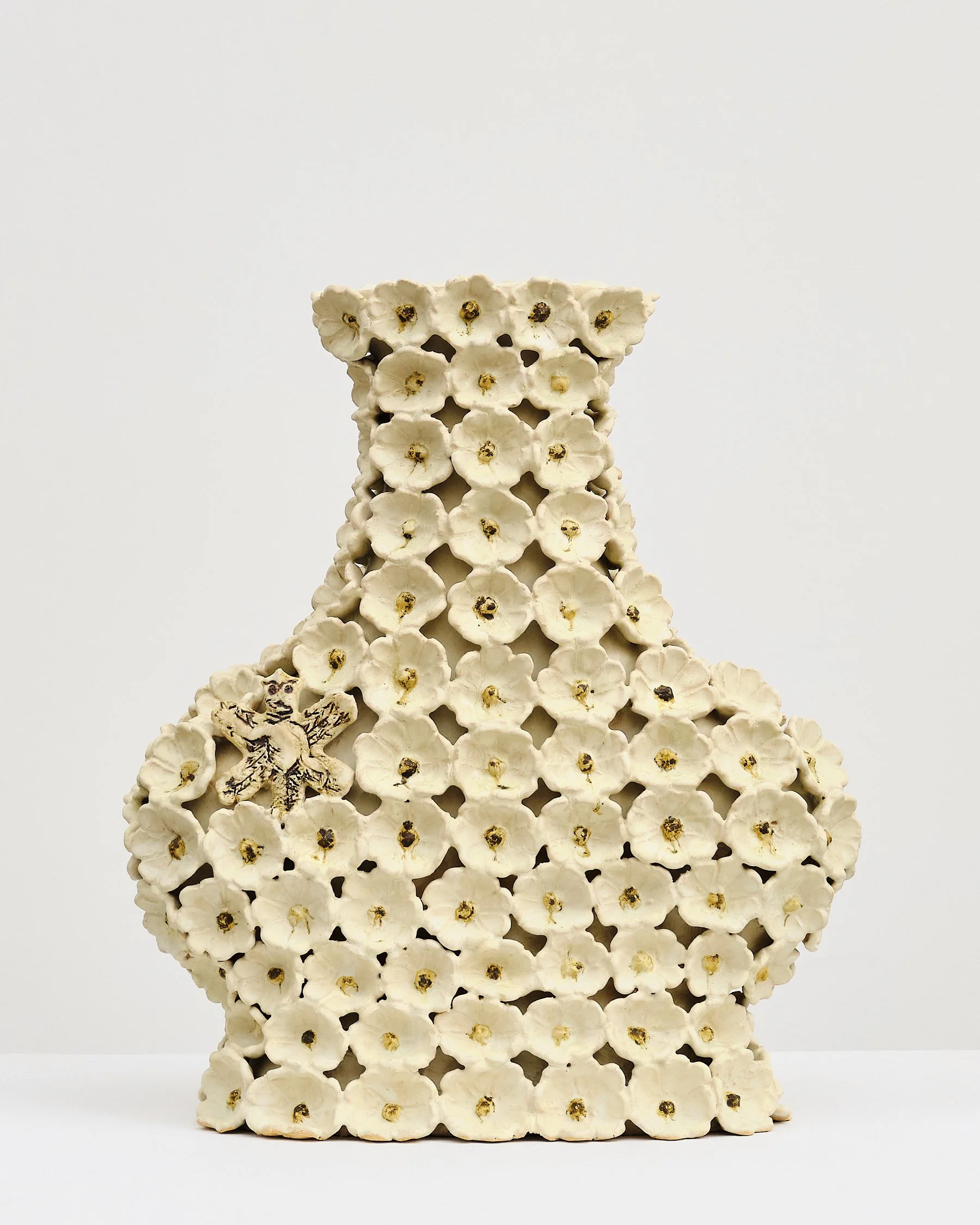
Maryam Yousif, Queen’s Rosettes from Tomb II Vessel in White Pebble, 2026, Glazed ceramic, 17 x 14.5 x 5 in, 43.18 x 36.83 x 12.70 cm
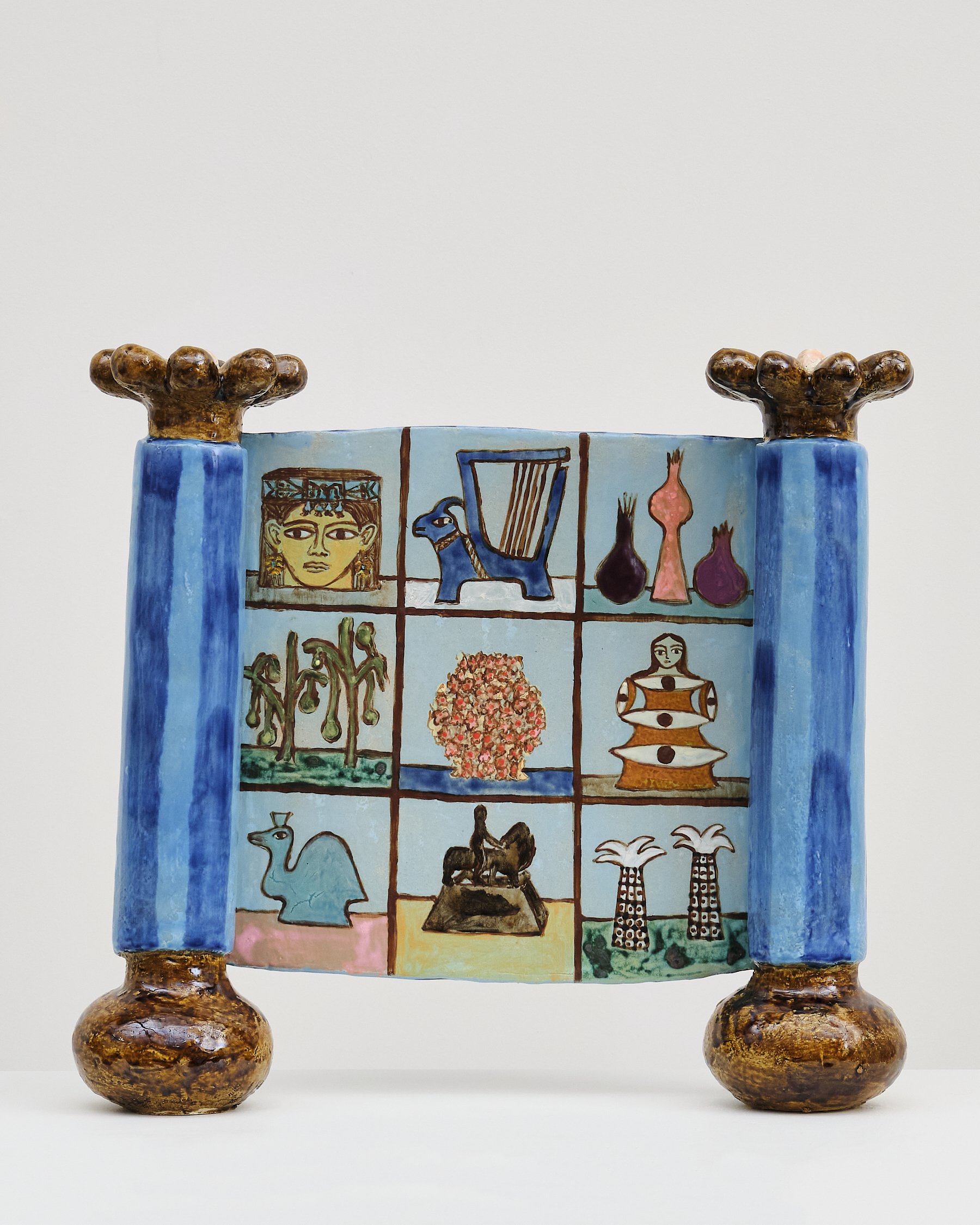
Maryam Yousif, Catalogue Scroll, 2026, Glazed ceramic, 19 x 20 x 5 in, 48.26 x 50.80 x 12.70 cm
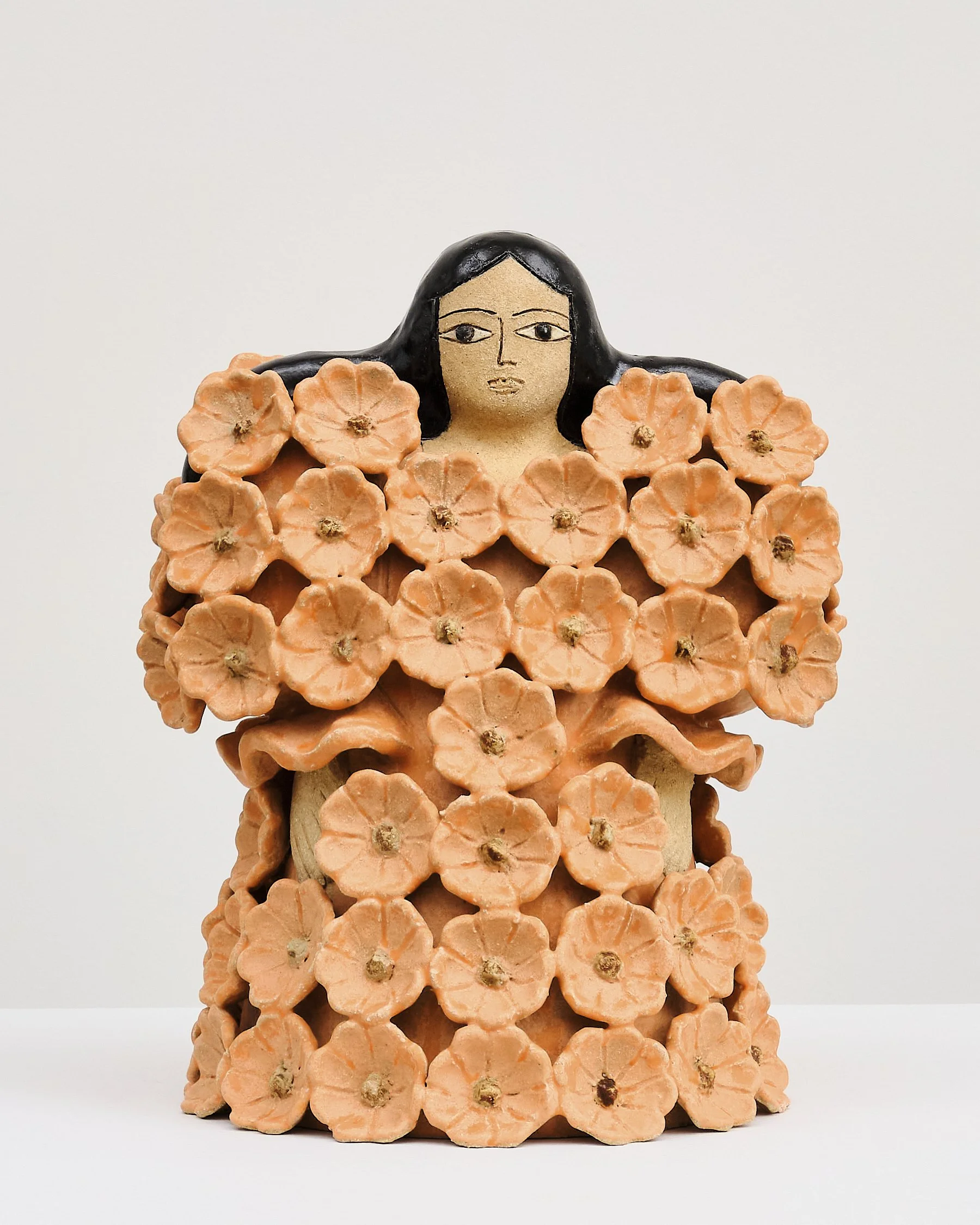
Maryam Yousif, Habibti in Tangerine Rosette Dress, 2026, Glazed ceramic, 14 x 10.5 x 9.5 in, 35.56 x 26.67 x 24.13 cm
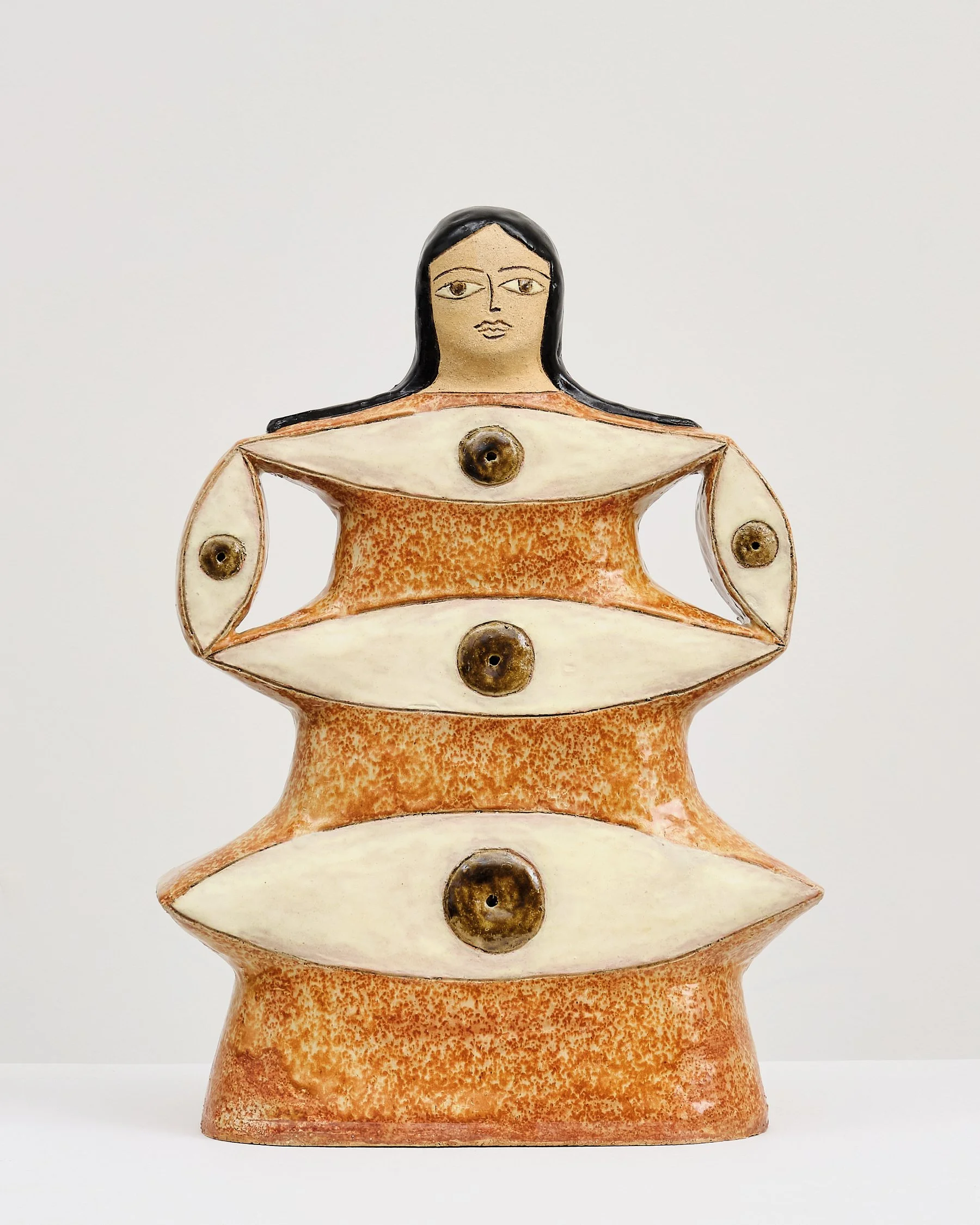
Maryam Yousif, Protection Vessel Dress, 2026, Glazed ceramic, 19.75 x 13.75 x 4.75 in, 50.17 x 34.92 x 12.06 cm
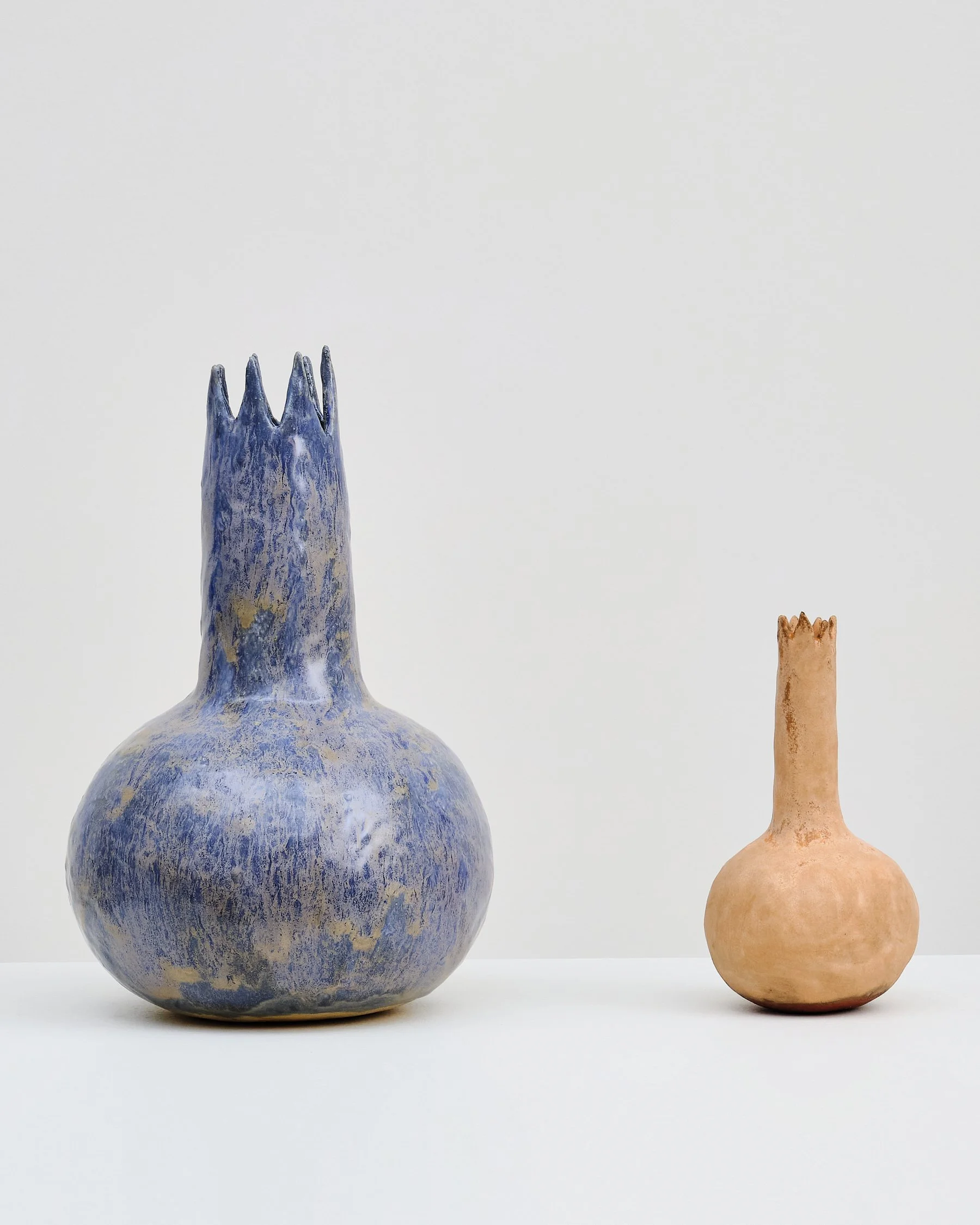
Maryam Yousif, Pomegranate Bottle in Blue Purple , 2026, Glazed ceramic, 12 x 8 x 8 in, 30.48 x 20.32 x 20.32 cm,
Maryam Yousif, Pomegranate Bottle in Tangerine:, 2026, Glazed ceramic, 7.5 x 4 x 4 in, 19.05 x 10.16 x 10.16 cm
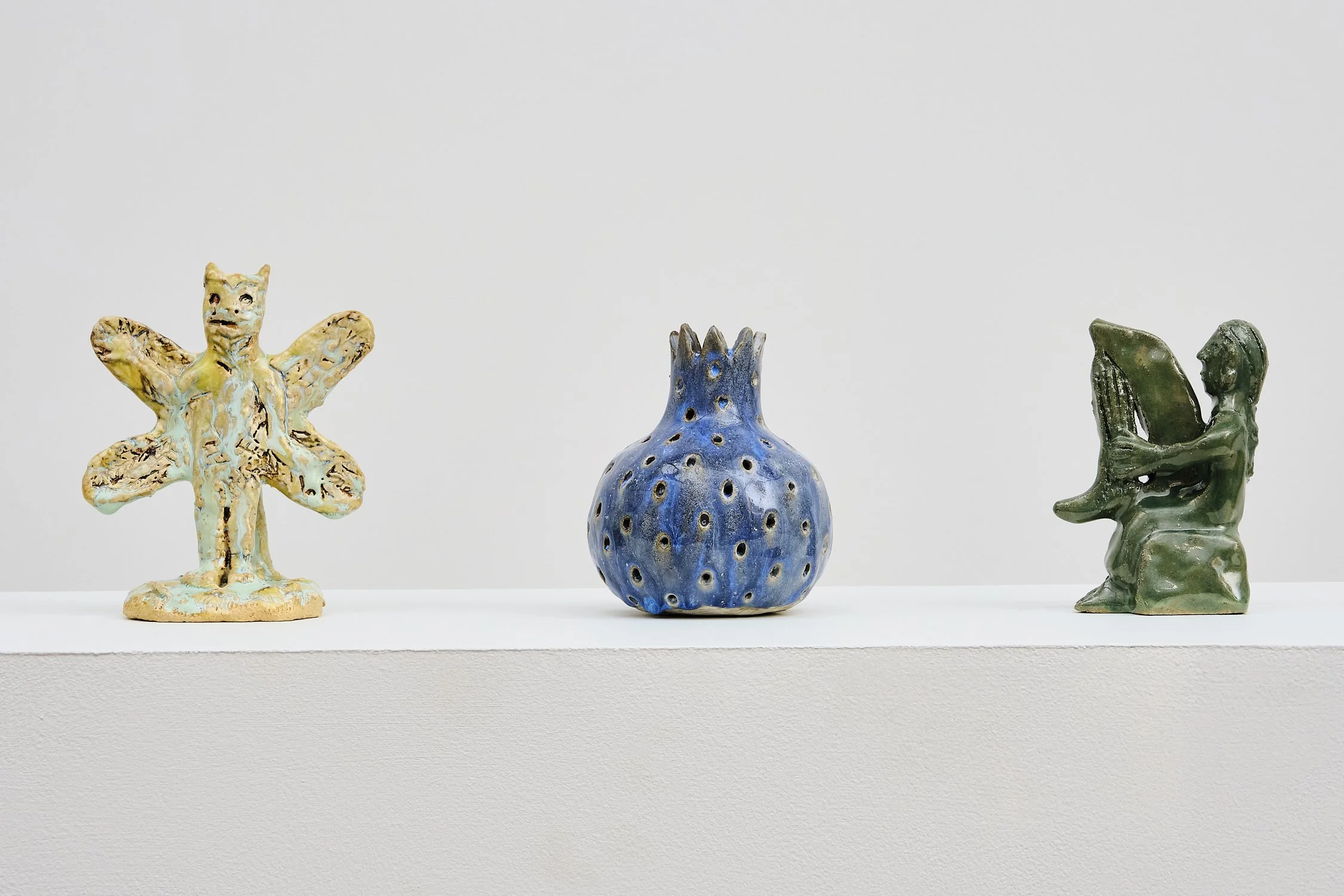
Maryam Yousif, Standing Pazzuzu, 2026, Glazed ceramic, 6 x 5 x 3 in, 15.24 x 12.70 x 7.62 cm
Maryam Yousif, Pomegranate Bottle in Interstellar, 2026, Glazed ceramic, 5 x 4 x 4 in, 12.70 x 10.16 x 10.16 cm
Maryam Yousif, Green Harp Player Figure, 2026, Glazed ceramic, 5 x 3.5 x 2.5 in, 12.70 x 8.89 x 6.35 cm
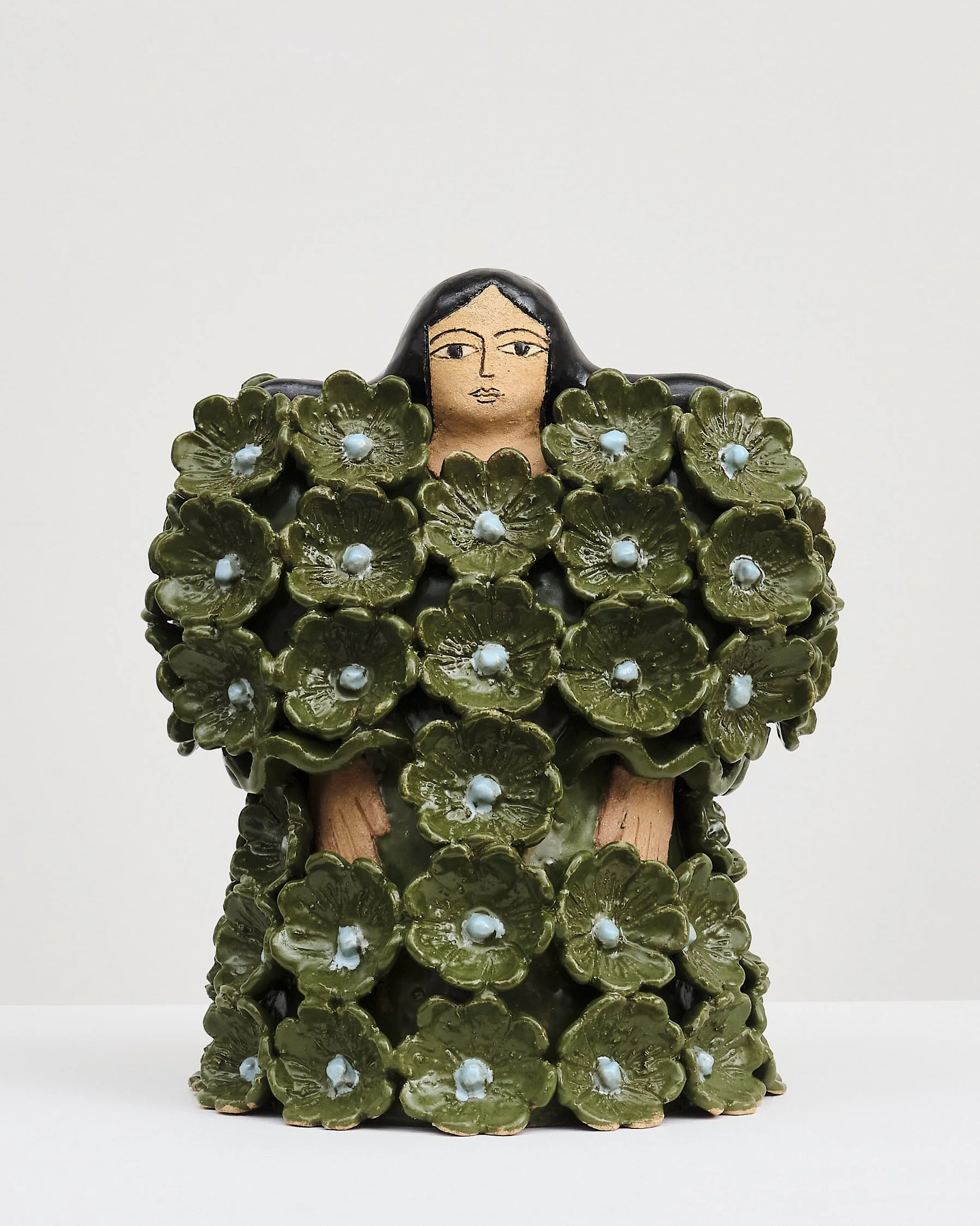
Maryam Yousif, Habibti in Green Rosette Dress, 2026, Glazed ceramic, 14 x 11 x 10 in, 35.56 x 27.94 x 25.40 cm
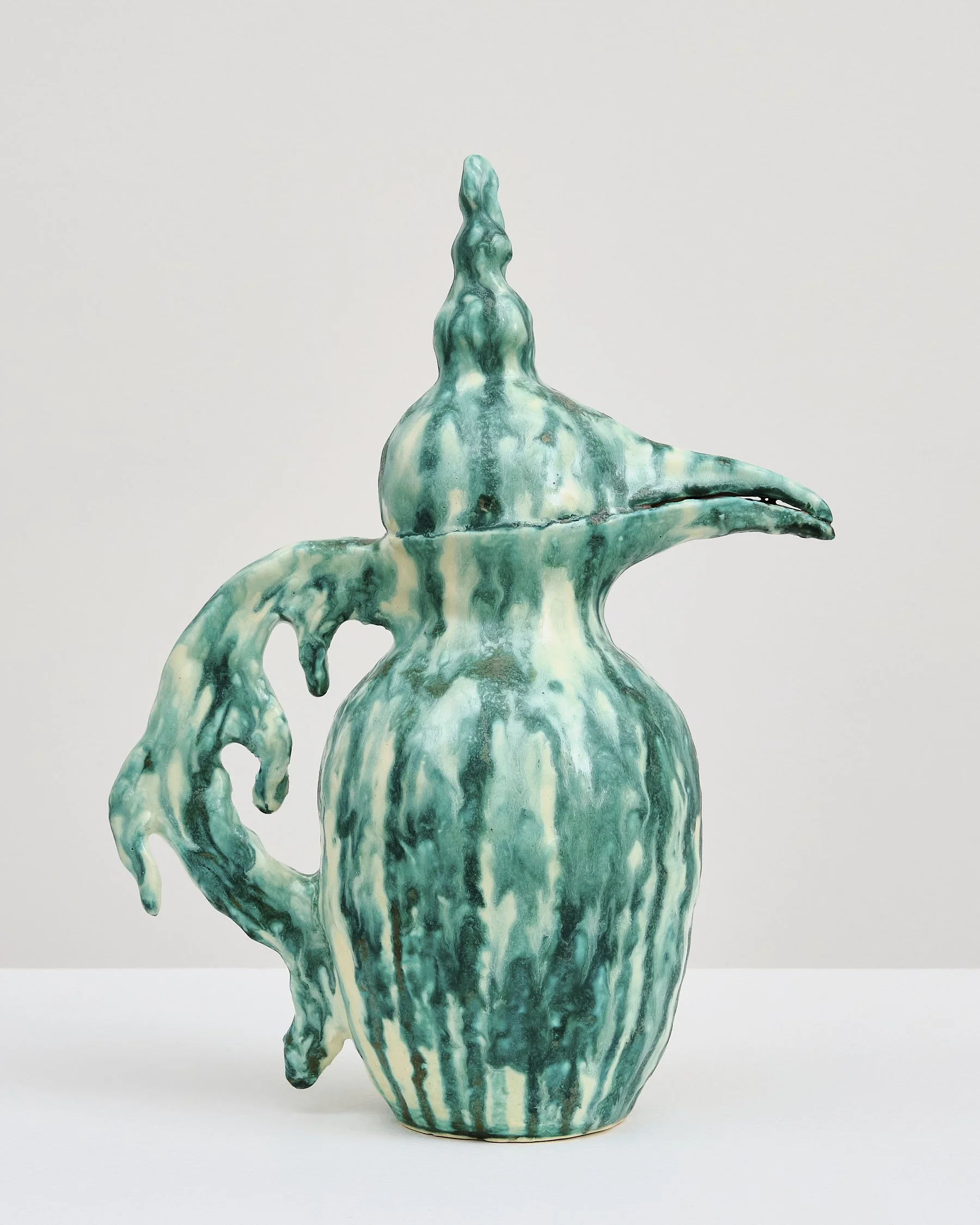
Maryam Yousif, Dallah in the Shape of Bird, 2026, Glazed ceramic, 13 x 11 x 5 in, 33.02 x 27.94 x 12.70 cm
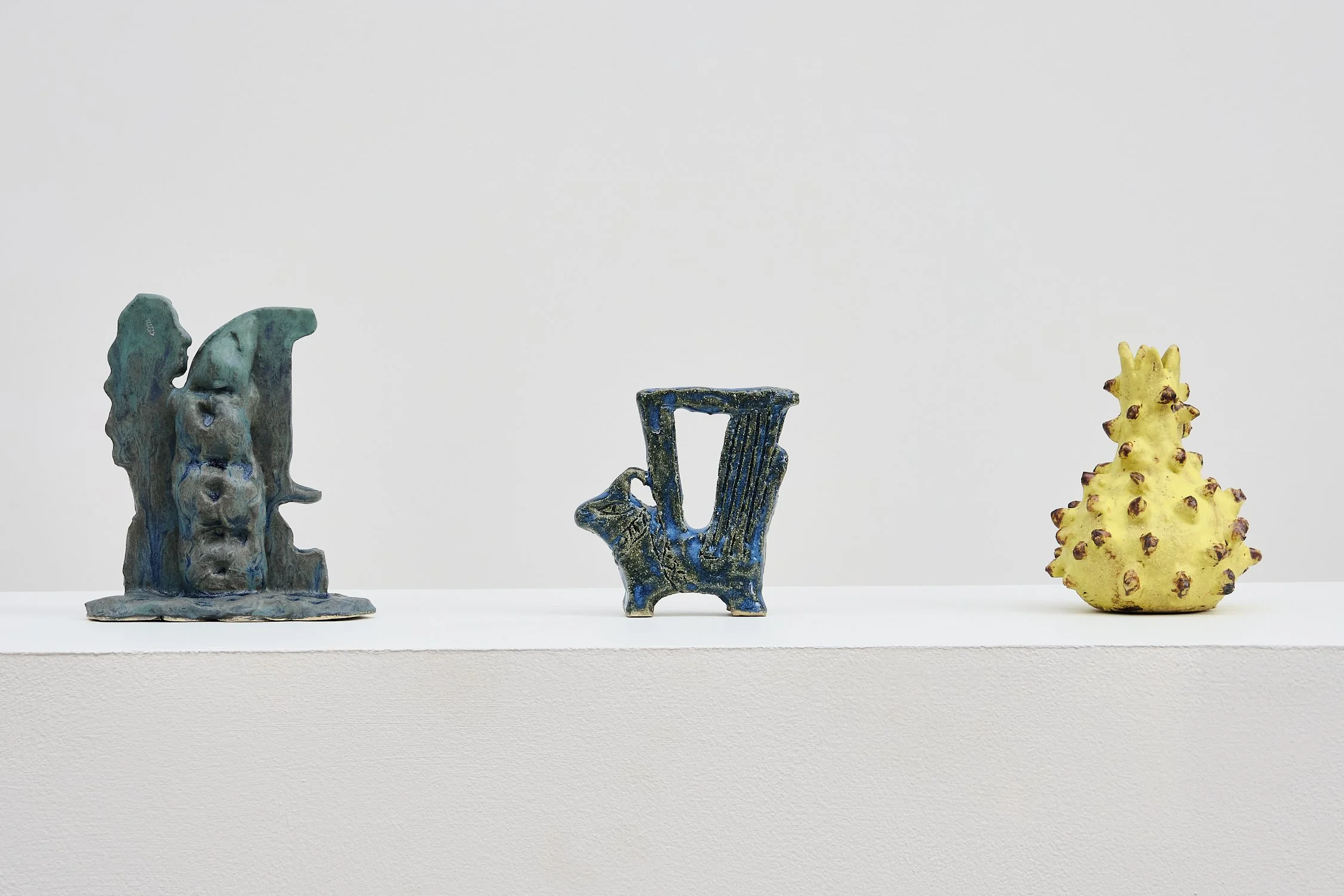
Maryam Yousif, Blue Stone Harp Player Figure , 2026, Glazed ceramic, 5.75 x 5 x 2 in, 14.61 x 12.70 x 5.08 cm
Maryam Yousif, Blue Standing Harp, 2026, Glazed ceramic, 3.8 x 4 x 1 in, 9.65 x 10.16 x 2.54 cm
Maryam Yousif, Nubby Pomegranate Bottle in Lemon, 2026, Glazed ceramic, 4.5 x 3.5 x 3.5 in, 11.43 x 8.89 x 8.89 cm
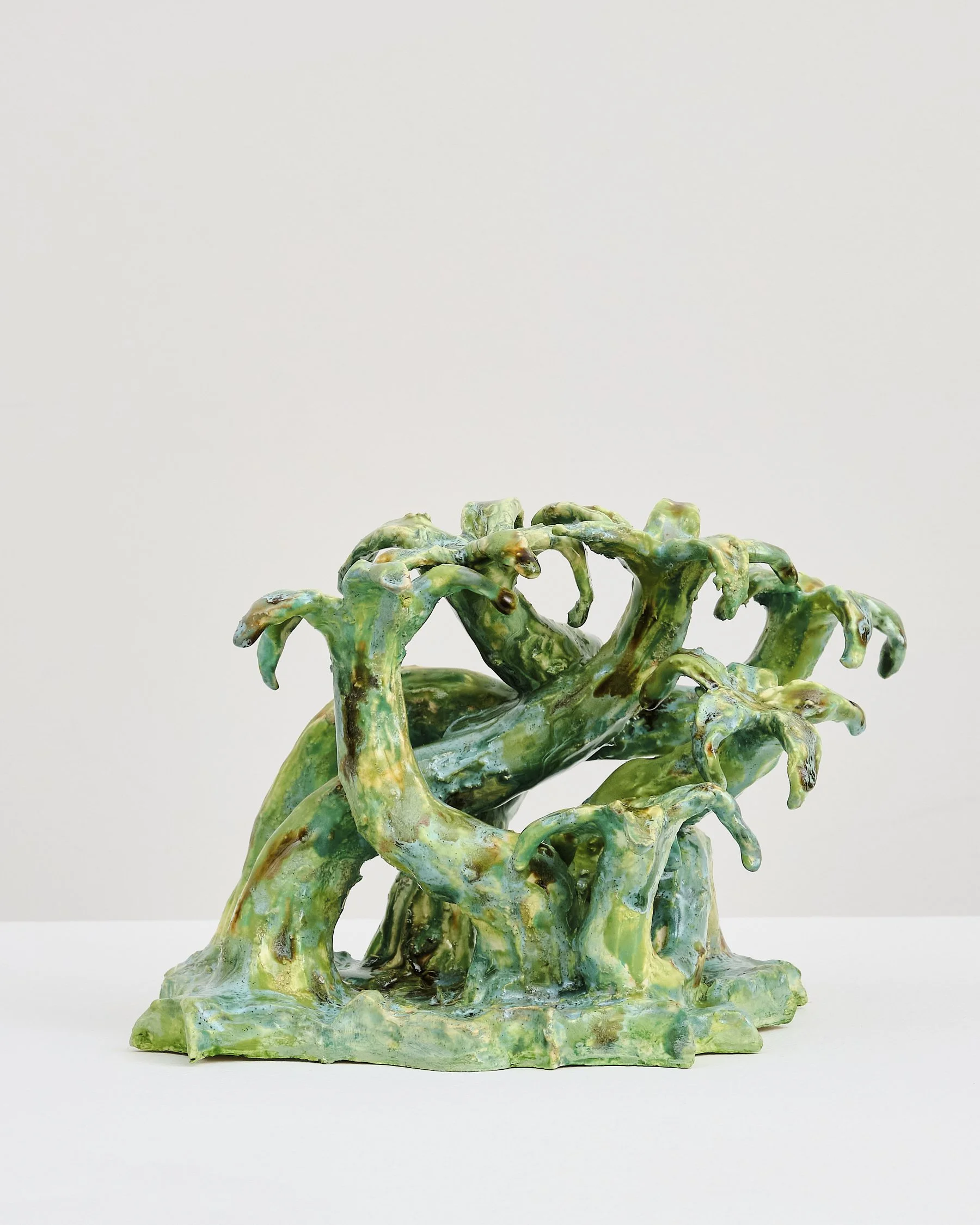
Maryam Yousif, Warp Palms, 2026, Glazed ceramic, 7 x 10 x 8 in, 17.78 x 25.40 x 20.32 cm
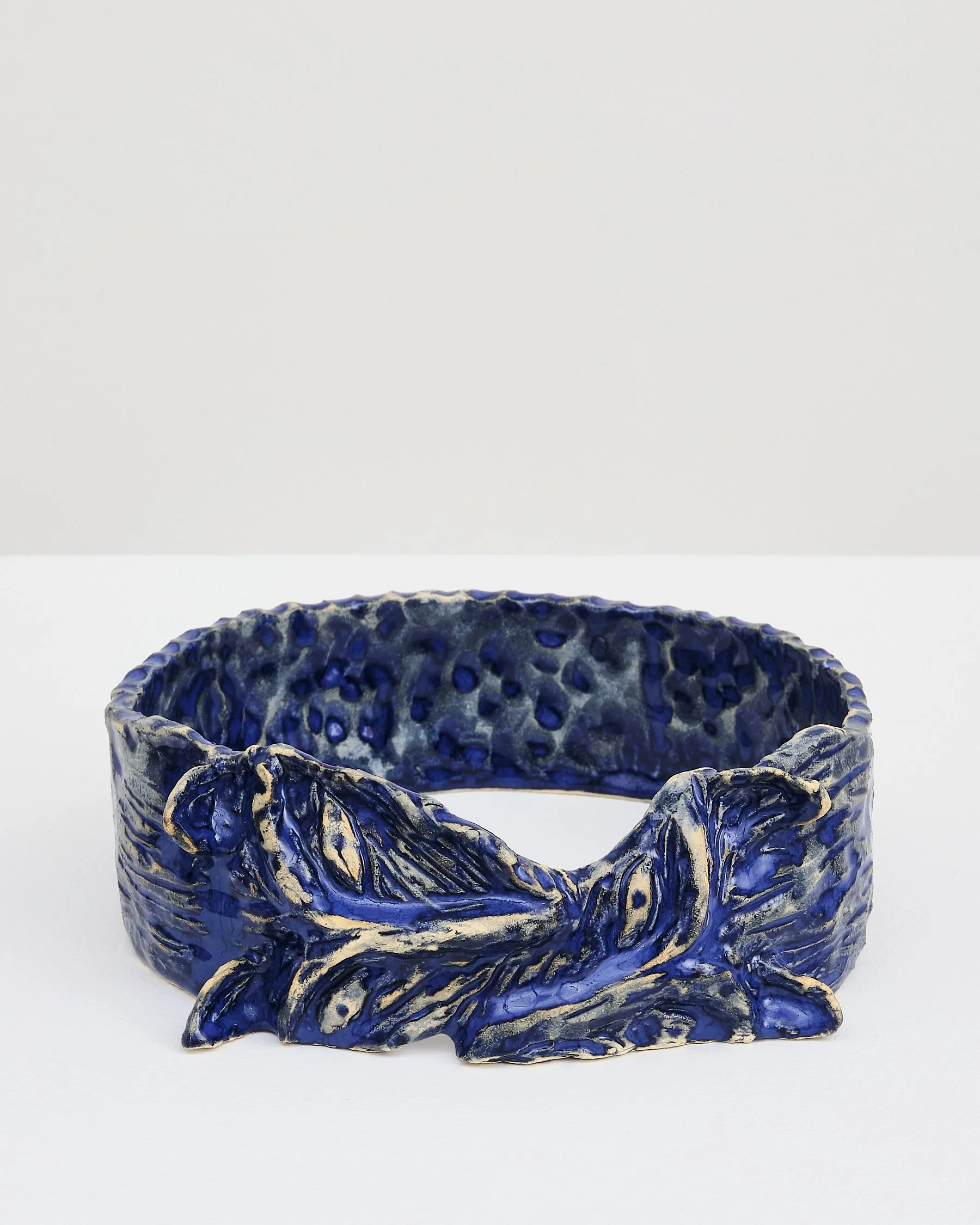
Maryam Yousif, Mom’s Wolves Ring, 2026, Glazed ceramic, 3.25 x 9 x 9 in, 8.25 x 22.86 x 22.86 cm
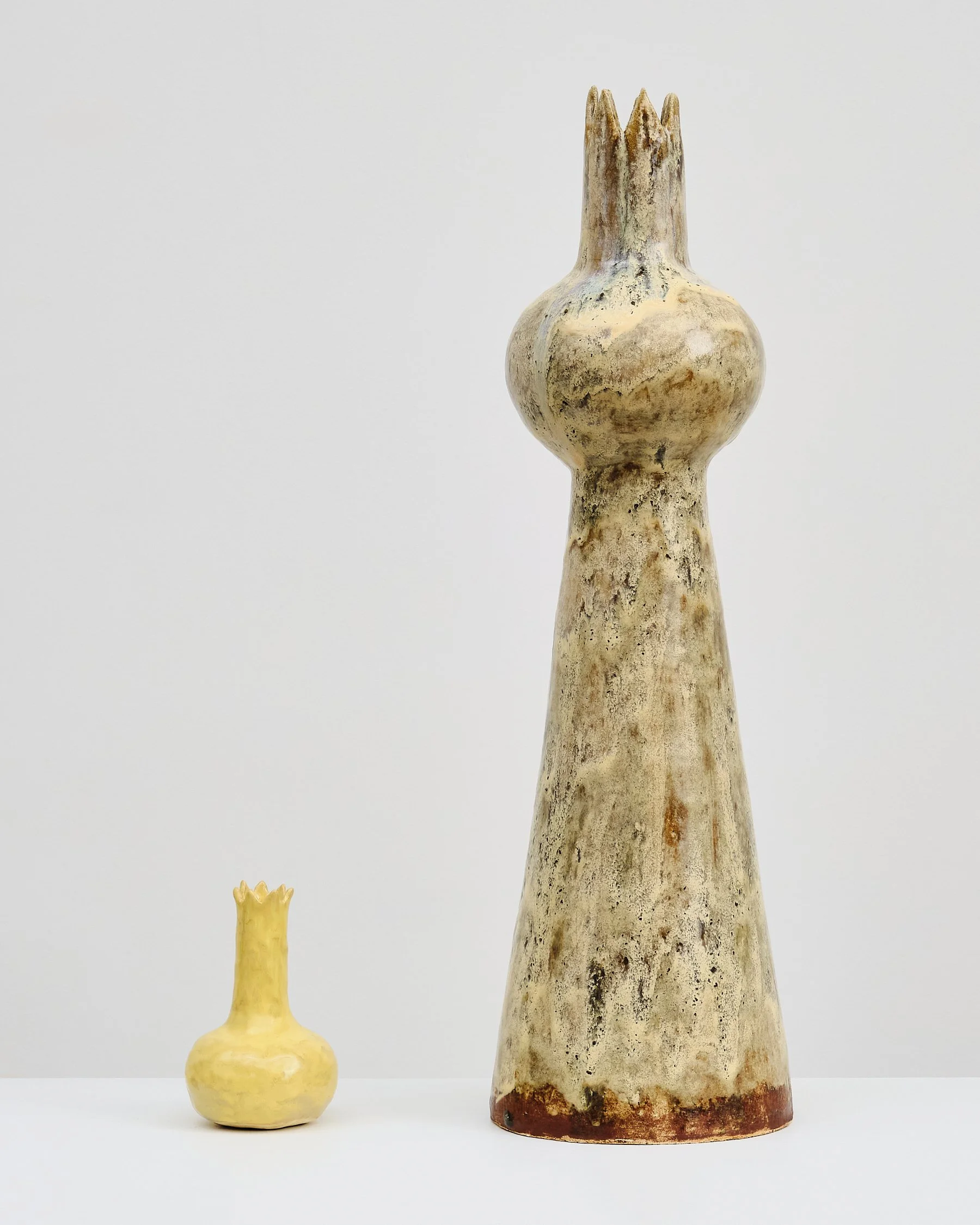
Maryam Yousif, Pomegranate Bottle in Yellow, 2026, Glazed ceramic, 5.75 x 3.5 x 3.5 in, 14.61 x 8.89 x 8.89 cm
Pomegranate Bottle in Jupiter , 2026, Glazed ceramic, 25 x 7x 7 in, 63.50 x 17.78 x 17.78 cm
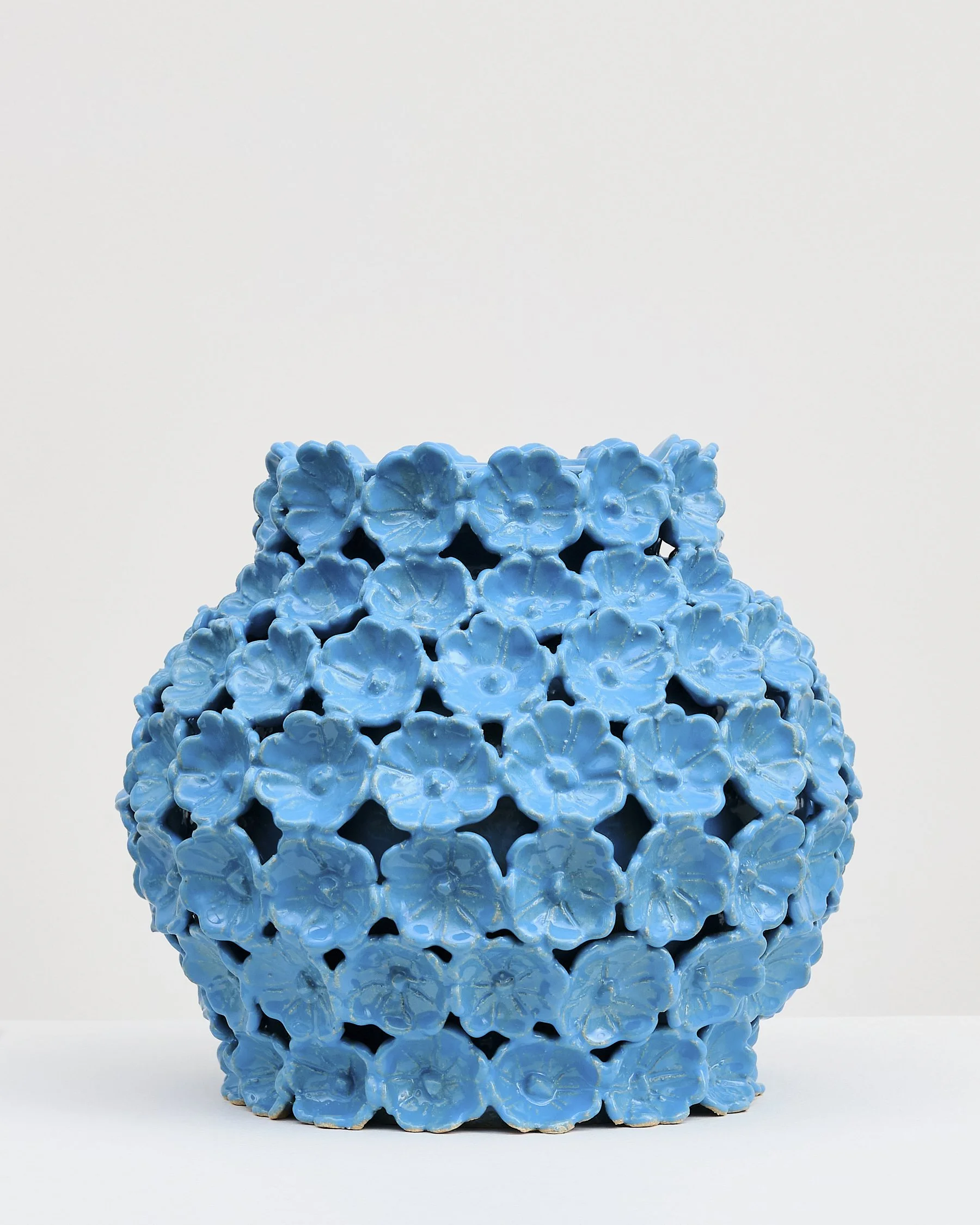
Maryam Yousif, Queen’s Rosettes from Tomb II Vessel in Wedgwood Blue, 2026, Glazed ceramic, 13 x 13 x 13 in, 33.02 x 33.02 x 33.02 cm
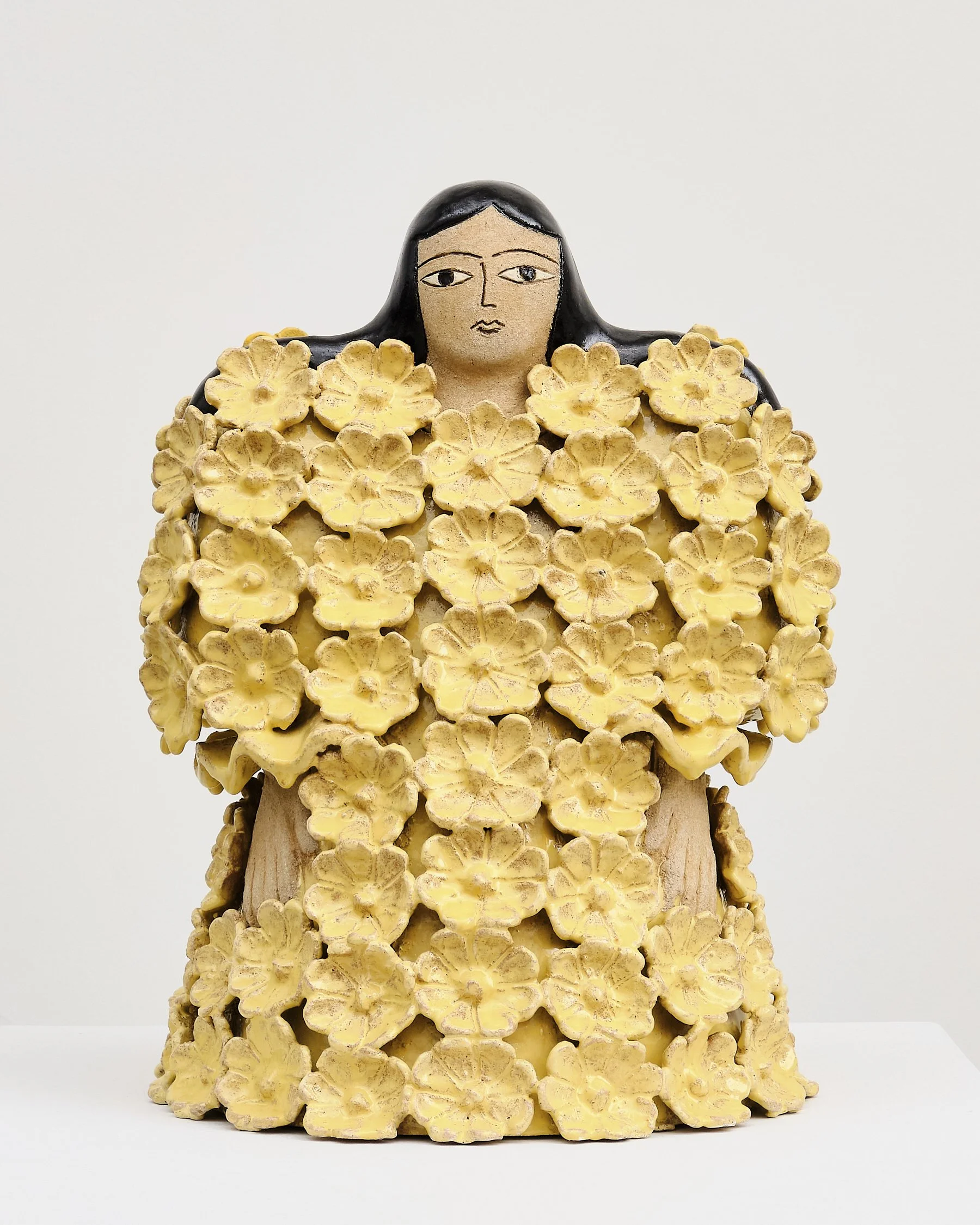
Maryam Yousif, Habibti in Yellow Desert Rosette Dress, 2026, Glazed ceramic, 18 x 12 x 12 in, 45.72 x 30.48 x 30.48 cm
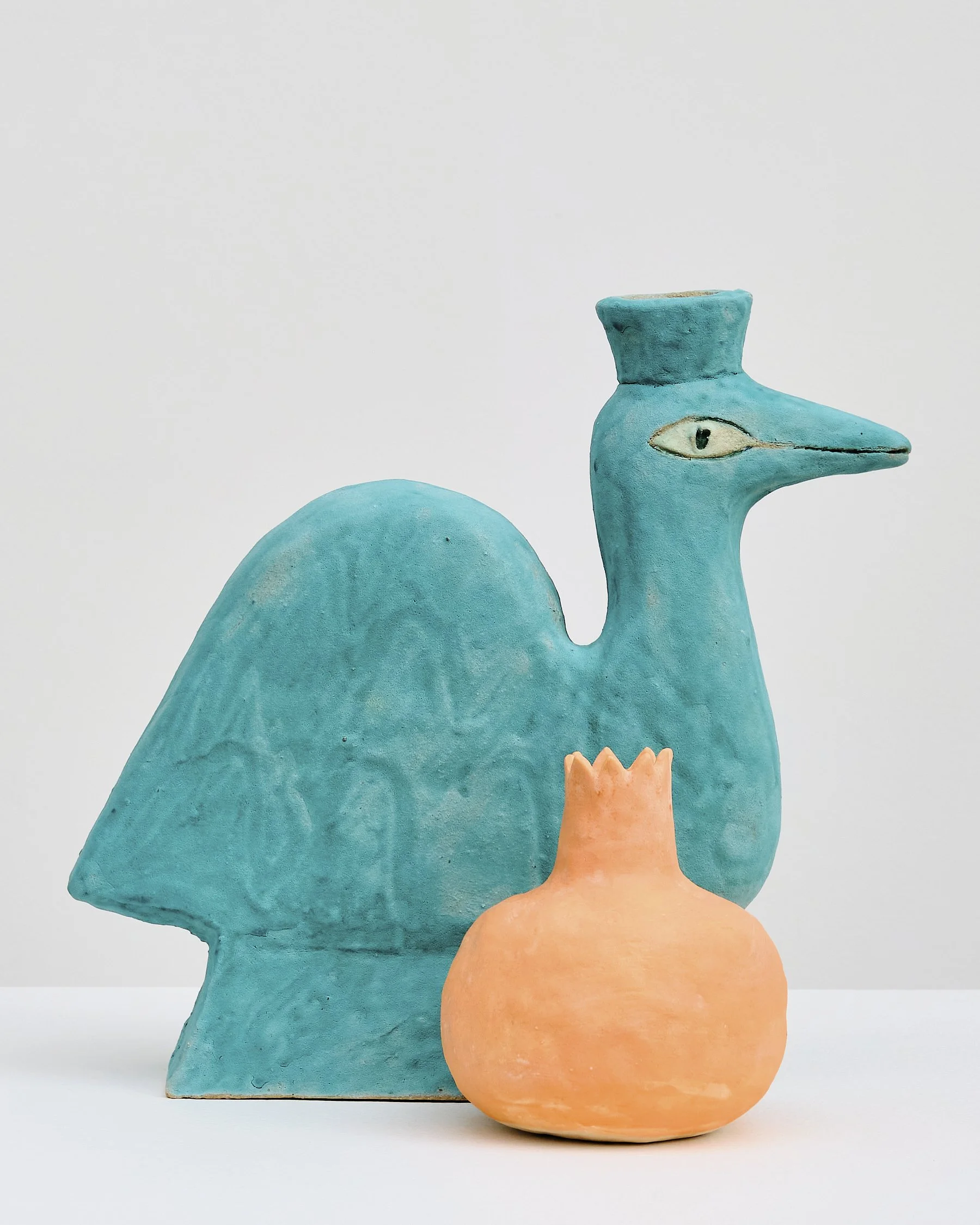
Maryam Yousif, Stone Bird Vessel and Stout Pomegranate Bottle in Tangerine, 2026, Glazed ceramic
Bird : 11.5 x 12 x 3.5 in / 29.21 x 30.48 x 8.89 cm
Orange Pomegranate : 5 x 5 x 5 in / 12.70 x 12.70 x 12.70 cm